
Jazan Surpasses 4 Million Visitors in 2025, Spending Hits SAR3 Billion as Saudi Arabia Accelerates Vision 2030
Saudi Arabia's Jazan Region recorded over 4 million tourists in 2025 with SAR3 billion in spending, marking 47% visitor growth and reshaping the Kingdom's tourism economy.

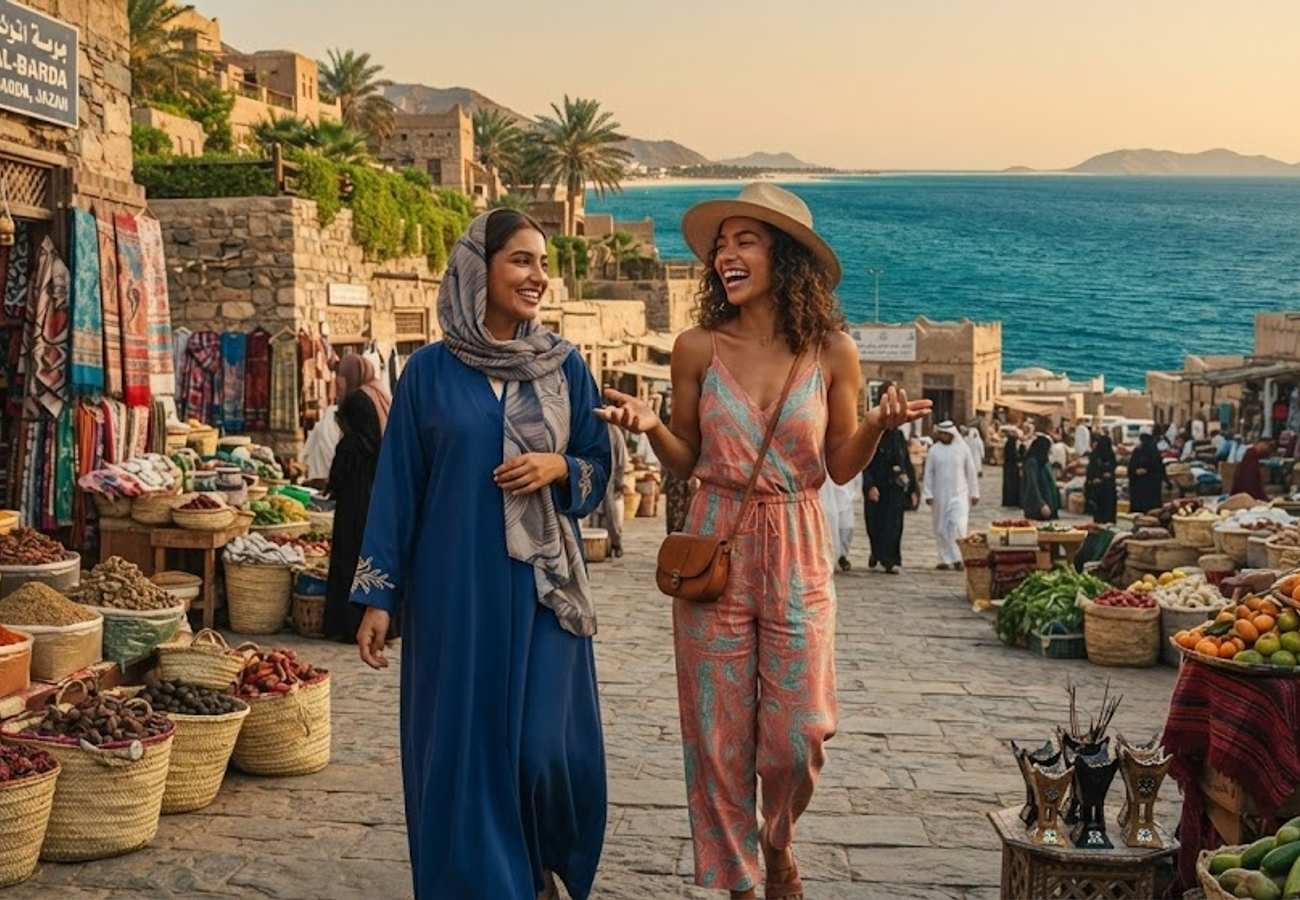
Image generated by AI
Jazan Region just delivered a tourism shock to the Kingdom. In 2025, this once-quiet southern destination welcomed over four million visitors—a staggering 47% jump from the previous year. More importantly, those visitors didn't just show up. They spent money. A lot of it.
Tourism expenditure climbed above SAR3 billion (roughly USD800 million), up 19% year-on-year. This isn't just about volume. This is about economic impact, and it signals something profound: Saudi Arabia's tourism boom is no longer confined to Riyadh, Jeddah, and the holy cities.
A Desert Kingdom's Hidden Coast Goes Global
For decades, when travelers thought Saudi tourism, they thought religious pilgrimage or business hubs. Not anymore.
Jazan is rewriting that script. Located on the Red Sea coast, this southern region boasts a rare geographic advantage: turquoise islands, mountain highlands, terraced farms, heritage villages, and coral-rich waters all within a few hours of each other. The Farasan Islands—Jazan's crown jewel—are drawing divers, island-hoppers, and nature photographers from across the Gulf.
Reddit: "Jazan feels like someone took the Red Sea, dropped it in Saudi Arabia, and forgot to tell anyone about it." — r/travel
This geographic diversity is critical. Unlike single-product destinations that live or die by one season, Jazan offers year-round appeal. Summer brings water sports and island tourism. Winter attracts mountain hikers and cultural travelers. Spring opens heritage festival season.
The Spending Story Matters More Than the Numbers
Here's what separates real tourism growth from tourist traffic: visitor spending. A city can see 10 million arrivals but capture minimal economic value if those visitors don't spend. Jazan flipped that script.
The 19% year-on-year increase in tourism expenditure reveals deeper market dynamics. Visitors aren't just passing through—they're staying longer, booking experiences, eating at restaurants, hiring guides, booking accommodations. When spending grows faster than visitor numbers sometimes do, it signals rising average spend per visitor and growing demand for premium experiences.
For the regional economy, this creates a ripple effect: hotels expand, restaurants hire staff, boat operators train crews, local artisans sell crafts, transport companies invest in vehicles. Tourism income flows not just to major hospitality chains but to small family businesses—the actual economic engines of regional development.
Why Vision 2030 Needed Jazan to Succeed
Saudi Vision 2030 set an audacious target: 150 million annual tourism arrivals by 2030. The Kingdom was nowhere near that when the vision launched. To hit that number, Saudi Arabia couldn't rely on Mecca, Medina, and Riyadh alone.
Enter regional destinations like Jazan.
The Kingdom's tourism strategy recognizes that sustainable growth requires geographic distribution. Concentrating tourism in major hubs creates infrastructure strain, environmental pressure, and missed opportunity for smaller communities. Spreading visitors across diverse regions—coast, mountains, deserts, cities—builds a resilient tourism economy.
Jazan's 4 million visitors in 2025 represent exactly what Saudi planners need: proof that tourists will travel beyond the traditional circuit. This validates the entire regional development strategy.
Natural Assets Give Jazan Structural Advantages
What makes Jazan competitive isn't marketing hype. It's raw geographic endowment.
The Farasan Islands feature mangroves, coral reefs, historic Swahili-style villages, and marine wildlife found nowhere else in Saudi Arabia. The mainland offers dramatic mountain terrain with traditional agricultural settlements that haven't changed in centuries. The coastline stretches for hundreds of kilometers with largely undeveloped beaches.
This combination attracts multiple traveler segments simultaneously:
- Marine tourists diving coral reefs and island-hopping
- Nature travelers hiking mountain trails and exploring mangrove ecosystems
- Cultural tourists visiting heritage villages and experiencing local life
- Food tourists sampling southern Saudi cuisine unavailable in the north
- Adventure travelers kayaking, camping, and exploring wild landscapes
One destination, multiple reasons to visit. That's the formula for year-round tourism success.
Cultural Heritage: The Missing Ingredient in Most Destinations
Jazan isn't banking solely on beaches and mountains. The region has deep cultural identity: traditional craftsmanship, local festivals, historic trade routes, and community traditions that stretch back centuries.
Modern travelers—especially post-pandemic—don't want postcards. They want stories. They want to understand how people live, what they eat, what they celebrate. Jazan's cultural assets transform it from a "nice place to visit" into a destination with narrative depth.
When managed responsibly, cultural tourism creates income for artisans, heritage guides, local performers, and food producers while preserving community identity. This is the gold standard: tourism that benefits locals economically while strengthening—not eroding—local culture.
Infrastructure Development Drove the Acceleration
Visitor growth doesn't happen by accident. Behind Jazan's 47% increase lies concrete infrastructure investment: improved coastal road access, new hotel developments, enhanced airport connectivity, organized tour operators, digital booking systems, and safety improvements.
According to Saudi Arabia's tourism investment landscape, the Kingdom has committed billions to regional tourism infrastructure. Jazan benefited directly from this commitment. Better roads mean easier access. More hotels mean capacity for visitors. Organized services mean tourists spend confidently.
The formula is simple: natural beauty + accessibility + services = sustainable growth.
The Employment and Investment Multiplier
Jazan's tourism boom isn't just about visitor numbers and spending. It's about opportunity creation.
Tourism sectors typically require:
- Hotel and hospitality staff
- Restaurant and food service workers
- Tour guides and activity operators
- Transport and logistics teams
- Retail and souvenir sellers
- Event and entertainment coordinators
- Digital and booking system specialists
Each category creates jobs, skills development opportunities, and entry points for young Saudis and entrepreneurs. For regions historically dependent on single industries (fishing, agriculture, government), tourism diversification can be transformational.
Local entrepreneurs can launch tour companies, eco-lodges, cultural centers, and hospitality ventures. Family businesses that operated at small scale can expand. This is economic decentralization in action.
Vision 2030's Broader Tourism Ambition
Jazan's 2025 performance validates Saudi Arabia's national tourism strategy. The Kingdom repositioned itself not as a single-purpose destination but as a complete tourism market: pilgrimage hubs, cosmopolitan cities, heritage sites, adventure destinations, beach resorts, and mountain retreats.
This geographic diversity matters globally. International tourists considering the Kingdom now see options beyond religious pilgrimage. This broadens the addressable market and attracts demographic segments—families, adventure travelers, couples, cultural enthusiasts—that might not have considered Saudi Arabia five years ago.
Jazan isn't a side story in Vision 2030. It's evidence the entire strategy is working.
The Sustainability Question
One critical challenge looms: managing growth responsibly.
Jazan's rapid tourism expansion must balance visitor demand with environmental protection (coral reefs, mangrove ecosystems, marine wildlife), cultural preservation (heritage villages, traditional crafts), and community benefit (ensuring locals capture tourism income and maintain quality of life).
Poorly managed tourism can destroy the very assets that attract visitors. The region's tourism leadership will need to implement environmental standards, community benefit-sharing mechanisms, and visitor management protocols. If executed well, Jazan becomes a model for sustainable regional tourism. If not, it becomes a cautionary tale.
What's Next for Jazan Tourism
Expect accelerating development: more boutique hotels, eco-lodges, maritime tourism facilities, heritage cultural centers, and organized experience packages. The Kingdom will likely increase marketing investment in Jazan globally. Direct flights from major international hubs may expand access.
The trajectory is clear. Jazan is transitioning from emerging destination to established player in Saudi Arabia's tourism economy. The 4 million visitors and SAR3 billion spending in 2025 are just the foundation.
Jazan proved regional tourism can reshape kingdoms—one visitor at a time.
Related Travel Guides
Disclaimer
This article is for informational and educational purposes only. It does not constitute legal, financial, or professional advice. While we strive to provide accurate and up-to-date information, travel policies, regulations, and conditions change rapidly. Always verify information with official sources before making travel decisions. Nomad Lawyer makes no representations about the accuracy, reliability, completeness, or suitability of the information provided. Readers should consult qualified professionals for advice specific to their circumstances. The views expressed in this article are those of the author and do not necessarily reflect the views of Nomad Lawyer.
Preeti Gunjan
Contributor & Community Manager
A passionate traveller and community builder. Preeti helps grow the Nomad Lawyer community, fostering engagement and bringing the reader experience to life.
Learn more about our team →