Japan Luxury Cruise Expansion Accelerates as Mitsui Ocean Sakura Opens Remote Islands and Regional Ports to Global Travelers

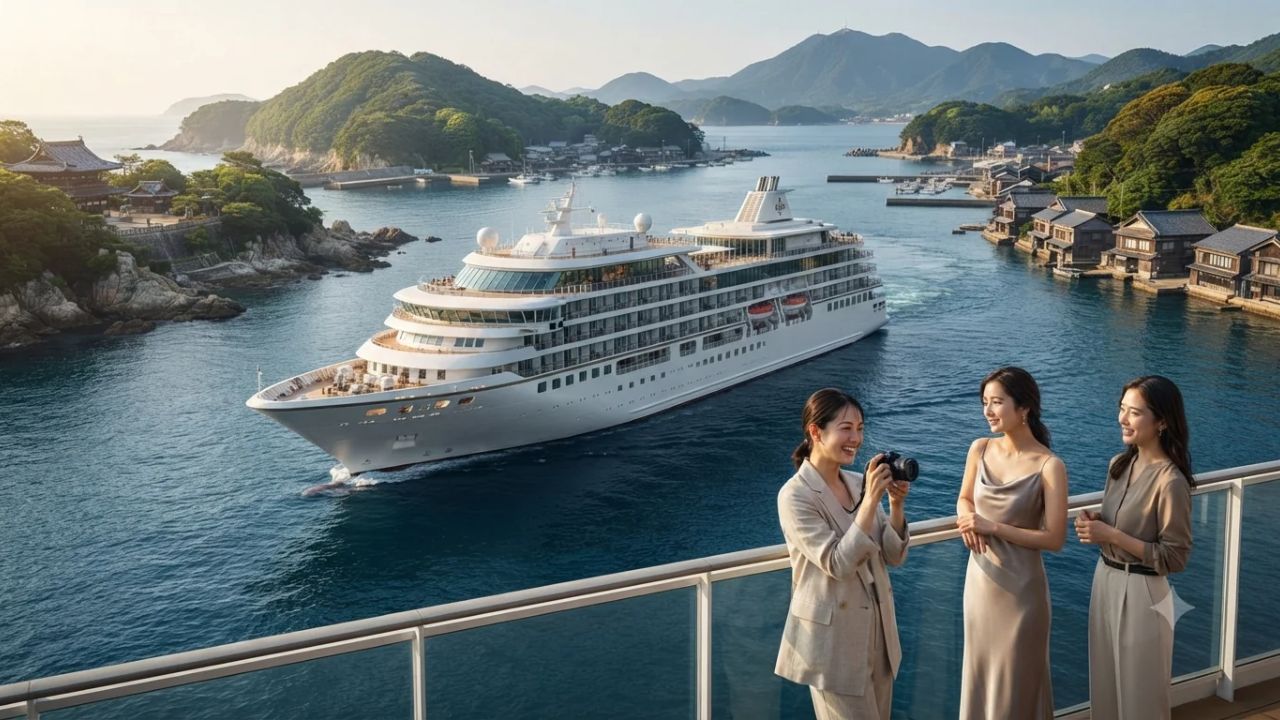
Japan’s maritime tourism sector is experiencing a structural transformation as Mitsui Ocean Cruises expands its boutique luxury operations, deploying the newly commissioned Mitsui Ocean Sakura to connect international travelers with remote archipelagos, historic coastal settlements, and secondary regional harbors unreachable by conventional mega-ships. Commencing full commercial service following the retirement of the historic Nippon Maru, the 458-passenger, all-suite vessel anchors a strategic national drive orchestrated by the Ministry of Land, Infrastructure, Transport and Tourism (MLIT) and the Japan National Tourism Organization (JNTO) to disperse inbound tourism beyond crowded metropolitan centers. Backed by 68 newly scheduled voyages for 2027, dedicated overseas sales representations across North America and Australasia, and targeted cultural shore experiences such as exclusive Noh theatrical performances at centuries-old shrines, Japan is redefining luxury ocean travel as a catalyst for regional economic revitalization.
The luxury cruise expansion arrives as Japan recalibrates its broader national tourism strategy. While primary urban centers along the traditional Golden Route—Tokyo, Kyoto, and Osaka—manage intense visitor concentrations, regional maritime prefectures possess extraordinary cultural assets, pristine marine ecosystems, and culinary traditions that remain largely undiscovered by foreign travelers. By prioritizing nimble luxury vessels that carry hundreds rather than thousands of guests, Japanese maritime operators can navigate shallow inland channels, dock at secluded fishing communities, and deliver high-yield economic benefits directly to local businesses without straining municipal infrastructure.
========================================================================================
MITSUI OCEAN SAKURA: VESSEL SPECIFICATIONS & OPERATIONAL PROFILE
========================================================================================
Vessel Name                      Mitsui Ocean Sakura (三井オーシャンサクラ)
Operating Brand                  Mitsui Ocean Cruises (MOL Cruises / Mitsui O.S.K. Lines)
Commercial Debut                 September 19, 2026 (Succeeding the retired Nippon Maru)
Sister Ship                      Mitsui Ocean Fuji (Entered Service Late 2024 / Early 2025)
Gross Tonnage (GT)               32,477 Gross Tons
Overall Length (LOA)             198.15 Meters (650 Feet)
Maximum Beam (Width)             25.60 Meters (84 Feet)
Draft Depth                      6.40 Meters (Enables access to shallow secondary ports)
Passenger Capacity               458 Guests (Double Occupancy Basis)
Total Suite Inventory            229 Luxury Suites (100% Ocean View / Private Balconies)
Crew Complement                  Approx. 330 Officers and Hospitality Staff
Crew-to-Passenger Ratio          1 : 1.38 (Ultra-Luxury Hospitality Benchmark)
Onboard Venues                   5 Fine Dining Restaurants, 3 Lounges/Bars, Wellness Spa,
                                 Twin Swimming Pools, Fitness Center, Traditional Tea Room
Primary Target Geographies       United States, Canada, Australia, New Zealand, Taiwan, Hong Kong
========================================================================================
Source: Mitsui Ocean Cruises Fleet Specifications & MLIT Maritime Registry (2026).
========================================================================================
The Paradigm Shift: From Mega-Ships to Intimate Island Exploration
For decades, international cruise tourism in East Asia was characterized by massive, 4,000-to-6,000-passenger mega-liners plying high-density routes between Shanghai, Busan, Fukuoka, and Yokohama. While economically efficient for mass transit, these oversized vessels impose acute logistical bottlenecks on destination ports, requiring deep-water berths, specialized terminal facilities, and fleets of diesel tour buses that concentrate thousands of tourists in single locations simultaneously.
The deployment of the Mitsui Ocean Sakura signals a decisive break from this mass-market paradigm. Operating with a modest length of 198.15 meters and a shallow draft of 6.4 meters, the vessel can dock at smaller municipal wharves and sheltered bays where mega-ships cannot physically enter.
========================================================================================
COMPARATIVE MARITIME IMPACT: BOUTIQUE LUXURY VS. CONTEMPORARY MEGA-CRUISE
========================================================================================
Operational Dimension    Mitsui Ocean Sakura (Boutique) Contemporary Mega-Liner
----------------------------------------------------------------------------------------
Passenger Capacity       458 Guests                     4,500 – 6,500 Guests
Gross Tonnage            32,477 GT                      150,000 – 230,000 GT
Port Accessibility       Over 120 Japanese Harbors      Fewer than 15 Deep-Water Mega-Ports
Terminal Logistics       Standard Municipal Pier        Specialized Deep-Water Mega-Berths
Shore Disembarkation     Walking pace, small groups     Thousands moving on scheduled bus waves
Local Community FootprintDispersed, high-yield spending Intense local crowding, traffic jams
Per-Passenger Shore Spend¥22,000 – ¥35,000+ per port   ¥8,000 – ¥12,000 per port
Primary Itinerary Style  Regional islands, cultural ritesStandard Golden Route city loops
========================================================================================
This structural agility allows Mitsui Ocean Cruises to construct itineraries that bypass industrial container terminals in favor of authentic cultural settings. Passengers step directly off the ship into secluded island fishing villages, rural sake-brewing districts, and protected coastal reserves. By maintaining a 1:1.38 crew-to-passenger ratio, the vessel guarantees personalized Japanese hospitality (omotenashi), appealing directly to affluent international travelers seeking depth and cultural connection rather than onboard waterparks and casino floors.
Vessel Architecture: Deconstructing the Mitsui Ocean Sakura
The physical layout and service design of the Mitsui Ocean Sakura reflect its ultra-luxury positioning. Every stateroom aboard the vessel is classified as an ocean-view suite, with the vast majority featuring private walk-out verandas overlooking the ocean.
========================================================================================
ACCOMMODATION TIERS & ONBOARD SUITE HIERARCHY
========================================================================================
Suite Category           Area (Sq Meters)   Private Veranda    Key In-Suite Amenities
----------------------------------------------------------------------------------------
Owner's Grand Suites     85 – 98 sqm        Wrap-Around BalconyDedicated Butler, Private Dining Salon
Signature Ocean Suites   65 – 72 sqm        Full Private Deck  Whirlpool Tub, Walk-In Wardrobe
Veranda Suites           34 – 42 sqm        Private Balcony    Separate Living Area, Marble Bath
Ocean View Suites        28 – 32 sqm        Panoramic Window   Writing Desk, Luxury Bedding
========================================================================================
Culinary Program and Gastronomic Identity
Dining serves as a central pillar of the onboard experience. Rather than a solitary grand banquet room, the ship features five distinct dining venues that highlight Japan's regional culinary heritage alongside international fine dining:
- Sakura Kaiseki Salon: An intimate restaurant featuring seasonal multi-course kaiseki dinners curated by master chefs, using fresh seafood and vegetables provisioned daily at destination ports.
- The Ocean Grill: Contemporary French and continental cuisine paired with boutique wines from Hokkaido, Nagano, and Yamanashi vineyards.
- Sushi Ginza: An authentic sushi counter serving omakase menus highlighting day-boat catches sourced directly from local prefectural fish markets along the cruise route.
- The Grand Dining Room: Open-seating European-Japanese fusion breakfast, lunch, and dinner.
- The Terrace Café: Casual al fresco breakfast and lunch overlooking the ship’s wake.
========================================================================================
ONBOARD WELLNESS & CULTURAL FACILITIES PROFILE
========================================================================================
Facility                 Operational Focus             Key Passenger Experience
----------------------------------------------------------------------------------------
The Sakura Spa & Onsen   Traditional Hydrotherapy      Cedar soaking tubs, shiatsu therapy
Tea Ceremony Pavilion    Chado Master Classes          Urasenke-style green tea rituals
Observatory Lounge       Panoramic Ocean Vistas        Afternoon high tea, evening chamber music
Library & Reading Room   Curated Literature & Maps     Japanese history, art, and maritime archives
Fitness & Motion Studio  Cardiovascular & Movement     Technogym equipment, morning yoga on deck
Outdoor Pool & WhirlpoolsOpen-Air Relaxation           Dual heated whirlpools, teak sun loungers
========================================================================================
Chronology: The Evolution of Mitsui O.S.K. Passenger Lines
Mitsui O.S.K. Lines (MOL) holds one of the longest and most prestigious maritime histories in East Asia, dating back to nineteenth-century passenger and cargo transit across the Pacific. The launch of the Mitsui Ocean Sakura marks the beginning of a modern chapter following decades of service by its pioneering predecessors.
========================================================================================
HISTORICAL TIMELINE: THE EVOLUTION OF MITSUI LUXURY PASSENGER CRUISING
========================================================================================
Year   Milestone Event                           Strategic Industry Significance
----------------------------------------------------------------------------------------
1989   Mitsui Passenger Line Modernized          Launch of the celebrated Oceanic Grace yacht
1990   Commissioning of the Nippon Maru          Establishes standard for domestic Japanese cruising
2001   Extensive Refit of Nippon Maru            Adds balcony suites to meet shifting luxury tastes
2023   MOL Announces Major Luxury Rebranding     Acquires Seabourn vessels to form modern fleet
2024   Mitsui Ocean Fuji Enters Service          First luxury all-suite vessel launches
2026   Retirement of Nippon Maru (May)           Concludes 36 years of historic passenger service
2026   Mitsui Ocean Sakura Maiden Voyage (Sept)  Commercial debut initiates aggressive global marketing
2027   68 New Regional Itineraries Scheduled     Comprehensive expansion across remote archipelagos
========================================================================================
The retirement of the Nippon Maru in May 2026 closed a 36-year era in Japanese passenger shipping. While beloved by generations of domestic Japanese travelers, the ship’s age, cabin layouts, and Japanese-language-only systems limited its ability to compete in the contemporary global luxury market. By acquiring and completely re-engineering modern all-suite vessels, Mitsui Ocean Cruises has created an international-standard fleet capable of serving discerning Western and Asian travelers while maintaining authentic Japanese cultural identity.
Unlocking Remote Archipelagos: The 2027 Itinerary Architecture
For the 2027 sailing season, Mitsui Ocean Cruises has formulated an ambitious deployment schedule consisting of 68 total voyages across its two ships, with the Mitsui Ocean Sakura responsible for 61 individual itineraries.
========================================================================================
MITSUI OCEAN SAKURA: 2027 ITINERARY BREAKDOWN BY DURATION & REGION
========================================================================================
Voyage Classification    Duration Category  Scheduled Sailings Geographic Focus
----------------------------------------------------------------------------------------
Short Getaways           1 to 3 Nights      36 Sailings        Tokyo Bay, Seto Inland Sea, Izu
Regional Explorations    4 to 7 Nights      18 Sailings        Kyushu, Okinawa Islands, Sea of Japan
Grand Archipelagic Tours 8 to 14 Nights     7 Sailings         Ogasawara, Hokkaido Circumnavigation
Total Planned DeploymentsFull Year 2027     61 Sailings        Nationwide Japanese Archipelago
========================================================================================
The Strategy of Short 1-to-3 Night Getaways
A significant commercial innovation in the 2027 schedule is the introduction of 36 short voyages lasting between one and three nights. Historically, luxury cruise operators focused almost exclusively on extended 10-to-14-day itineraries. However, modern international travelers visiting Japan typically allocate their vacations across high-speed Shinkansen bullet trains, luxury ryokans, and urban hotels.
By offering short 2-night and 3-night coastal sailings departing from accessible ports like Yokohama, Kobe, or Hakodate, Mitsui enables foreign visitors to integrate a luxury cruise component into a broader terrestrial vacation itinerary. A traveler can spend three days in Tokyo, board the Mitsui Ocean Sakura for a 48-hour journey through the Izu Peninsula and Suruga Bay, disembark near Kyoto, and continue their journey by rail.
========================================================================================
FEATURED 2027 VOYAGES & REMOTE ISLAND DESTINATIONS
========================================================================================
Voyage Route Name        Key Remote Port Calls         Distinctive Cultural & Nature Highlights
----------------------------------------------------------------------------------------
Ogasawara Island Odyssey Chichijima & Hahajima         Subtropical UNESCO World Heritage waters,
                                                       whale watching, endemic botanical habitats
Seto Inland Sea Voyage   Shodoshima, Naoshima, TomonouraArt island architecture, artisanal soy sauce
                                                       breweries, historic Edo-period merchant houses
Ryukyu Archipelago Trail Miyakojima, Ishigaki, Kerama  Coral reef snorkeling, traditional Sanshin
                                                       music, Ryukyuan imperial heritage sites
Hokkaido Wilderness Loop Rausu, Rishiri, Rebun         Shiretoko UNESCO brown bear reserves,
                                                       alpine wild flora, sea urchin harvesting
Kii Peninsula Expedition Hidaka, Shingu, Toba          Kumano Kodo pilgrimage trails, Dojoji Noh,
                                                       Mikimoto pearl farming coastal history
========================================================================================
Immersive Cultural Encounters: Hidaka Port and the Sacred Dojoji Noh Performance
A defining characteristic of Mitsui Ocean Cruises’ excursion philosophy is the emphasis on deep cultural immersion rather than superficial sightseeing. Unlike mass-market shore tours that briefly stop at souvenir markets, Mitsui Ocean Sakura itineraries integrate exclusive access to sacred cultural institutions.
A prime illustration of this strategy is the planned May 2027 voyage featuring Hidaka Port in Wakayama Prefecture. Located on the Kii Peninsula along the Pacific coast, Hidaka is an industrial-agricultural port that rarely receives international cruise traffic.
========================================================================================
CASE STUDY: MAY 2027 HIDAKA PORT IMMERSIVE ITINERARY
========================================================================================
Itinerary Component      Operational Detail & Cultural Significance
----------------------------------------------------------------------------------------
Port of Call             Hidaka Port, Wakayama Prefecture (Overnight Docking)
Featured Landmark        Dojoji Temple (道成寺) - Founded 701 AD (Oldest temple in Wakayama)
Cultural Narrative       The Legend of Anchin and Kiyohime (Classic Japanese folklore)
Exclusive Event          Private, Evening Noh Theatrical Performance within Temple Grounds
Artistic Lineage         Kanze or Hosho School of Noh Masters performing masked classical drama
Daytime Shore Tours      Kumano Kodo ancient pilgrimage trail hiking, Yuasa soy sauce village
Economic Beneficiaries   Local temple caretakers, regional sake producers, bus operators,
                         artisanal lacquerware crafters in Kainan, local fishing cooperatives
========================================================================================
Dojoji Temple, established in 701 AD, is the oldest temple in Wakayama Prefecture and the historic setting of the legendary dramatic tale of Anchin and Kiyohime—a tragic story of love, betrayal, and transformation that forms a cornerstone of classical Japanese Noh, Kabuki, and Bunraku theater.
During the May 2027 sailing, the ship will dock overnight at Hidaka Port. In the evening, passengers will be transported to Dojoji Temple for an exclusive, private performance of classical Noh theater enacted by master performers on the temple’s sacred grounds. Illuminated by traditional torches and set against national treasure wooden architecture, the performance offers international guests an intimate encounter with centuries-old spiritual drama that is virtually impossible for independent tourists to organize.
Government Strategy: MLIT’s ¥33,000 Spending Blueprint
The expansion of boutique luxury cruising aligns directly with aggressive policy targets established by Japan’s central government. Data released by the Ministry of Land, Infrastructure, Transport and Tourism (MLIT) underscores the rapid rebound and structural maturation of Japan’s cruise sector:
========================================================================================
JAPAN CRUISE SECTOR NATIONAL PERFORMANCE METRICS & 2030 TARGETS
========================================================================================
Statistical Metric               2024 Actual      2025 Actual      2030 Government Target
----------------------------------------------------------------------------------------
Inbound Cruise Passengers        ~1.48 Million    ~1.77 Million    2.50+ Million
Year-on-Year Growth Rate         Baseline Year    +19.6% Increase  Steady Annual Expansion
Total Annual Port Calls          2,680 Calls      3,117 Calls      4,000+ Port Calls
Average Per-Passenger Spend/Port ~¥18,500         ~¥22,000         ¥33,000 (+50% Growth)
Regional Harbor Utilization Rate 18% of Ports     27% of Ports     45% of Eligible Ports
Total Cruise Shore Economic Yield¥27.4 Billion    ¥38.9 Billion    ¥82.5+ Billion
========================================================================================
Source: Japan Ministry of Land, Infrastructure, Transport and Tourism (MLIT) Research (2026).
========================================================================================
The Shore Dwell-Time Formula: The ¥900 per Hour Multiplier
MLIT economic studies conducted across Japanese regional ports uncovered a vital correlation between the length of time a cruise ship stays in port and the financial benefits realized by the local community:
- Every additional hour a cruise passenger spends ashore generates approximately ¥900 in incremental retail, dining, and transport spending.
- Conventional mega-ships typically dock for 6 to 8 hours during daytime windows, limiting passenger activity to rushed bus tours and basic souvenir purchases.
- Luxury vessels like the Mitsui Ocean Sakura frequently execute 12-to-24-hour stays or overnight port calls. A 16-hour stay allows passengers to enjoy lunch in local eateries, participate in afternoon craft workshops, and dine at upscale regional restaurants for dinner, dramatically expanding local economic impact.
========================================================================================
CORRELATION: SHORE TIME VS. PER-PASSENGER LOCAL ECONOMIC IMPACT
========================================================================================
Port Stay Duration       Estimated Local Spend  Typical Activity Profile
----------------------------------------------------------------------------------------
6 Hours (Standard Call)  ¥14,000 – ¥16,000      Quick bus tour, gift shop purchase
10 Hours (Extended Call) ¥18,000 – ¥22,000      Local lunch, museum entry, taxi hire
14 Hours (Evening Call)  ¥24,000 – ¥28,000      Afternoon craft workshop, local izakaya dinner
24 Hours (Overnight Call)¥32,000 – ¥45,000+     Multi-meal dining, night cultural events, bars
========================================================================================
To support this model, the Japanese government approved 51 dedicated regional cruise tourism projects across two funding tranches throughout 2026. These subsidies assist local prefectures in training multilingual tour guides, upgrading Wi-Fi infrastructure at rural docks, creating hands-on cultural workshops, and installing contactless mobile payment terminals in traditional village shops.
International Commercial Pivot: Targeting North America and Australasia
Historically, Japanese domestic cruise lines operated almost exclusively for Japanese retirees, with marketing materials, onboard entertainment, and booking engines available only in Japanese. To justify the substantial capital investments in new tonnage, Mitsui Ocean Cruises has undertaken a complete commercial reorientation.
The company has set a firm strategic objective: raise the proportion of international travelers across its fleet to 30 percent over the next three seasons.
========================================================================================
MITSUI OCEAN CRUISES: INTERNATIONAL SALES REPRESENTATION NETWORK
========================================================================================
Target Market Territory  Sales Representation Channel  Strategic Focus & Passenger Profile
----------------------------------------------------------------------------------------
United States & Canada   Appointed Luxury Cruise GSAs  Affluent retirees, multi-generational families
Australia & New Zealand  Dedicated Marine Agency Reps  Adventure luxury cruisers, nature enthusiasts
Taiwan & Hong Kong       Direct Luxury Travel Partners Repeat regional travelers, food connoisseurs
United Kingdom & Europe  European Boutique Wholesalers Cultural travelers, heritage enthusiasts
========================================================================================
To achieve this goal, Mitsui has established official General Sales Agencies (GSAs) and commercial representation agreements across six key international markets: the United States, Canada, Australia, New Zealand, Taiwan, and Hong Kong.
These overseas sales partners integrate Mitsui’s inventories into luxury travel advisor consortia—such as Virtuoso, Signature Travel Network, and American Express Fine Hotels & Resorts—enabling travel advisors in New York, Sydney, and Vancouver to book suites, verify availability, and package air-rail-cruise itineraries using standard global distribution systems.
JNTO’s Multilingual Digital Portal
Parallel to commercial sales initiatives, the Japan National Tourism Organization (JNTO) launched a dedicated online portal in September 2026 available in English and Traditional Chinese. The platform provides comprehensive guides to Japanese-operated cruise vessels, detailing onboard facilities, etiquette guidelines, regional port maps, and curated shore excursion guides. This initiative eliminates language barriers that historically intimidated Western travelers from booking Japanese domestic cruise lines.
The Modern Japanese Luxury Maritime Landscape
The debut of the Mitsui Ocean Sakura is part of a broader, competitive renaissance across Japan's luxury cruise sector. Several operators are introducing differentiated vessels catering to distinct luxury travel segments:
========================================================================================
COMPARATIVE MATRIX: JAPAN'S CONTEMPORARY LUXURY MARITIME FLEET
========================================================================================
Vessel Name       Operating Entity   Tonnage / Capacity Key Defining Attribute
----------------------------------------------------------------------------------------
Mitsui Ocean SakuraMitsui Ocean Cruises 32,477 GT / 458 Pax All-suite boutique luxury, remote ports
Mitsui Ocean Fuji Mitsui Ocean Cruises 32,477 GT / 458 Pax Worldwide and regional ocean voyages
Asuka III         NYK Cruises        52,200 GT / 702 Pax Contemporary grand luxury, LNG-powered
Guntû             Setouchi Cruise    3,013 GT / 34 Pax   Floating ryokan, Seto Inland Sea exclusivity
SEFU (Debuting '27)Private Consortium Small Yacht Scale  Ultra-private coastal yacht charter
========================================================================================
- Asuka III (NYK Cruises): Entering commercial service in July 2025, the 52,200-gross-ton Asuka III represents Japan’s premier modern luxury liner. Powered by dual-fuel liquefied natural gas (LNG), the ship features 351 staterooms—all with private balconies—and showcases museum-grade original artwork by Japanese masters alongside fine dining restaurants overseen by Michelin-starred culinary consultants.
- Guntû: Offering an entirely distinct travel experience, Guntû operates as a floating minimalist ryokan sailing exclusively within the calm waters of the Seto Inland Sea. With only 17 wood-paneled cabins, private open-air cypress baths, and a six-seat sushi bar serving freshly caught local fish, it represents the absolute pinnacle of quiet architectural luxury.
- SEFU: Promoted by JNTO for a scheduled 2027 debut, SEFU is a boutique yacht-style vessel engineered to offer personalized coastal journeys for private groups and high-net-worth travelers seeking bespoke itineraries.
Together, these vessels provide international travelers with an unprecedented array of choices, ranging from intimate wooden floating inns to sophisticated ocean-going luxury liners.
Environmental Sustainability and Port Community Stewardship
As Japan expands regional cruise tourism, government officials and maritime operators face the critical task of balancing economic development with ecological protection and community well-being. Many of the remote archipelagos featured on Mitsui Ocean Sakura’s itineraries—such as the Ogasawara Islands and the Shiretoko Peninsula—are UNESCO World Heritage sites characterized by fragile ecosystems that cannot tolerate heavy environmental strain.
========================================================================================
ENVIRONMENTAL & SUSTAINABILITY SAFEGUARDS IN REGIONAL CRUISING
========================================================================================
Environmental Domain     Operational Standard & Technical Implementation
----------------------------------------------------------------------------------------
Marine Fuel Compliance   Utilization of low-sulfur marine gasoil (MGO) and biofuel blends
Wastewater Management    Advanced wastewater purification systems meeting MARPOL Annex IV
Shore Power Connection   Cold ironing capabilities allowing zero-emission docking at equipped piers
Waste Sorting Protocols  Rigorous onboard recycling and zero-single-use-plastic policies
Visitor Quota Controls   Capped shore group sizes (max 20 guests per naturalist guide on islands)
Heritage Protection FundsPort levies directly reinvested into regional walking trail maintenance
========================================================================================
Because Mitsui Ocean Sakura carries only 458 passengers, its ecological footprint is a fraction of a mass-market liner. On sensitive islands like Chichijima in the Ogasawara chain, shore excursions are divided into small, guided walking groups accompanied by licensed eco-rangers to prevent trail erosion and protect endangered flora and fauna.
In addition, Mitsui Ocean Cruises collaborates closely with municipal island councils, coordinating arrival schedules to ensure cruise calls do not overwhelm local ferry services, water reserves, or medical clinics. This cooperative framework ensures that cruise tourism remains welcome and sustainable over the long term.
Comprehensive Frequently Asked Questions
What is the Mitsui Ocean Sakura?
The Mitsui Ocean Sakura is an ultra-luxury boutique cruise ship operated by Mitsui Ocean Cruises (a division of Mitsui O.S.K. Lines). Measuring 198.15 meters in length and 32,477 gross tons, the all-suite vessel accommodates up to 458 passengers across 229 staterooms, providing personalized service, authentic Japanese hospitality, and access to secondary regional ports.
When did the Mitsui Ocean Sakura enter commercial service?
The vessel commenced commercial passenger operations on September 19, 2026, succeeding the historic Nippon Maru, which was retired in May 2026 after 36 years of service.
Why can the Mitsui Ocean Sakura access ports that mega-ships cannot?
With an overall length under 200 meters and a shallow draft of just 6.4 meters, the ship can navigate shallow channels and dock at municipal wharves and small fishing harbors that cannot accommodate massive 150,000+ gross ton liners.
How many voyages are planned for the 2027 cruise season?
Mitsui Ocean Cruises has announced 68 total itineraries for 2027 across its fleet, with 61 voyages assigned to the Mitsui Ocean Sakura. These include 36 short getaways lasting between one and three nights.
What are some of the key remote destinations featured on its itineraries?
Featured destinations include the subtropical Ogasawara Islands (Chichijima and Hahajima), the Seto Inland Sea art islands, the Yaeyama and Kerama archipelagos in Okinawa, the Shiretoko Peninsula and Rishiri Island in Hokkaido, and the Kii Peninsula in Wakayama Prefecture.
What cultural experience is planned for Hidaka Port in May 2027?
During an overnight stay at Hidaka Port in Wakayama, guests will attend an exclusive evening performance of classical Noh theater within the historic grounds of Dojoji Temple, founded in 701 AD.
What is the Japanese government’s spending target for cruise passengers?
Japan’s Ministry of Land, Infrastructure, Transport and Tourism (MLIT) aims to increase average cruise passenger spending at each port call from approximately ¥22,000 in 2025 to ¥33,000 by 2030, representing a 50 percent increase.
How does the length of a port stay affect local spending?
MLIT research indicates that each additional hour a cruise passenger spends ashore generates approximately ¥900 in incremental spending on dining, transportation, crafts, and retail goods.
What international markets is Mitsui Ocean Cruises targeting?
Mitsui has appointed dedicated luxury sales representatives in the United States, Canada, Australia, New Zealand, Taiwan, and Hong Kong, aiming to increase the proportion of international guests to 30 percent of its total manifest.
How does the Mitsui Ocean Sakura compare to other Japanese luxury ships?
While NYK Cruises' Asuka III (52,200 GT, 702 passengers) offers larger-scale luxury with dual-fuel LNG propulsion, and Guntû operates as a 17-cabin floating ryokan in the Seto Inland Sea, Mitsui Ocean Sakura provides an optimal balance: an all-suite ocean-going vessel capable of circumnavigating the entire archipelago and docking at intimate regional harbors.
Strategic Outlook: Recharting Japan’s Maritime Identity in the Luxury Era
The rise of boutique luxury cruising marks an essential evolution in Japan’s inbound tourism landscape. By moving beyond high-density urban corridors and unlocking the cultural treasures of its extensive coastline, Japan is demonstrating how thoughtful maritime travel can address overtourism while breathing new economic vitality into aging rural communities.
Through the Mitsui Ocean Sakura, travelers gain access to a Japan that few foreign visitors ever experience: tranquil island ports where traditions remain vibrant, historic temples situated against forested mountains, and secluded coves where centuries of maritime craftsmanship endure. Supported by forward-looking government infrastructure investments, dedicated international sales partnerships, and an unwavering commitment to authentic cultural hospitality, Japan’s luxury cruise sector is setting a global benchmark for sustainable, high-yield regional tourism.
Related Travel Guides
- Minor Hotels Appoints Karin Kopano to Lead The Wolseley Hotel New York Ahead of Its 2027 Midtown Flagship Debut
- Malaysia Upgrades Travel Insurance Landscape as MSIG Introduces Online Booking Fraud and Medical Coverage up to RM500,000
- UK Holidaymakers Shift to Alternative Christmas Breaks in Madeira, Lapland and Rural Wales as Festive Travel Spending Tops £3.3 Billion
- Bangkok’s Song Wat Road Named World’s Coolest Street for 2026 as Heritage Meets Creative Renaissance
This article is for informational purposes. Flight routes, passenger regulations, visa rules, and transit advisories are subject to change by airlines and aviation authorities. Readers are advised to verify schedules and travel documentation with relevant carriers and border agencies before departure.
Related Stories
Riding the New SNCF TGV M: A 2027 Guide to Paris to Marseille High-Speed Rail
Royal Caribbean’s Legend of the Seas Makes US Debut at Port Everglades: Icon Class Mega-Ship Launches Fort Lauderdale Caribbean Season