
Japan Unveils Kyushu Travel Subsidies Up to 60% Launching October 1, 2026
Starting October 1, 2026, Japan launches massive Kyushu travel discounts up to 60%, offering subsidies up to ¥35,000 per person across seven prefectures.

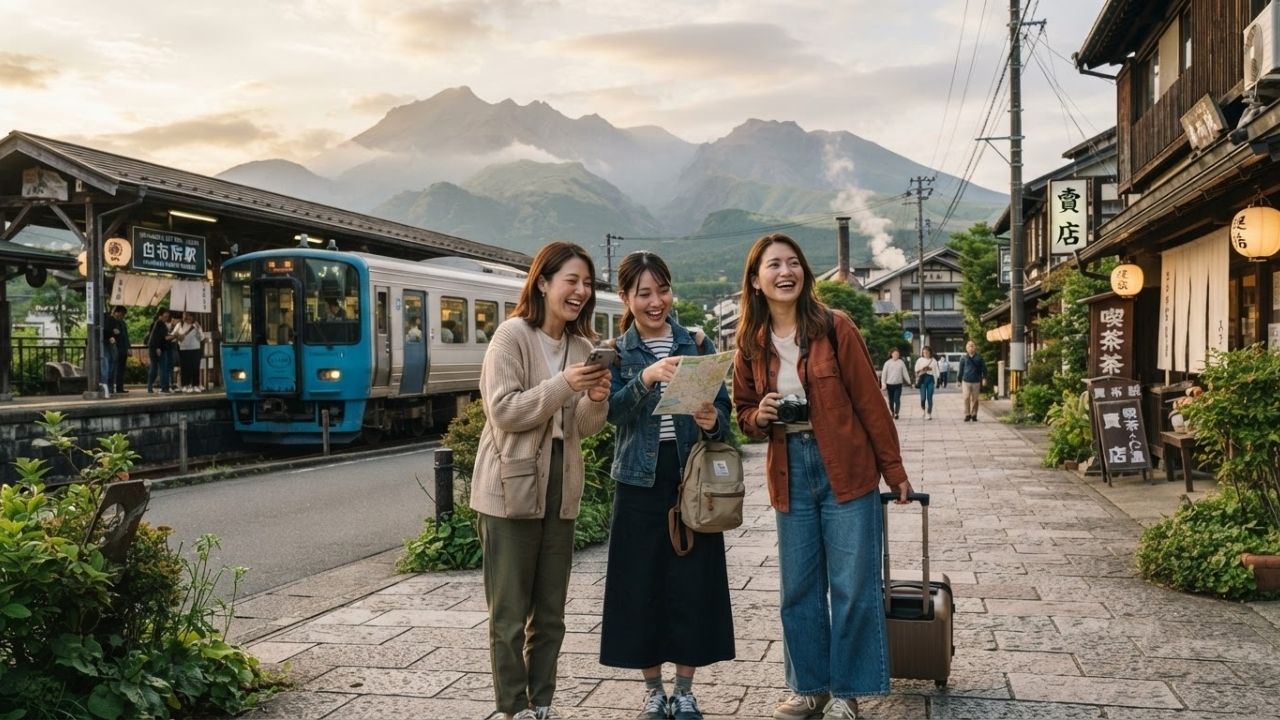
Image generated by AI
Japan has launched a major regional travel support campaign across the southwestern island of Kyushu. Effective October 1, 2026, the policy provides direct travel discounts of up to 60 percent and financial subsidies capped at ¥35,000 per person to divert international tourists away from overcrowded metropolitan corridors.
Prefectural Discount Tiers and Monetary Subsidy Caps
[FUKUOKA, Japan] — Tourism authorities in Japan have finalized a multi-tiered promotional structure across all seven prefectures of Kyushu. Designed to rebalance visitor traffic beyond the traditional Tokyo–Kyoto–Osaka transit route, the program delivers substantial cost reductions for individual travelers, hotel guests, and tour planners.
The promotional campaign establishes two primary discount tiers based on regional economic need:
- 60 Percent Discount Tier: Applied across Kumamoto and Kagoshima prefectures to accelerate tourism recovery in central volcanic and southern coastal zones.
- 50 Percent Discount Tier: Implemented across Fukuoka, Oita, Nagasaki, Saga, and Miyazaki prefectures.
To ensure equitable distribution of public funds, official policy guidelines establish strict monetary caps per traveler:
- Single-Night Lodging Stays: Discounts are capped at ¥20,000 (approximately $130) per person for standalone hotel or ryokan bookings.
- Multi-Day Regional Travel Packages: Subsidies incorporating regional transit arrangements are capped at ¥30,000 (approximately $190) per guest.
- Multi-Prefecture Tour Packages: Comprehensive itineraries spanning multiple Kyushu prefectures receive maximum support capped at ¥35,000 (approximately $220) per traveler.
Individual prefectural administrations will manage digital booking portals and reservation windows independently, with official rollout beginning October 1, 2026.
¥180 Billion Economic Impact, Flight Slot Allocations, and Shinkansen Transit
Economic modeling indicates that the Kyushu subsidy campaign will generate over ¥180 billion (approximately $1.2 billion) in direct traveler expenditure across western Japan. Analytical forecasts project that for every ¥1,000 in public discount funds distributed, local markets will generate ¥3,800 in private consumer transactions across regional dining, artisanal crafts, and transit providers.
The economic initiative is expected to transform regional tourism metrics:
- Daily Visitor Spend: Daily foreign traveler expenditure is projected to rise from the regional baseline of ¥28,000 up to ¥42,000.
- Length of Stay: Average foreign visitor stay durations are expected to expand from 2.8 days to 6.5 days per trip.
- Employment Growth: The hospitality sector will expand employment by 14.5 percent, creating approximately 22,000 new permanent and seasonal jobs.
- Aviation Slot Expansion: International airports in Fukuoka and Kagoshima will increase direct overseas flight slot allocations by 32 percent in Q4 2026, adding 85,000 additional monthly seat capacities.
- Air-Rail Integration: Transit connections between airport terminals and high-speed Kyushu Shinkansen bullet train lines will be streamlined to under 45 minutes, raising airline load factors from 68 percent to over 88 percent.
The table below outlines discount tiers, subsidy caps, and regional destination highlights across all seven Kyushu prefectures:
| Kyushu Prefecture | Official Discount Tier | Max Package Subsidy Cap | Primary Regional Destinations & Attractions |
|---|---|---|---|
| Kumamoto | Up to 60% Discount | ¥35,000 ($220) Per Person | Kumamoto Castle, Mt. Aso active volcano crater |
| Kagoshima | Up to 60% Discount | ¥35,000 ($220) Per Person | Sakurajima volcano, Kirishima hot springs & beaches |
| Fukuoka | Up to 50% Discount | ¥35,000 ($220) Per Person | Fukuoka urban gateway, Yatai street-food stalls |
| Oita | Up to 50% Discount | ¥35,000 ($220) Per Person | Beppu & Yufuin historic onsen hot spring resorts |
| Nagasaki | Up to 50% Discount | ¥35,000 ($220) Per Person | Historic harbor district, Glover Garden & Peace Park |
| Saga | Up to 50% Discount | ¥35,000 ($220) Per Person | Arita & Imari ceramics, Takeo Onsen historic baths |
| Miyazaki | Up to 50% Discount | ¥35,000 ($220) Per Person | Takachiho Gorge, Aoshima Island & coastal scenery |
Onsen Ryokan Revitalization, Heritage Restoration, and Eco-Management
The influx of capital provides direct support to traditional Japanese lodging networks and historic cultural preservation. In Oita prefecture, traditional ryokan inns across Beppu and Yufuin project international guest occupancy rates to rise from historical baselines of 24 percent to 58 percent. High-end wellness resorts project Average Daily Rates (ADR) to stabilize around ¥48,000 ($310) per room.
To support heritage preservation, a dedicated 2 percent municipal accommodation tax integrated into subsidized stays is projected to generate ¥1.2 billion annually for ongoing structural restoration at Kumamoto Castle.
Environmental management forms a central pillar of the initiative:
- Traffic Diversion: The campaign aims to redirect 18 to 22 percent of peak-season international travelers away from overcrowded corridors in Tokyo and Kyoto toward rural Kyushu.
- Density Control: Destination density will be capped at a sustainable 150 to 250 visitors per square kilometer, compared to metropolitan density levels exceeding 1,200 visitors per square kilometer.
- Zero-Emission Transit: Zero-emission electric shuttle networks will operate across Mt. Aso and Beppu, reducing transit emissions by 27 percent, supported by a ¥4.5 billion municipal waste management upgrade across Oita and Miyazaki.
- Digital Infrastructure: Merchants are expanding digital payment systems to achieve 95 percent contactless readiness by October 1, 2026. Real-time AI translation hubs supporting 14 languages will deploy across 3,500 venues, while 98 percent public Wi-Fi coverage is being established across rural transit routes.
The table below summarizes key economic, aviation, environmental, and infrastructure targets under the Kyushu campaign:
| Target Performance Area | Baseline Historical Metric | Projected Campaign Metric | Strategic Tourism & Economic Impact |
|---|---|---|---|
| Direct Economic Output | Standard Regional Spend | ¥180 Billion ($1.2 Billion) | Stimulates ¥3,800 private spend per ¥1,000 public fund |
| Daily Foreign Spend | ¥28,000 Per Person / Day | ¥42,000 Per Person / Day | Driven by curated multi-prefecture tour packages |
| Average Length of Stay | 2.8 Days | 6.5 Days | Shifts travel behavior toward extended regional stays |
| Regional Job Creation | Baseline Hospitality Workforce | +14.5% Growth (22,000 Jobs) | Expands permanent & seasonal hospitality employment |
| Airport Flight Slots | Baseline Q4 Flight Slots | +32% Slot Allocation (+85k seats) | Direct overseas flights to Fukuoka & Kagoshima |
| Ryokan Occupancy (Onsen) | 24% International Occupancy | 58% International Occupancy | Revitalizes traditional inn networks in Beppu & Yufuin |
| Over-Tourism Diversion | Concentrated in Tokyo/Kyoto | 18% to 22% Traffic Shift | Caps regional density at 150–250 visitors per km² |
| Contactless Readiness | 62% Rural Merchant Access | 95% Contactless Readiness | Modernizes regional digital payment infrastructure |
Why This Matters for Passengers and Japan-Bound Explorers
For travelers planning a trip to Japan, the October 1, 2026 launch of the Kyushu subsidy program offers an affordable way to experience authentic Japanese culture. By taking advantage of 50 to 60 percent travel discounts and subsidies up to ¥35,000 per person, visitors can skip overcrowded lines in Tokyo or Kyoto and explore Mount Aso, hot springs in Beppu, and street-food stalls in Fukuoka at a fraction of standard costs.
Frequently Asked Questions
Which Japanese prefectures qualify for the 60 percent travel discount starting October 1, 2026?
Kumamoto and Kagoshima prefectures qualify for the maximum 60 percent travel discount tier, while Fukuoka, Oita, Nagasaki, Saga, and Miyazaki offer 50 percent support discounts.
What are the maximum monetary subsidy caps per traveler under the Kyushu campaign?
Subsidy caps are set at ¥20,000 ($130) per person for single-night lodging, ¥30,000 ($190) for multi-day travel packages with transport, and ¥35,000 ($220) for comprehensive multi-prefecture tour packages.
How do travelers access the Kyushu travel discounts?
Beginning October 1, 2026, international travelers and tour operators can access campaign discounts through official prefectural digital reservation portals and participating hotel booking platforms.
Related Travel Guides
Disclaimer
This article is for informational and educational purposes only. It does not constitute legal, financial, or professional advice. While we strive to provide accurate and up-to-date information, travel policies, regulations, and conditions change rapidly. Always verify information with official sources before making travel decisions. Nomad Lawyer makes no representations about the accuracy, reliability, completeness, or suitability of the information provided. Readers should consult qualified professionals for advice specific to their circumstances. The views expressed in this article are those of the author and do not necessarily reflect the views of Nomad Lawyer.
Raushan Kumar
Founder & Lead Developer
Full-stack developer with 11+ years of experience and a passionate traveller. Raushan built Nomad Lawyer from the ground up with a vision to create the best travel and law experience on the web.
Learn more about our team →