
Japan's Kuroneko Cargo Aircraft Service to End in June 2027 as JAL and Yamato Pivot Domestic Logistics
JAL, Spring Japan, and Yamato Holdings will retire their three Airbus A321P2F Kuroneko freighters by June 2027, shifting domestic cargo to passenger belly holds.

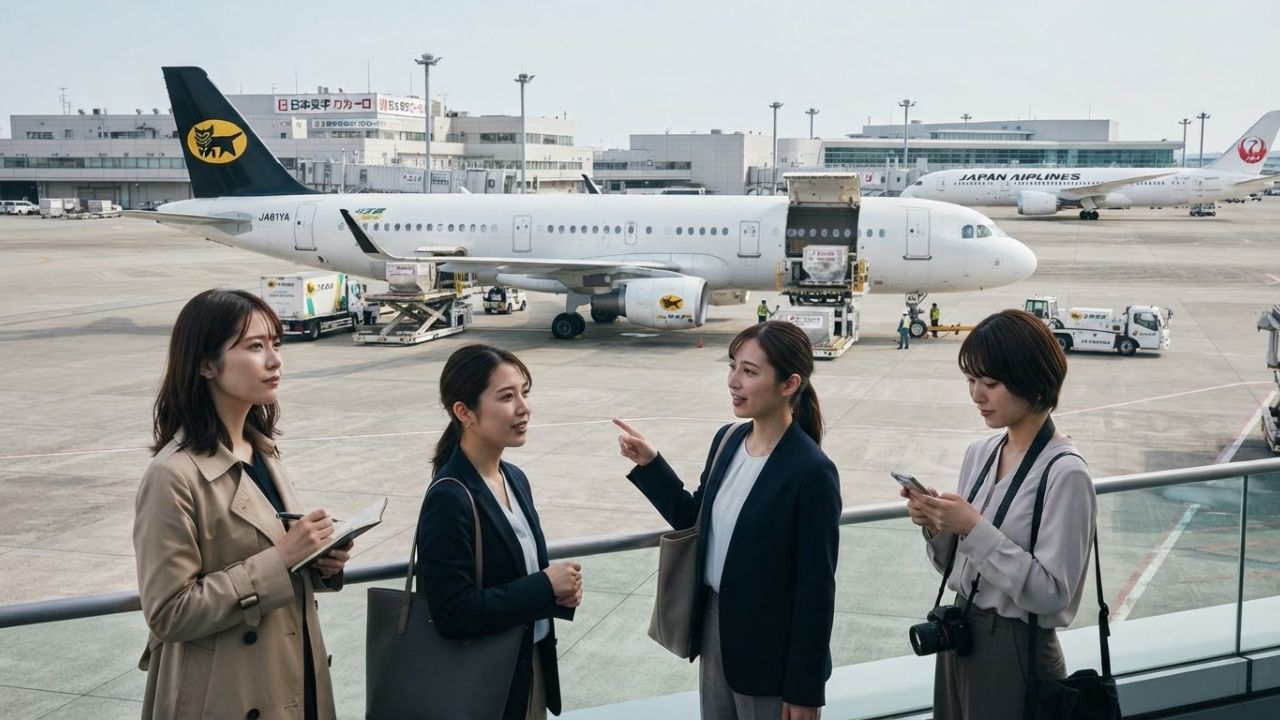
Image generated by AI
Japan Airlines, Spring Japan, and Yamato Holdings will terminate their dedicated "Kuroneko" Airbus A321-200P2F cargo flight service by June 2027, shifting domestic freight back into scheduled passenger aircraft belly holds amid high jet fuel costs and yen depreciation.
The Evolution of Japan’s Dedicated Air Freight Experiment
In response to acute structural changes in domestic surface transport, Japan's largest parcel delivery firm and its flag carrier initiated a pioneering aviation venture. However, economic realities have prompted a strategic realignment. On September 4, 2026, Japan Airlines (JAL), low-cost subsidiary Spring Japan, and logistics titan Yamato Holdings announced that operations of their dedicated "Kuroneko" cargo-only aircraft will formally conclude by June 2027.
The dedicated air cargo initiative commenced in April 2024, designed specifically to counteract Japan’s "2024 logistics problem"—a shortage of long-haul truck drivers triggered by legal caps on driver overtime hours. To build an aerial bypass across the Japanese archipelago, the partnership introduced a specialized fleet of three converted Airbus A321-200P2F (Passenger-to-Freighter) aircraft.
While the distinctive grey twin-engine jets successfully carried express parcels between Tokyo, Hokkaido, Kyushu, and Okinawa, sustained operating cost pressures have made standalone freighter operations economically unviable. Following the phase-out in mid-2027, the companies will pivot to a more cost-effective model, utilizing the ample belly-hold cargo space of JAL’s domestic passenger fleet.
[Japan Kuroneko Cargo Aircraft Program Summary]
• Operating Alliance:      Japan Airlines (JAL), Spring Japan, Yamato Holdings
• Flight Launch Date:      April 2024
• Scheduled Termination:   By June 2027 (Fleet Retirement)
• Aircraft Model:          Airbus A321-200P2F (Passenger-to-Freighter Conversion)
• Fleet Deployment:        3 Converted Airframes
• Visual Design:           Grey fuselage, Yamato black cat nose emblem, Advance tail mark
• Future Freight Strategy: Absorption into scheduled passenger flight belly holds
| Operational Dimension | Dedicated Freighter Era (2024–2027) | Future Strategy (Post-June 2027) |
|---|---|---|
| Aircraft Platform | 3 dedicated Airbus A321-200P2F | Scheduled passenger Airbus A350, Boeing 787, 767 |
| Operating Carrier | Spring Japan (on behalf of Yamato) | JAL Group domestic network passenger flights |
| Cost Dynamics | Dedicated airframe fuel, lease & crew fees | Shared passenger network operating overhead |
| Freight Capacity | Fixed main-deck container capacity | Scalable lower-deck cargo holds on high-frequency routes |
| Primary Route Focus | Dedicated nighttime trunk cargo runs | Flexible day-and-night passenger schedules |
Economic Pressures Driving the 2027 Fleet Phase-Out
When Yamato and JAL launched the service in early 2024, the priority was securing transport capacity regardless of operating premium. Over the subsequent two years, however, the financial model encountered severe macroeconomic headwinds:
- Aviation Fuel Volatility: Elevated jet fuel prices sharply increased the cost per ton-kilometer across dedicated freighter rotations, eroding projected operating margins.
- Persistent Yen Depreciation: Aircraft lease agreements, spare parts procurement, and maintenance services priced in US dollars escalated in local currency terms due to the sustained weakness of the Japanese yen.
- Wider Price Spread with Road Transport: While road trucking faced capacity caps, the cost difference between highway transport and dedicated air freight proved substantially wider than initial feasibility models anticipated.
- Fleet Flexibility Requirements: Maintaining an isolated mini-fleet of three A321 freighters created disproportionate maintenance, crew scheduling, and standby aircraft costs for Spring Japan.
Recognizing these economic imbalances, management concluded that continuing dedicated freighter flights past June 2027 would impose unsustainable costs on domestic logistics operations.
Visual Icon of Japanese Transport: The Grey Airbus A321P2F
The three aircraft deployed in the Kuroneko program became instant favorites among aviation photographers and travelers across Japanese airports. Converted by Elbe Flugzeugwerke (EFW) from passenger Airbus A321-200ceo aircraft, the freighters featured a distinct livery:
- A sleek, all-grey fuselage reflecting modern industrial design.
- The iconic Yamato Group black cat symbol (depicting a mother cat gently carrying her kitten) displayed prominently near the aircraft nose.
- Yamato’s contemporary "Advance" corporate emblem displayed across the vertical stabilizer.
The aircraft operated time-sensitive overnight runs linking Tokyo (Haneda and Narita) with Sapporo (New Chitose), Kitakyushu, and Naha, proving that narrow-body passenger-to-freighter conversions could perform high-frequency domestic rotations reliably.
The Intersection of Air Cargo and Japanese Tourism
Although the Kuroneko aircraft carried only freight and zero commercial passengers, Yamato Transport’s logistics infrastructure is deeply intertwined with the Japanese travel experience.
Yamato operates Japan's celebrated Hands-Free Travel (Tebura Kanko) network, known colloquially as Takkyubin. This luggage delivery system allows domestic and international travelers to forward heavy suitcases, ski bags, and golf sets directly from airport arrival terminals to city hotels, or between accommodations across Tokyo, Kyoto, and regional prefectures:
- Belly-Hold Efficiency: When dedicated freighters retire in 2027, traveler suitcases forwarded via Yamato will ride in the lower cargo holds of JAL’s wide-body passenger aircraft (including Airbus A350-900s and Boeing 787s). This shared capacity provides multiple daily flight departures rather than single nightly cargo runs.
- Regional Gastronomy Distribution: Air cargo enables the ultra-fresh distribution of regional delicacies, such as morning-caught sea urchin (uni) and scallops from Hokkaido, sweet mangoes from Okinawa, and chilled wagyu beef from Miyazaki, delivering them to dining establishments across Tokyo within hours of harvest.
Local Insider Tips for Using Luggage Delivery in Japan
- Forward Bulky Bags from Narita or Haneda Directly to Your Hotel: Upon landing at Tokyo Haneda (HND) or Narita (NRT), avoid hauling large rolling suitcases onto commuter trains during rush hour. Visit the Yamato Transport (Black Cat) service counter in the arrival hall. Bags dropped before 10:30 AM can often be delivered to your hotel in central Tokyo the same evening, while standard delivery reaches Kyoto or Osaka the following morning for roughly ¥2,000 to ¥3,000 per bag.
- Ship Ski and Snowboard Gear Directly to the Slopes: If heading to ski resorts in Niseko, Hakuba, or Nozawa Onsen, ship your equipment via Yamato's dedicated Ski Takkyubin. You can collect your gear directly at the resort ski lodge or locker room, avoiding transit delays on regional bullet trains.
- Utilize Convenience Store Drop-Offs: You do not need to find a formal shipping depot to forward luggage between hotels. Almost every 7-Eleven, FamilyMart, and Lawson in Japan functions as an authorized Yamato drop-off point. Hotel front desks will also provide and help fill out the distinctive green-and-yellow shipping waybill (denpyo).
- Use Cool Takkyubin for Culinary Souvenirs: If purchasing vacuum-sealed fresh seafood at Sapporo's Nijo Market or fruit in Okinawa, request Cool Takkyubin (refrigerated or frozen delivery). Parcels travel in temperature-controlled containers inside aircraft cargo holds, ensuring products arrive in perfect condition.
- Allow One Extra Buffer Day for Remote Islands: While major trunk routes (Tokyo to Osaka or Fukuoka) offer next-day delivery, forwarding luggage to remote islands (such as Ishigaki, Miyakojima, or Yakushima) requires two full days. Pack an overnight bag with essential clothing and toiletries in your personal carry-on.
Japanese Logistics Outlook: Integrating Passenger and Freight Systems
The retirement of the Kuroneko Airbus A321P2F fleet reflects a return to pragmatic operational synergy. While dedicated freighters provided an agile emergency response to trucking regulations in 2024, the long-term future of Japanese transport lies in shared, multi-modal efficiency.
By absorbing express parcel volumes into JAL's scheduled domestic passenger network, Japan Airlines and Yamato Holdings preserve rapid inter-island connectivity while insulating operations from standalone freighter overhead. For travelers and logistics clients alike, Japan's air transport system will continue to deliver world-class punctuality, connecting remote prefectures with metropolitan hubs through a flexible, sustainable aviation network.
Frequently Asked Questions
What is the Kuroneko cargo aircraft service?
The Kuroneko cargo service is a domestic air freight operation launched in April 2024 by Japan Airlines, Spring Japan, and Yamato Holdings using three converted Airbus A321-200P2F freighters.
When will the Kuroneko cargo aircraft cease operations?
The dedicated cargo aircraft flights are scheduled to terminate operations by June 2027.
Why are JAL and Yamato retiring the cargo planes?
The decision was prompted by elevated aviation fuel costs, the continued depreciation of the Japanese yen, and a larger-than-expected price spread between road trucking and dedicated air freight.
Will the closure affect passenger flight schedules?
No. The aircraft were operated exclusively as cargo freighters and carried no commercial passengers. Passenger schedules across JAL and Spring Japan remain unaffected.
How will Yamato deliver express parcels after June 2027?
Freight and forwarded luggage will be transported using the lower-deck belly-hold cargo space of scheduled JAL Group passenger flights, alongside expanded road and rail logistics.
Related Travel Guides
Disclaimer
This article is for informational and educational purposes only. It does not constitute legal, financial, or professional advice. While we strive to provide accurate and up-to-date information, travel policies, regulations, and conditions change rapidly. Always verify information with official sources before making travel decisions. Nomad Lawyer makes no representations about the accuracy, reliability, completeness, or suitability of the information provided. Readers should consult qualified professionals for advice specific to their circumstances. The views expressed in this article are those of the author and do not necessarily reflect the views of Nomad Lawyer.
Kunal K Choudhary
Co-Founder & Contributor
A passionate traveller and tech enthusiast. Kunal contributes to the vision and growth of Nomad Lawyer, bringing fresh perspectives and driving the community forward.
Learn more about our team →