
All Nippon Airways, Japan Airlines, and Solaseed Trigger Widespread Travel Chaos as 381 Flights Suffer Severe Delays and Cancellations Across Tokyo, Osaka, and Sapporo: Latest Airline News
A highly destructive wave of severe flight delays and sudden cancellations completely fractures the Japanese aviation network, paralyzing vital domestic corridors and international gateways.

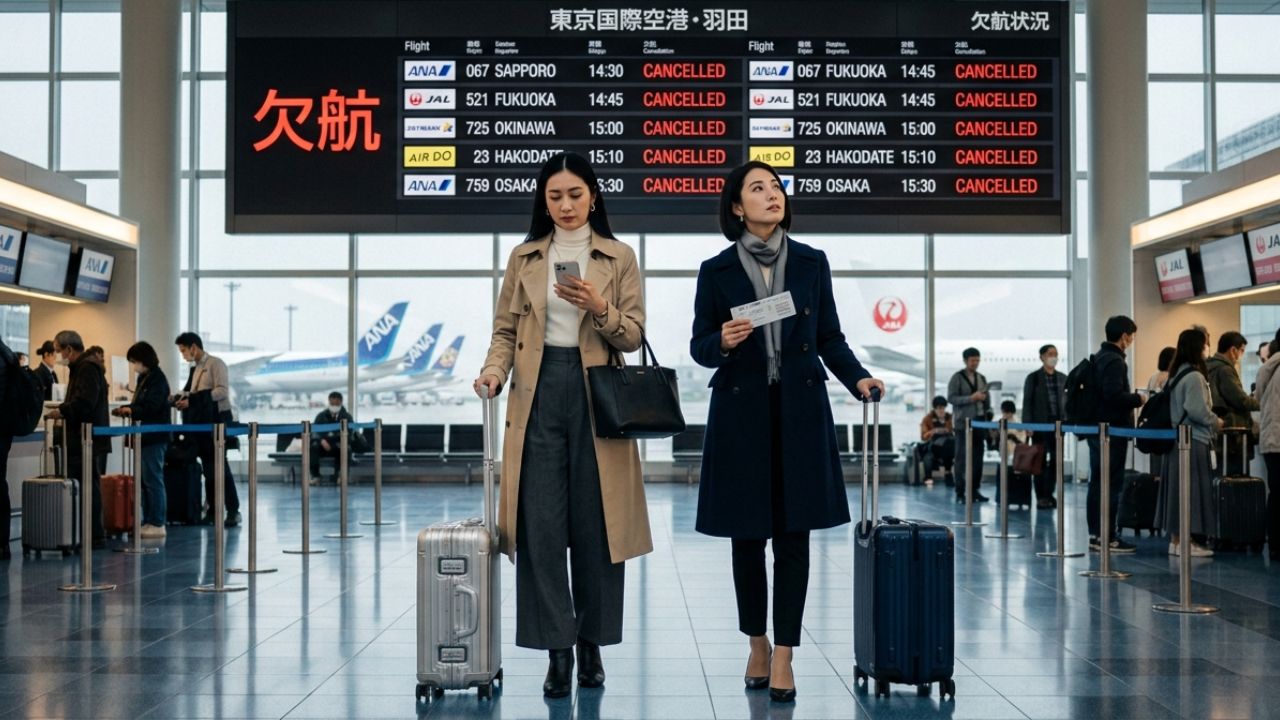
Image generated by AI
A Devastating Collapse in Japanese Aviation Punctuality
A terrifying, highly destructive wave of sudden flight cancellations and agonizing schedule delays is currently tearing through the absolute heart of the Japanese aviation system, instantly plunging thousands of unsuspecting domestic and international passengers into a severe state of travel chaos. Over the past 24 hours, an aggressive cascade of 368 severe flight delays and 13 outright cancellations has completely paralyzed operations across Japan's most critical transit hubs. Heavyweight carriers, led by All Nippon Airways (ANA), Japan Airlines (JAL), Solaseed Air, and ANA Wings, have all heavily contributed to this massive operational collapse. With severe airport disruptions completely dominating today's primary airline news, these highly volatile aviation updates confirm that critical corridors connecting Tokyo, Osaka, Sapporo, Nagasaki, and Hakodate have been violently severed, leaving desperate commuters and international tourists fighting for non-existent re-accommodation in heavily congested terminal lobbies.
Expanded Overview: Measuring the Scale of the Disruption
The sheer geographic scale and rapid acceleration of this systemic breakdown mark a highly concerning period of scheduling instability for the Japanese aviation sector, which is globally renowned for its absolute precision. These 381 confirmed disruptions are not isolated to a single, localized failure at one terminal; rather, they signify a massive, interconnected failure spanning the entire archipelago, from the freezing northern landscapes of Hokkaido to the western reaches of Nagasaki.
Because Japan relies heavily on incredibly dense, high-frequency domestic shuttle flights to maintain its economic rhythm, even localized operational hiccups rapidly escalate into widespread logistical nightmares. The sudden accumulation of delayed departures and abruptly cancelled flights completely destroyed terminal flow, overwhelming station managers who frantically attempted to process the massive backlog of stranded travelers across both domestic short-haul and intercontinental long-haul networks.
Section-Wise Breakdown of Airport Operations
Tokyo International Airport (Haneda): The Epicenter of the Crisis
Serving as the absolute crown jewel of the Japanese aviation network, Tokyo Haneda Airport was the most heavily devastated by the operational challenges. A staggering total of 256 agonizing delays were registered here, violently compounded by 5 complete flight cancellations. The massive scale of the disruption left thousands of corporate commuters and tourists stranded in packed departure lounges. Legacy titans Japan Airlines (90 delays) and All Nippon (84 delays) suffered catastrophic schedule degradation. The massive congestion completely exposed the fragility of Haneda's high-density operations, severing vital global connections operated by international partners like Delta Air Lines, StarFlyer, and Air Do.
Osaka International Airport (Itami): Kansai Region Paralyzed
As the primary domestic gateway serving the massive Kansai metropolitan area, Osaka Itami encountered severe, cascading disruptions. The airport recorded 36 severe flight delays and 3 total cancellations. The breakdown in Osaka immediately fractured the heavily utilized Tokyo-Osaka corridor, severely impeding the flow of vital business traffic and forcing massive logistical realignments for ANA Wings and Japan Airlines.
Sapporo (New Chitose) and Regional Hubs: Network-Wide Failures
The operational rot heavily infected the northern and western extremities of the Japanese network. New Chitose Airport, serving Sapporo, faced massive scheduling backlogs, registering 61 delays and 1 cancellation as carriers like Air Do and Skymark struggled with aircraft rotation. In western Japan, Nagasaki Airport suffered 10 delays and 2 structural cancellations, heavily impacting Solaseed operations. Meanwhile, Hakodate Airport in southern Hokkaido recorded 5 delays and 2 complete cancellations, further proving the truly nationwide scope of the systemic collapse.
Flight Details and Mandatory Carrier Disruption Tables
To fully comprehend the sheer scale and precise distribution of this massive operational strain, the following tables explicitly document the exact delay and cancellation metrics recorded across all affected airlines operating at the five heavily disrupted airports:
Tokyo International Airport (Haneda)
| Airline | Cancelled | Cancelled (%) | Delayed | Delayed (%) |
|---|---|---|---|---|
| Solaseed | 2 | 3% | 4 | 7% |
| ANA Wings | 1 | 1% | 11 | 12% |
| All Nippon | 1 | 0% | 84 | 21% |
| Japan Airlines | 1 | 0% | 90 | 19% |
| China Airlines | 0 | 0% | 1 | 25% |
| Delta Air Lines | 0 | 0% | 5 | 41% |
| Lufthansa | 0 | 0% | 1 | 25% |
| Garuda Indonesia | 0 | 0% | 1 | 50% |
| Japan Transocean Air Co. | 0 | 0% | 3 | 25% |
| Korean Air | 0 | 0% | 1 | 12% |
| Qantas | 0 | 0% | 2 | 50% |
| SAS | 0 | 0% | 1 | 50% |
| StarFlyer | 0 | 0% | 11 | 22% |
| Skymark | 0 | 0% | 16 | 20% |
| United | 0 | 0% | 1 | 8% |
| American Airlines | 0 | 0% | 1 | 12% |
| AirAsia X | 0 | 0% | 2 | 100% |
| Asiana | 0 | 0% | 3 | 37% |
| Air Do | 0 | 0% | 15 | 31% |
Osaka International Airport (Itami)
| Airline | Cancelled | Cancelled (%) | Delayed | Delayed (%) |
|---|---|---|---|---|
| ANA Wings | 2 | 1% | 5 | 4% |
| Japan Airlines | 1 | 0% | 20 | 11% |
| All Nippon | 0 | 0% | 9 | 15% |
| Ibex | 0 | 0% | 2 | 11% |
New Chitose Airport (Sapporo)
| Airline | Cancelled | Cancelled (%) | Delayed | Delayed (%) |
|---|---|---|---|---|
| ANA Wings | 1 | 1% | 10 | 16% |
| Air Do | 0 | 0% | 11 | 28% |
| All Nippon | 0 | 0% | 20 | 28% |
| Peach Aviation | 0 | 0% | 2 | 5% |
| China Airlines | 0 | 0% | 1 | 50% |
| Fuji Dream | 0 | 0% | 1 | 8% |
| Japan Airlines | 0 | 0% | 10 | 11% |
| Jetstar Japan | 0 | 0% | 1 | 5% |
| Skymark | 0 | 0% | 4 | 10% |
| Thai Vietjet Air | 0 | 0% | 1 | 50% |
Nagasaki Airport
| Airline | Cancelled | Cancelled (%) | Delayed | Delayed (%) |
|---|---|---|---|---|
| Solaseed | 2 | 25% | 0 | 0% |
| All Nippon | 0 | 0% | 1 | 9% |
| Japan Airlines | 0 | 0% | 6 | 30% |
| Oriental Air Bridge | 0 | 0% | 2 | 20% |
| Skymark | 0 | 0% | 1 | 16% |
Hakodate Airport
| Airline | Cancelled | Cancelled (%) | Delayed | Delayed (%) |
|---|---|---|---|---|
| ANA Wings | 1 | 25% | 0 | 0% |
| All Nippon | 1 | 9% | 3 | 27% |
| Japan Airlines | 0 | 0% | 2 | 22% |
Passenger Impact and Travel Rights
The massive scale of this 381-flight disruption has directly inflicted catastrophic financial and logistical damage on thousands of passengers. Travelers abruptly facing last-minute schedule changes were violently subjected to missed hotel bookings, cancelled regional excursions, and massive productivity losses.
If scheduling volatility continues to plague the Japanese aviation sector, international tourists will increasingly abandon domestic flights in favor of the highly reliable Shinkansen (high-speed rail) network to avoid being hopelessly stranded at the terminal. Passengers facing lengthy delays should immediately request written confirmation of the cancellation from their carrier (ANA, JAL, Solaseed, etc.), as this documentation is strictly required when lodging claims with travel insurance providers for emergency hotel accommodations or alternative transit.
Industry Analysis: Exposing Systemic Instability
Aviation analysts evaluating this massive data set point to severe, synchronized operational challenges plaguing the Japanese airspace. The fact that the disruptions involved an enormous mix of massive global legacy airlines (Japan Airlines, All Nippon, Delta) and vital regional connectors (ANA Wings, Solaseed, Air Do) mathematically proves that the failure is deeply systemic. Extreme air traffic control congestion and incredibly tight turnaround times have left mega-hubs like Tokyo Haneda operating with dangerously thin buffer zones. When minor delays accumulate, they rapidly cascade into a multi-hub network failure, directly threatening Japan's lucrative, highly dependent domestic economy.
Conclusion: A Precarious Recovery Outlook
The unprecedented disruption involving 368 delays and 13 abruptly cancelled flights across Tokyo, Osaka, Sapporo, Hakodate, and Nagasaki brutally highlights how terrifyingly interconnected and fragile the Japanese aviation system truly is. With vital domestic and intercontinental routes heavily affected, this situation reflects a massive strain on the operational capacity of the nation's most critical air corridors. As airlines desperately attempt to reposition crews and clear the massive backlog of delayed passengers, travelers navigating Japanese airspace must mentally and financially prepare for a highly volatile environment where schedule reliability remains under extreme pressure.
Key Takeaways
- Massive Grounding: A staggering 368 flights were severely delayed and 13 were abruptly cancelled across Japan's busiest aviation hubs.
- Epicenter of Chaos: Tokyo Haneda Airport suffered the absolute heaviest operational damage, recording 256 delays and 5 complete cancellations.
- Airlines Affected: Heavyweight carriers including All Nippon Airways, Japan Airlines, Solaseed, and ANA Wings were heavily dragged into the network collapse.
- National Network Fractured: Beyond Tokyo, the crisis violently impacted operations in Osaka (Itami), Sapporo (New Chitose), Nagasaki, and Hakodate.
- Passenger Pivot: Continued aviation instability may force international tourists and domestic commuters to rapidly shift their bookings toward Japan's highly reliable high-speed rail network.
Disclaimer: The massive flight cancellation and delay data presented is based on reported operational schedules sourced directly from flight tracking databases. Passengers booked on All Nippon, Japan Airlines, Solaseed, or any other carrier operating out of the affected Japanese hubs are strongly advised to consult their airline directly for the absolute latest flight status and re-accommodation protocols.
Disclaimer
This article is for informational and educational purposes only. It does not constitute legal, financial, or professional advice. While we strive to provide accurate and up-to-date information, travel policies, regulations, and conditions change rapidly. Always verify information with official sources before making travel decisions. Nomad Lawyer makes no representations about the accuracy, reliability, completeness, or suitability of the information provided. Readers should consult qualified professionals for advice specific to their circumstances. The views expressed in this article are those of the author and do not necessarily reflect the views of Nomad Lawyer.
Kunal K Choudhary
Co-Founder & Contributor
A passionate traveller and tech enthusiast. Kunal contributes to the vision and growth of Nomad Lawyer, bringing fresh perspectives and driving the community forward.
Learn more about our team →