
Japan Doubles Domestic Airline Fuel Subsidy to ¥20.9 per Litre as International Flight Subsidies End
Japan increases its domestic airline fuel subsidy to ¥20.9 per litre from September 3, 2026, supporting regional connectivity while halting international subsidies.

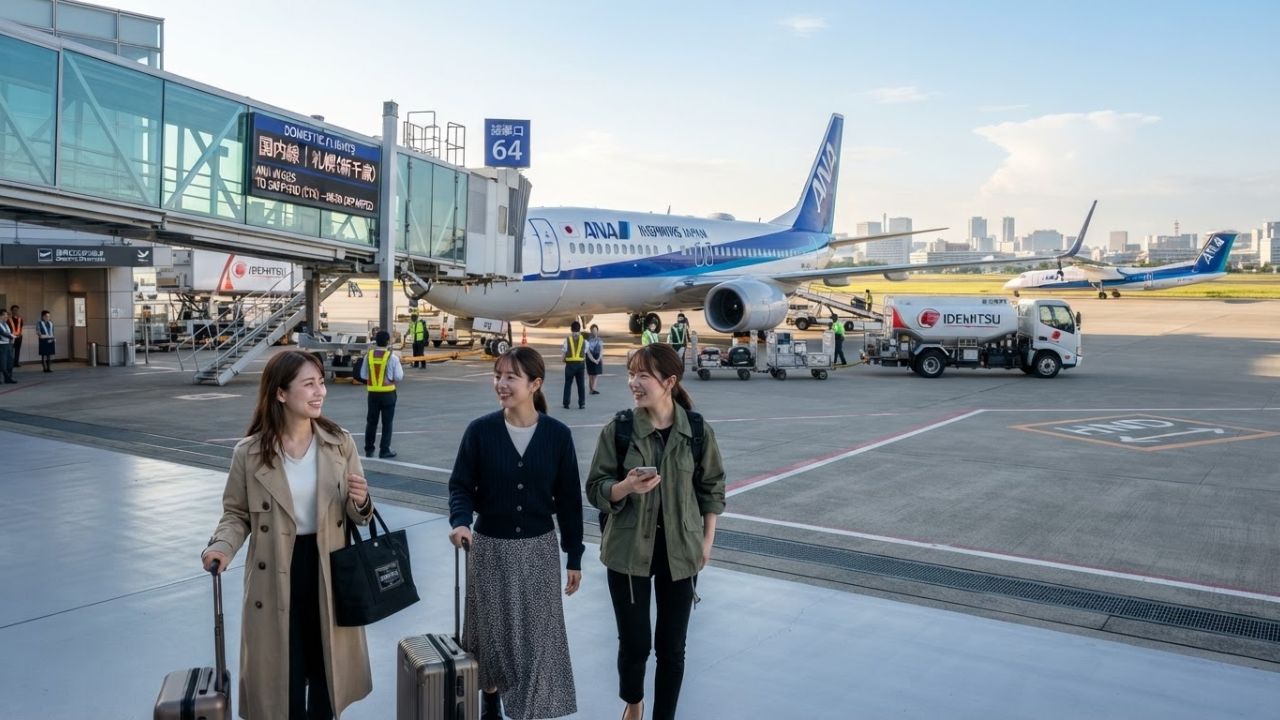
Image generated by AI
Starting September 3, 2026, Japan has doubled its domestic aviation fuel subsidy rate to 80 percent of the government gasoline benchmark—delivering ¥20.9 per litre in wholesale price relief while ending subsidies for international air corridors.
The Wholesale Fuel Pivot: Doubling Domestic Protection
The Japanese government has revised its national energy mitigation framework to prioritize domestic transport resilience. Effective September 3, 2026, the Ministry of Economy, Trade and Industry (METI) expanded its wholesale fuel mitigation scheme, elevating the domestic aviation fuel subsidy rate from 40 percent to 80 percent of the government gasoline benchmark.
Under this recalibrated formula, eligible wholesale aviation fuel purchased for domestic air operations receives a government subsidy of ¥20.9 per litre, accompanied by a September 2026 procurement adjustment of ¥2.8 per litre. Ground transport and heating fuels—including gasoline, diesel, kerosene, and heavy fuel oil—are supported at ¥26.2 per litre.
Simultaneously, the Japanese government officially terminated aviation fuel subsidy provisions for international flights departing or arriving in Japan. Policymakers noted that international airlines independently manage long-haul fuel volatility through transparent, published international fuel surcharge bands and currency hedging, directing limited state resources to internal connectivity across Japan's four main islands and distant archipelagos.
[Japan Energy Mitigation Programme — Benchmark Comparison from September 3, 2026]
• Domestic Aviation Fuel:     ¥20.9 per litre (Doubled from 40% to 80% benchmark)
• Procurement Adjustment:     ¥2.8 per litre (September 2026 component)
• Gasoline / Diesel / Kerosene: ¥26.2 per litre (Baseline reference benchmark)
• Heavy Fuel Oil:             ¥26.2 per litre (Matching ground-transport baseline)
• International Aviation:     Subsidy assistance terminated; carrier surcharges apply
| Fuel Product Category | Support Rate (Effective Sep. 3, 2026) | Policy Formula & Strategic Focus |
|---|---|---|
| Domestic Jet Fuel | ¥20.9 per litre | 80% of gasoline subsidy benchmark (up from 40%) |
| Gasoline | ¥26.2 per litre | Standard national price-stabilization benchmark |
| Diesel & Kerosene | ¥26.2 per litre | Matches baseline ground transport and winter heating aid |
| Heavy Fuel Oil | ¥26.2 per litre | Maritime and industrial manufacturing support |
| International Flights | ¥0.0 (Support Ended) | Carriers utilize private fuel surcharges and hedging |
Wholesale Mechanism: Why Subsidies Do Not Equal Instant Fare Discounts
Travelers must understand how Japan's fuel relief operates. The funds from METI do not flow to travelers as instant check-out rebates or cash discounts. Instead, the government distributes subsidies directly to licensed oil refineries and petroleum importers to depress the wholesale acquisition cost of jet fuel for airlines.
The real-world benefits for air passengers are indirect but substantial:
- Insulation Against Energy Shocks: Wholesale price relief shields domestic carriers—such as All Nippon Airways (ANA), Japan Airlines (JAL), Skymark, Peach Aviation, and Jetstar Japan—from sudden oil price spikes linked to Middle East instability.
- Preserving Regional Route Capacity: Regional airlines serving non-trunk routes can maintain daily frequencies without operating at prohibitive losses.
- Preventing Base Fare Escalations: By absorbing a portion of wholesale procurement costs, airlines face reduced pressure to raise baseline domestic fare tariffs during shoulder and off-peak travel periods.
Airline pricing remains determined by booking velocity, seasonal holidays (such as Golden Week, Obon, and New Year), seat inventory control, airport landing fees, and aircraft maintenance expenses.
Protecting Isolated Prefectures and Remote Island Lifelines
Aviation in Japan is not a luxury; it serves as a geographic necessity. Across Hokkaido's northern expanses, the mountainous prefectures of Tohoku and Shikoku, and the hundreds of inhabited islands in Okinawa and Kagoshima, air transport provides essential links for emergency medical care, fresh produce, and local commerce.
Parallel to the fuel subsidy, the Ministry of Land, Infrastructure, Transport and Tourism (MLIT) is seeking to delay a scheduled domestic aviation-fuel tax increase planned for fiscal 2027. The standard statutory tax is ¥26,000 per kilolitre, which had been reduced during the pandemic to ¥15,000 per kilolitre for fiscal 2025 and 2026. Without an extension, the rate would climb to ¥18,000 per kilolitre in fiscal 2027.
[Proposed Domestic Aviation-Fuel Tax Schedule (MLIT)]
• Standard Domestic Sectors: Maintain ¥15,000 / kL (Statutory rate: ¥26,000 / kL)
• Okinawa Island Routes:     Maintain ¥7,500 / kL  (Statutory rate: ¥13,000 / kL)
• Specified Remote Islands:  Maintain ¥11,250 / kL (Statutory rate: ¥19,500 / kL)
By capping aviation-fuel taxes at ¥7,500 per kilolitre for Okinawa routes and ¥11,250 per kilolitre for specified remote islands (such as Amami Oshima, Tokunoshima, Ishigaki, and Miyakojima), regulators ensure that essential island hoppers operated by Ryukyu Air Commuter (RAC) and Japan Air Commuter (JAC) remain financially sustainable.
International Surcharge Dynamics: The JAL and JTA Benchmark
Because international flight fuel subsidies have ended, overseas flyers departing or arriving in Japan remain subject to carrier-published fuel surcharges. International surcharges are adjusted on fixed two-month assessment cycles based on Singapore kerosene market averages and currency exchange valuations.
For tickets issued between September 1 and October 31, 2026, Japan Airlines (JAL) and Japan Transocean Air (JTA) applied their Zone O surcharge band rather than the steeper Zone P level, reflecting emergency market adjustments:
| International Route Sector | One-Way Fuel Surcharge (Tickets Issued Sep. 1 – Oct. 31, 2026) |
|---|---|
| Japan to South Korea / Russian Far East / Okinawa to Taipei & Kaohsiung | ¥5,900 |
| Japan to East Asia (Excluding South Korea and Mongolia) | ¥12,400 |
| Japan to Guam, Palau, Philippines, Vietnam, Mongolia, Irkutsk | ¥17,500 |
| Japan to Thailand, Malaysia, Singapore & Specified Southeast Asia | ¥29,000 |
| Japan to Hawaii, India, Indonesia & Specified Route Groups | ¥37,000 |
| Japan to North America, Europe, Middle East & Oceania | ¥50,000 (Reduced from Zone P's ¥53,000) |
International passengers should remember that fuel surcharges depend on the exact date of ticket issuance, not the date of departure. Booking before a surcharge adjustment window takes effect can save long-haul passengers thousands of yen per sector.
Local Insider Tips for Navigating Japan Domestic Flights in 2026
- Take Advantage of Inbound Air Passes (JAL Explorer Pass & ANA Experience JAPAN): If visiting Japan on a foreign passport with a temporary visitor visa, you can access heavily discounted domestic flights via the JAL Japan Explorer Pass or ANA Discover JAPAN Fare. These fixed-rate fares range from ¥5,500 to ¥11,000 for mainland sectors and ¥7,700 for Okinawa and Hokkaido routes, offering substantial savings compared to standard domestic tariffs.
- When to Fly vs. Take the Shinkansen: High-speed rail is superior for journeys under three hours (such as Tokyo to Kyoto, Osaka, or Nagoya). However, when traveling from Tokyo (Haneda - HND) to Fukuoka (FUK), Hiroshima (HIJ), Sapporo (New Chitose - CTS), or Kagoshima (KOJ), domestic flights are twice as fast and often 30 to 40 percent cheaper than a one-way Shinkansen ticket, especially when booked 28 to 75 days in advance under Tokubin or Super Value discount tiers.
- Time Your International Ticket Purchases Around Surcharge Cycles: JAL and ANA announce international fuel surcharge revisions on the 10th to 15th day of alternate months (February, April, June, August, October, December) for application on the 1st of the following month. If oil prices are falling and airlines announce a drop from Zone O to Zone N, hold off on issuing long-haul tickets until the 1st of the next month.
- Avoid Peak Domestic Holiday Windows: Domestic flights experience extreme demand during Golden Week (late April to early May), Obon (mid-August), and the New Year holiday (December 28 to January 5). Fuel subsidies do not offset peak holiday pricing; seat fares on popular routes between Tokyo, Sapporo, and Naha sell out months in advance at premium rates.
- Terminal Positioning at Haneda (HND): Ensure you arrive at the correct domestic terminal in Tokyo. JAL, Skymark, and StarFlyer operate from Terminal 1; ANA, Solaseed Air, and Air Do depart from Terminal 2. The Keikyu Airport Line and Tokyo Monorail stop at dedicated subterranean stations for each terminal.
Aviation Market Outlook: Balancing Island Mobility with Energy Volatility
Japan's decision to double domestic aviation fuel support to ¥20.9 per litre while ending international subsidies illustrates a pragmatic transport strategy. In an era marked by fluctuating global oil markets and geopolitical instability in key shipping lanes, the Japanese government has prioritized its internal supply chains, regional workforce mobility, and domestic tourism dispersion.
By pairing wholesale fuel subsidies with tax caps on remote island routes, Japan safeguards its regional prefectures from economic isolation. For international travelers and local residents alike, this targeted policy provides schedule consistency and protects vital air links across one of the most geographically diverse archipelagoes in Asia.
Frequently Asked Questions
What is the new fuel subsidy rate for domestic airlines in Japan?
Effective September 3, 2026, Japan increased the domestic aviation fuel subsidy to 80 percent of the gasoline benchmark, setting the support level at ¥20.9 per litre, alongside a ¥2.8 per litre procurement adjustment.
Why did the government end fuel subsidies for international flights?
Subsidies for international flights ended because international carriers independently manage jet fuel price swings through published passenger fuel surcharges and currency hedging mechanisms.
Does the higher domestic fuel subsidy mean airfares will drop automatically?
No. The subsidy reduces wholesale fuel costs for refiners and airlines, acting as an operational buffer. Ticket prices continue to be set by airlines based on demand, seasonality, route competition, and operating overheads.
What is the status of Japan's aviation-fuel tax for remote islands?
The Ministry of Land, Infrastructure, Transport and Tourism is proposing to maintain reduced tax rates of ¥15,000 per kilolitre for standard domestic routes, ¥7,500 per kilolitre for Okinawa, and ¥11,250 per kilolitre for specified remote islands through fiscal 2027.
How can international passengers save money on Japanese fuel surcharges?
Fuel surcharges are locked on the date tickets are issued. By monitoring bi-monthly surcharge announcements from carriers like JAL and ANA, passengers can purchase tickets before rates rise or delay issuance if surcharges are scheduled to decrease.
Related Travel Guides
- Italy Flight Cancellations and Delays Disrupt Summer Travel Across Milan, Rome, Venice, and Major European Hubs
- Boeing's 777X Gamble: Why the Aircraft Giant Is Building Uncertified Jets Ahead of Regulatory Approval
- Reagan National Airport Chaos: 96 Flights Delayed, 5 Canceled as Weather Disrupts American Airlines, Delta, JetBlue Across DC, New York, Chicago, Boston, Atlanta
Disclaimer
This article is for informational and educational purposes only. It does not constitute legal, financial, or professional advice. While we strive to provide accurate and up-to-date information, travel policies, regulations, and conditions change rapidly. Always verify information with official sources before making travel decisions. Nomad Lawyer makes no representations about the accuracy, reliability, completeness, or suitability of the information provided. Readers should consult qualified professionals for advice specific to their circumstances. The views expressed in this article are those of the author and do not necessarily reflect the views of Nomad Lawyer.
Raushan Kumar
Founder & Lead Developer
Full-stack developer with 11+ years of experience and a passionate traveller. Raushan built Nomad Lawyer from the ground up with a vision to create the best travel and law experience on the web.
Learn more about our team →