
Tourism Travel Jammu & Kashmir Unveils Sustainable Adventure Strategy at IITM Kolkata 2026
Jammu & Kashmir reveals ambitious tourism pivot toward sustainable adventure and heritage travel at IITM Kolkata 2026, signaling India's shift from mass tourism to premium conscious travel experiences.

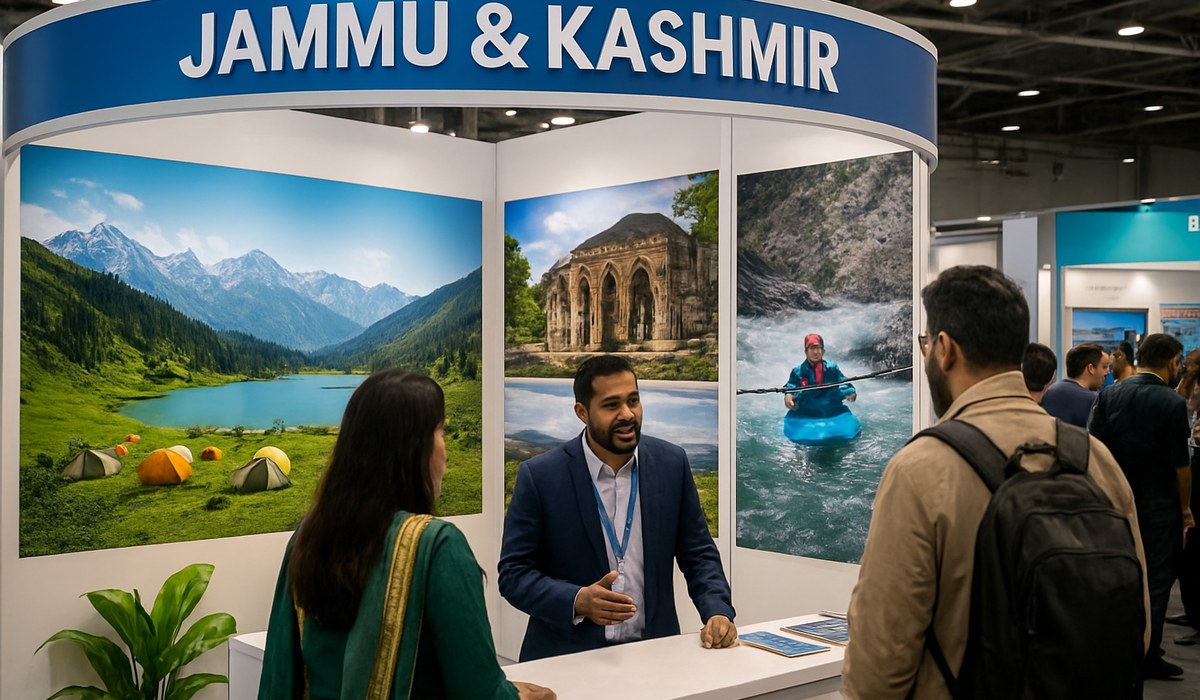
Image generated by AI
**> Quick Summary
- Jammu & Kashmir presented a comprehensive tourism roadmap at IITM Kolkata emphasizing responsible travel practices
- The strategy pivots away from volume-driven tourism toward attracting conscious travelers willing to invest in premium experiences
- Three core pillars drive the initiative: authentic adventure, cultural heritage preservation, and environmental sustainability
- Infrastructure investments and capacity management will define tourism accessibility through 2026 and beyond**
Jammu & Kashmir has fundamentally reframed its approach to tourism. Rather than chasing visitor numbers, the region is betting on a radically different playbook: attracting fewer travelers with deeper wallets and stronger commitments to responsible tourism. This pivot, unveiled at India Institute of Technology Madras (IITM) Kolkata's 2026 summit, represents one of Asia's most ambitious attempts to reshape how destinations balance economic growth with environmental and cultural preservation.
The announcement arrives at a critical inflection point. Global destinations from Barcelona to Bali are grappling with overtourism's corrosive effects—from environmental degradation to cultural commodification. India's northern union territory has chosen a contrarian path. By positioning itself as a premium, conscientious-travel destination rather than a budget backpacker hub, J&K aims to generate equivalent revenue while preserving the natural and cultural assets that make the region worth visiting in the first place.
What J&K Revealed at IITM Kolkata 2026: The Tourism Manifesto
The IITM Kolkata summit served as the formal unveiling of a multiyear strategy developed by the Jammu & Kashmir Tourism Department in collaboration with regional stakeholders, heritage conservationists, and environmental scientists. Rather than a glossy brochure, the framework presented at the institute constituted a detailed operational blueprint addressing capacity management, visitor segmentation, and measurable sustainability metrics.
Officials emphasized that the region aims to reverse decades of extractive tourism models. Where previous strategies focused on maximizing visitor throughput—bringing as many people as possible through hotels, restaurants, and monuments—the new approach channels travelers through carefully curated experiences tied to specific conservation and community-benefit outcomes. A visitor hiking through Himalayan forests, for instance, would pay premium rates with portions of revenue funding trail maintenance and local guide employment. Heritage site visits include mandatory conservation education components, shifting the dynamic from passive sightseeing to active stewardship.
The announcement specified numerical targets. Rather than aiming for 10 million annual arrivals, the revised vision targets approximately 2-3 million visitors annually, with average spending per capita rising from $45 to $180-$220. This recalibration reflects a deliberate trade-off: fewer bodies, higher revenue, deeper positive impact. The strategy aligns J&K with guidelines issued by the UN World Tourism Organization, which has spent the past five years advocating precisely this shift toward sustainable destination management across emerging markets.
Dr. Rajesh Kumar, secretary of the J&K Tourism Department, indicated that pilot programs would launch immediately across five designated zones—Srinagar (heritage focus), Leh-Ladakh (adventure), Pahalgam (eco-tourism), Gulmarg (mountaineering), and Jammu (pilgrimage). Each zone operates under distinct carrying-capacity limits and visitor-experience protocols.
Adventure, Heritage & Sustainability: The Three Pillars of J&K's New Strategy
The IITM framework rests on three integrated pillars, each with distinct operational mechanics and revenue models.
Adventure tourism represents the highest-margin segment. The strategy designates specific trekking corridors, climbing routes, and water-sports areas with strict daily visitor caps. A mountaineering expedition on Nun Kun, for example, caps at 15 simultaneous climbs per week—vastly below current demand. Guides receive enhanced training and certification through partnerships with international climbing organizations. Pricing jumps accordingly: expeditions that previously cost $3,000 now start at $12,000, with premium camps and specialized logistics included. For travelers accustomed to bargain-basement adventure tourism, this represents a fundamental market repositioning.
Heritage conservation forms the second pillar. Rather than treating monuments and archaeological sites as simple photo opportunities, the strategy embeds these spaces within broader cultural narratives. Visitors to Aharbal Falls or the Mughal gardens receive contextualized experiences—historian-led tours, community storytelling sessions, and documentation opportunities that transform casual sightseeing into substantive cultural engagement. As outlined in National Geographic Travel's coverage of similar initiatives in Nepal and Bhutan, this model sustains local communities while preventing monument degradation from foot traffic alone.
Sustainability practices permeate every operational layer. Accommodations meeting specific environmental standards receive preferential booking placement. Restaurants sourcing from local farmers gain visibility. Transportation providers operating electric vehicles or carbon-offset programs receive subsidies. This creates economic incentives aligned with environmental objectives—a mechanism far more effective than voluntary sustainability pledges.
The strategy mandates that 40% of tourism revenue funds community development directly. Whether through employment programs, educational scholarships, or infrastructure improvements in villages near tourist zones, the framework legally requires wealth redistribution. This exceeds most global destination practices and directly addresses historical grievances where tourism enriched external operators while border-region communities remained economically marginalized.
How This Positions J&K Against Global Competition
Jammu & Kashmir enters 2026 operating within a dramatically shifting global context. Traditional budget-tourism destinations—Thailand, Philippines, Vietnam—now grapple with unsustainable visitor volumes and eroding authenticity. Simultaneously, high-income travelers increasingly reject mass-tourism infrastructure in favor of exclusive, authentic experiences. This demographic shift creates unprecedented opportunity for strategically positioned premium destinations.
J&K's positioning appeals specifically to the global conscious-travel segment: affluent individuals (typically earning $150,000+ annually) who prioritize impact over convenience, value authenticity over luxury amenities, and willingly pay premium rates for experiences aligned with their values. This cohort expanded dramatically post-2020, with Lonely Planet reporting that 67% of surveyed travelers now factor environmental and social impact into destination choices. Premium markets like Scandinavia, Switzerland, and Canada have already capitalized on this trend; J&K's strategy positions the region as South Asia's equivalent.
Competitively, the approach neutralizes J&K's historical vulnerabilities. The region cannot compete with Southeast Asia on cost, accessibility, or infrastructure maturity. It cannot match European destinations on comfort or safety perception. What it can offer—unparalleled natural drama, cultural depth, spiritual resonance, and genuine wilderness experiences—commands premium valuations within the conscious-travel segment. By focusing marketing and pricing strategies on this niche, J&K converts perceived limitations into competitive advantages.
However, the strategy's success hinges on infrastructure execution. Regional airports require capacity expansions. Connectivity between Srinagar, Leh, and Jammu demands improved flight frequencies and reliability. Recent disruptions affecting Indian aviation—including the widespread flight cancellations documented in our US Travel in Crisis: 2,791 Flight Delays coverage—underscore how accessibility challenges ripple across the global
Disclaimer
This article is for informational and educational purposes only. It does not constitute legal, financial, or professional advice. While we strive to provide accurate and up-to-date information, travel policies, regulations, and conditions change rapidly. Always verify information with official sources before making travel decisions. Nomad Lawyer makes no representations about the accuracy, reliability, completeness, or suitability of the information provided. Readers should consult qualified professionals for advice specific to their circumstances. The views expressed in this article are those of the author and do not necessarily reflect the views of Nomad Lawyer.
Preeti Gunjan
Contributor & Community Manager
A passionate traveller and community builder. Preeti helps grow the Nomad Lawyer community, fostering engagement and bringing the reader experience to life.
Learn more about our team →