Jamaica's Public Beach Transformation: 10-Beach Makeover, Negril and Ocho Rios Escapes, and Local Coastal Guide

While international travelers imagine Jamaica as an endless ribbon of unbroken white sand, approximately 70 percent of the island's coastline consists of sheer limestone cliffs and rocky headlands, leaving just 30 percent as true beach terrain. On 15 November 2026, Prime Minister Andrew Holness announced a major policy shift at the Jamaica Labour Party's 83rd annual conference at the Montego Bay Convention Centre in St. James, directing Tourism Minister Edmund Bartlett to finance major upgrades for at least 10 public beaches in the upcoming national budget while establishing a minimum baseline of two free-access public beaches across every one of Jamaica's 14 parishes.
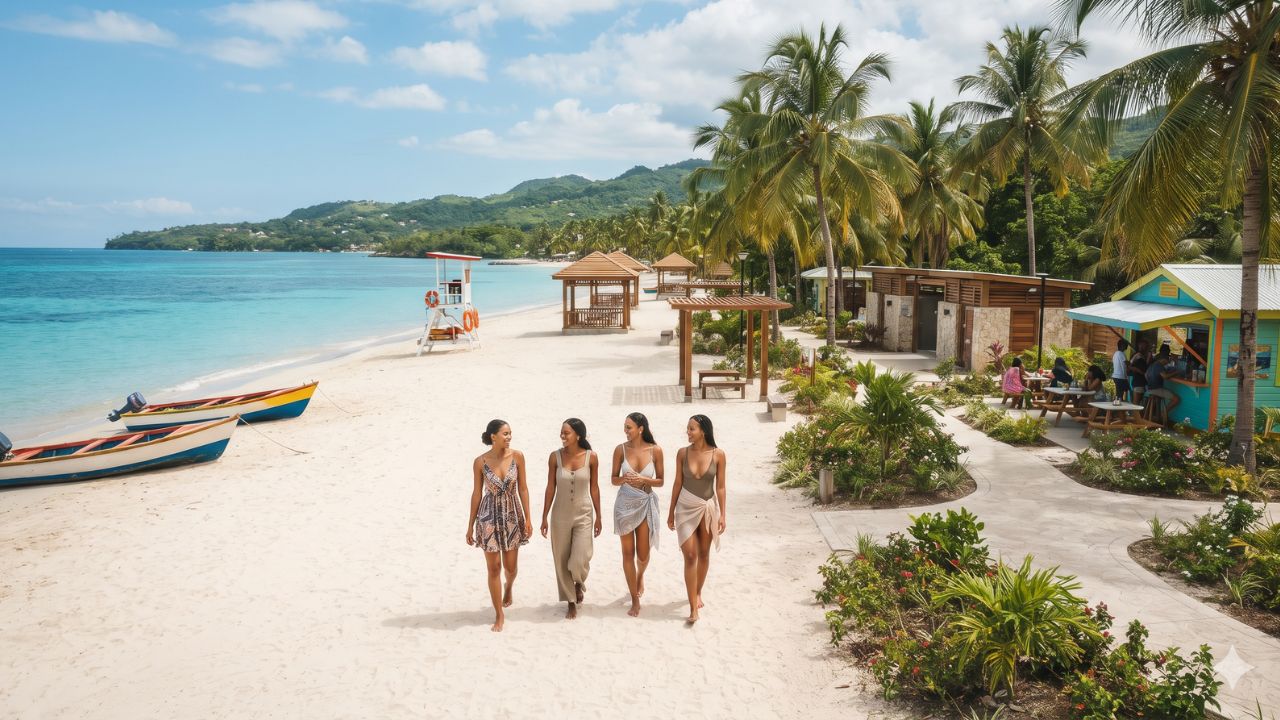
The directive responds directly to growing domestic debates surrounding coastal accessibility. For decades, foreign tourists experienced Jamaica through private all-inclusive resort enclaves that wall off expansive shoreline strips. The state’s new public beach development program aims to reclaim coastal recreation for both local residents and independent travelers, delivering modern facilities, certified lifeguard towers, and solar-powered amenities from Negril's western shores to the hidden coves of Portland.
Reclaiming the Shoreline: Jamaica's 10-Beach Public Makeover Directive
The coastal policy outlined by the Jamaican government focuses on transforming raw shorelines into safe, clean, community-accessible public parks. Speaking to party delegates in Montego Bay, Prime Minister Holness confirmed that while nationwide coastal assessments are complete, the initial ten beneficiary beaches will receive direct capital development through upcoming budgetary allocations. The wider national target mandates at least 28 fully maintained, free-entry public beaches—securing a minimum pair of accessible beaches within each parish.
Official coastal statistics presented in September 2026 by Water, Environment and Climate Change Minister Matthew Samuda through the Jamaica Information Service provide vital context for understanding beach availability. While 30 percent of the island's perimeter contains sandy shores, commercial tourism properties and private developments occupy nine percentage points of the coastline. Approximately 21 percent of the coast operates as licensed public beach land, with 17 percentage points currently offering free public entry.
Minister Samuda pointed to key public coastal landmarks—including Long Bay Beach in Portland, Bob Marley Beach in St. Andrew, Jackson Bay Beach in Clarendon, Alligator Pond Beach in Manchester, and Negril Beach in Westmoreland—as vital cultural commons that anchor local life.
Travelers can research regional beach safety standards and cultural events on the official Visit Jamaica portal.
| Coastal Classification & Metric | Official Statistic / Specification | Regional Travel Context |
|---|---|---|
| Total Rocky / Cliff Shoreline | ~70% of national coastline | Rugged limestone bluffs and coral shelves |
| Sandy Beach Terrain | ~30% of national coastline | Prime recreational and bathing shoreline |
| Commercialized Coastal Share | 9 percentage points of coastline | Occupied by private resorts and ports |
| Licensed Public Beach Shoreline | ~21% of national coastline | Designated for public recreation |
| Free-Access Coastal Share | 17 percentage points of coastline | Unrestricted public entry without gate fees |
| Government Target per Parish | Minimum 2 free public beaches | At least 28 free public beaches across 14 parishes |
| Initial Upgraded Beach Target | At least 10 public beaches | Funded via upcoming national tourism budget |
| Harmony Beach Park Footprint | 16 acres along Montego Bay | J$1.3B–J$1.5B public investment model |
Ongoing Infrastructure Projects: Priory, Success, and Pagee
The new 10-beach commitment builds directly upon three flagship community beach developments initiated in June 2026 by Tourism Minister Bartlett:
- Priory Bathing and Fishing Beach (St. Ann): Located near Ocho Rios, this project blends leisure recreation with living maritime heritage. The plan introduces modern dining facilities, changing pavilions, security posts, and medical rooms, while preserving traditional artisan fishing docks where visitors can watch local crews land daily catches of snapper and parrotfish for sea-to-table preparation.
- Success Beach (St. James): Situated near Montego Bay, Success Beach is being outfitted with lifeguard stations, wastewater treatment units, and expanded parking to absorb weekend day-trippers.
- Pagee Beach (St. Mary): Centered on a historic fishing cove, Pagee is receiving storm-resistant seawalls, commercial artisan craft stalls, and accessible boardwalk ramps, with construction slated for completion by the close of the 2027–2028 financial year.
These projects mirror the successful template established by Harmony Beach Park in Montego Bay. Developed by the Urban Development Corporation for J$1.3 billion (with government ministers noting an overall investment near J$1.5 billion), the 16-acre waterfront park opened on 21 May 2021 along Howard Cooke and Jimmy Cliff Boulevards, just seven minutes from Sangster International Airport. The park features jogging trails made from recycled rubber tires, solar-powered administrative offices, manicured lawns, and active beach operations opening Wednesday through Sunday from 9:00 AM to 5:00 PM (with the outer park grounds open daily from 6:00 AM to 10:00 PM).
Explore conservation policies and public capital project details via the Tourism Enhancement Fund.
What Makes Jamaica's Public Coastlines Different: Culture Beyond the Resort Gate
Jamaica's public beaches are vibrant cultural spaces where island social life unfolds in real time, distinct from private resort zones:
The Free-Access Network Across Parishes
In August 2026, the government formally published an inventory of 60 public beaches offering free entry across all four coastal quadrants:
- The Northern Coast: From Orchard and Bulls Bay in Hanover to Sunset Beach and Dead End Beach in St. James (where planes land directly over sunbathers); Jacob Taylor (Silver Sands) in Trelawny; and Cardiff Hall (Flavours Beach) and Sharkies in St. Ann.
- Portland's Lush Inlets: Portland parish boasts iconic public coves, including Winnifred Beach—reclaimed and fiercely protected by local community activists—alongside Long Bay's dramatic Atlantic surf breaks and Bryan's Bay.
- The Wild South Coast: St. Elizabeth hosts nine recognized public beaches, including Frenchman’s Bay, Calabash Bay in sleepy Treasure Beach, and Font Hill, where gentle waters lap against natural mangrove borders.
- Central & Eastern Havens: Jackson Bay in Clarendon, Alligator Pond in Manchester (famous for open-air beachfront fish fry stalls at Little Ochie), and Lyssons Beach in St. Thomas.
Culinary Beach Rituals
At public beaches like Hellshire Beach near Kingston, the day revolves around fresh seafood shacks. Diners select fresh fish from coolers, which cooks score, fry in deep oil drums, and douse with pickled scotch bonnet peppers, carrots, and onions (escovitch style), served alongside piping-hot fried cassava cakes (bammy) and sweet cornmeal dough cakes (festival).
Near Discovery Bay in Ocho Rios, Puerto Seco Beach provides organized family amenities, while Frenchman’s Cove near Port Antonio offers a natural phenomenon where an ice-cold freshwater jungle river flows into a turquoise marine inlet.
Visitor Insider Tips: Navigating Jamaica's Beaches Like a Local
- Distinguish Free Beaches from Park-Managed Facilities: Not every public beach is free. While the 60 listed government beaches do not charge entry, certain facilities managed by the Tourism Enhancement Fund or private concessionaires—such as Burwood Beach in Trelawny (a 130-meter white-sand stretch upgraded in 2015) or Puerto Seco—charge modest entrance fees to non-Jamaican visitors to fund ongoing restroom maintenance, waste collection, and lifeguard services. Always carry Jamaican dollars (JMD) in small denominations for facility entry and shower tokens.
- Time Your Visits for Quiet Mornings: Public beaches fill rapidly with extended families, church groups, and sound-system gatherings on Saturday and Sunday afternoons. If you want tranquil waters and empty sands, arrive between 7:30 AM and 10:30 AM on weekday mornings.
- Use Route Taxis for Coastal Transport: Avoid expensive resort private hire cars. Shared "route taxis" (identifiable by their red license plates) run frequent point-to-point hops along coastal highways like the A1 from Montego Bay to Ocho Rios for fixed, regulated fares.
- Ordering Seafood by Weight: When dining at public beach shacks at Hellshire, Alligator Pond, or shark spots in St. Ann, fish is sold by weight (per pound). Confirm the total cost before the cook drops your snapper into the pan to avoid surprises.
Cultural and Environmental Context: Balancing Public Heritage with Coastal Ecology
The transformation of Jamaica's public coastline represents an ecological and social turning point. Decades of unconstrained shoreline commercialization triggered fierce community activism, as local fisherfolk found themselves displaced from traditional landing beaches and rural families were fenced out of shorelines their ancestors frequented.
Modern public beach parks address environmental degradation through strict civil engineering standards:
- Erosion Mitigation & Dune Restoration: Rising sea levels and intense Caribbean storm surges have eroded sands across Negril's Seven Mile stretch. New public beach designs incorporate living shoreline buffers, native sea grape trees, and sand dune revegetation rather than concrete seawalls that exacerbate scouring.
- Wastewater & Runoff Controls: Facilities at Priory, Success, and Pagee integrate closed-loop sewage filtration systems to prevent untreated municipal effluent from discharging into delicate coral reefs.
- Empowering Community Fisherfolk: By integrating artisan fishing hubs directly into recreational beach park footprints, Jamaica ensures that traditional coastal livelihoods survive alongside modern tourism.
FAQ: Visiting Jamaica's Public Beaches in 2026
What is Jamaica's new public beach development plan?
Prime Minister Andrew Holness has ordered upgrades for at least 10 public beaches in the upcoming national budget, establishing a minimum mandate of two free-access public beaches in every parish.
Are all public beaches in Jamaica free to enter?
No. While the government designated 60 official free-access public beaches, certain managed facilities (such as Burwood Beach or Puerto Seco) charge small admission fees to fund maintenance, lifeguards, and shower facilities.
What are the operating hours for Harmony Beach Park in Montego Bay?
The outer recreational park opens daily from 6:00 AM to 10:00 PM, while supervised beach bathing access is open Wednesday through Sunday from 9:00 AM to 5:00 PM.
Which public beaches in Jamaica are famous for local food?
Hellshire Beach in St. Catherine and Alligator Pond in Manchester are legendary for authentic Jamaican escovitch fried fish, festival, and lobster cooked directly on the beach.
Related Travel Guides
- Caribbean Marine Conservation and Ecotourism Regulations
- Boutique Coastal Escapes and Island Rail Routes
- Managing Flight Disruptions and Transit Protocols Across Caribbean Hubs
Beyond the high resort walls lies the true Caribbean, where the waves belong to everyone.
This article is for informational purposes. Flight routes, passenger regulations, visa rules, and transit advisories are subject to change by airlines and aviation authorities. Readers are advised to verify schedules and travel documentation with relevant carriers and border agencies before departure.
Related Stories
CONNECT Winter Marketplace 2026 Brings MICE Sector to West Palm Beach November 18-20
Breeze Airways Expands 2026–2027 Routes: Myrtle Beach and Caribbean Travel Guide