Indiana's Heartland Travel Guide: Elkhart Heritage Trail, Indiana Dunes, and Weekend Escapes 2026

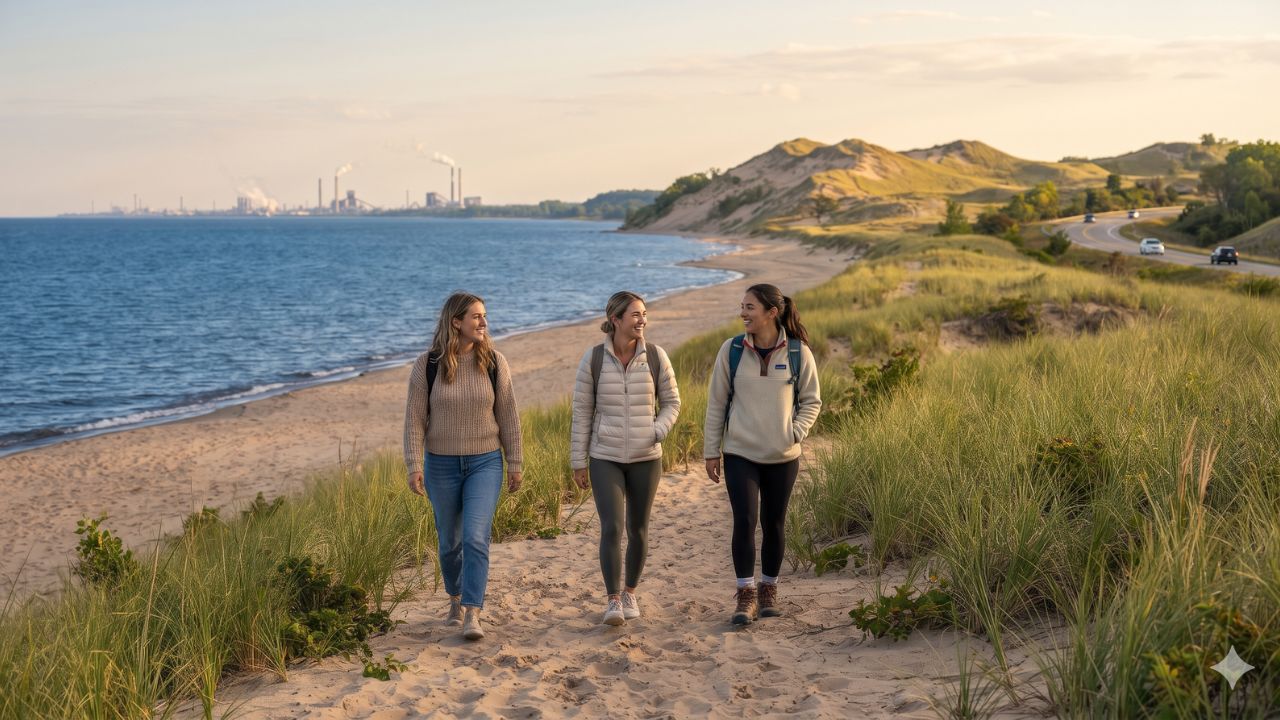
In northern Indiana's Elkhart County, an astonishing 32.5 percent of all payroll positions are concentrated directly on factory assembly floors—nearly six times the United States national average of 5.5 percent—fueling an industrial rhythm where workers average a brisk 20-minute commute and $1,318 in weekly wages. Yet behind this rigorous manufacturing drive lies one of the American Midwest’s most rewarding weekend travel cultures, where factory shifts and commuter corridors give way to scenic shorelines, historic earthworks, and rural artisan communities across a $15.1 billion statewide visitor economy.
Across Indiana, manufacturing accounts for 16.5 percent of all payroll jobs—nearly double the national benchmark of 8.7 percent. Official labor and tourism metrics compiled by the U.S. Bureau of Labor Statistics, the Indiana Department of Workforce Development, and the Indiana Destination Development Corporation reveal a compelling reality: the harder the local workforce labors from Monday through Friday, the more treasured their weekend recreational spaces become. Four counties—Elkhart, Johnson, Porter, and Madison—illustrate this dynamic, translating productive weekdays into memorable outdoor and cultural discoveries for curious travelers.
The Heartland Work-and-Wander Dynamic: Indiana's Four Powerhouse Counties
The geography of Indiana's hardest-working communities splits between specialized factory hubs and high-earning metropolitan commuter zones:
- Elkhart County (The Industrial Core): With 60,400 factory employees and 132,200 total nonfarm jobs recorded by September 2026, Elkhart stands as the recreational vehicle and specialty manufacturing capital of the world. Because plants draw labor locally, residents enjoy an average one-way commute of just 20.0 minutes.
- Johnson County (The High-Earning Suburb): Located directly south of Indianapolis, Johnson County saw its population surge 7.7 percent between 2020 and 2025 to 174,262 residents. Backed by an exceptionally low 3.2 percent unemployment rate in September 2026 and a median household income of $95,247 (fourth highest statewide), its 90,399 active workers spend 26.4 minutes each morning and evening commuting along Interstate 65 into the capital.
- Porter County (The Lake Michigan Corridor): Home to 175,420 residents, Porter County bridges Northwest Indiana’s heavy steel mills with Chicago's metropolitan economy. Paying an average weekly wage of $1,235 and recording an $88,795 median household income, workers average a 28.5-minute commute each way along Interstate 94 and the Indiana Toll Road.
- Madison County (The Central Plains): Anchored by Anderson, Pendleton, and Elwood, the county maintains 39,851 in-county jobs with an average weekly wage of $993 and a 3.7 percent unemployment rate, while thousands commute 26.3 minutes each way into neighboring Hamilton and Marion counties.
Travelers can research regional touring routes and seasonal festivals through the official Visit Indiana platform.
| County & Region | Primary Economic Engine | Commute & Wage Benchmarks | Core Cultural & Travel Landmarks |
|---|---|---|---|
| Elkhart County | Manufacturing (32.5% production jobs) | 20.0 min commute; $1,318/wk wage | Heritage Trail, Amish markets, RV/MH Hall of Fame |
| Johnson County | Indianapolis commuter belt & commerce | 26.4 min commute; $95,247 median income | Historic downtown Franklin, craft orchards, greenways |
| Porter County | Steel, logistics & Chicago commuting | 28.5 min commute; $1,235/wk wage | Indiana Dunes National Park, Lake Michigan beaches |
| Madison County | Light manufacturing, healthcare, logistics | 26.3 min commute; $60,842 median income | Mounds State Park ancient earthworks, Pendleton historic center |
What Makes Indiana's Heartland Counties Different: Industrial Grit Meets Natural Escapes
For independent road-trippers, exploring these four counties reveals an authentic cross-section of Midwestern culture far removed from generic tourist strips:
1. Elkhart County: The Heritage Trail and Amish Craftsmanship
Visitor spending across Elkhart County climbed 6.4 percent year-over-year, ranking 11th highest among Indiana’s 92 counties.
- The Heritage Trail Driving Loop: This scenic 90-mile loop winds through Elkhart, Goshen, Middlebury, and Nappanee, creating a striking contrast between modern high-tech RV assembly lines and traditional horse-and-buggy Amish farms.
- Artisan Traditions: Stop in Middlebury and Nappanee to browse handmade oak furniture, quilt gardens, and bakeries serving scratch-made shoofly pies and warm cinnamon rolls. In downtown Elkhart, explore the Midwest Museum of American Art or tour the world-renowned RV/MH Hall of Fame, showcasing the historical evolution of American mobile camping culture since the 1920s.
2. Porter County: Indiana Dunes National Park and Coastal Trails
Stretching across 16,000 acres along Lake Michigan’s southern tip, Indiana Dunes National Park is protected through the National Park Service.
- Massive Outdoor Recreation Footprint: Federal records show the park logs 1.27 million annual hiking and walking visits, nearly 279,000 nature study visits, 57,979 cycling trips, 39,209 boating outings, and 21,368 overnight camping stays.
- Trail Adventures: Hike the 1966 Hiking Challenge or cycle the 9-mile Calumet Trail through towering coastal sand dunes and interdunal wetlands.
- Rail Connectivity: The Northern Indiana Commuter Transportation District’s South Shore Line connects stations in Chesterton and Portage directly to downtown Chicago, making the lakefront dunes an accessible rail-to-trail escape.
3. Johnson County: Historic Franklin and Agritourism Trails
Supported by strong household incomes, Johnson County’s 4,360 local business establishments power a thriving weekend culinary and heritage scene.
- Historic Downtown Franklin: Stroll pedestrian-friendly brick avenues centered around the 1920s Art Deco Historic Artcraft Theatre, indie bookshops, and craft taprooms.
- Orchards & Greenways: Families flock to apple orchards and farm-to-table eateries in Bargersville and Whiteland, enjoying pastoral countryside within 30 minutes of Indianapolis.
4. Madison County: Prehistoric Sacred Earthworks
Madison County’s defining outdoor treasure is Mounds State Park in Anderson, maintained by the Indiana Department of Natural Resources.
- Adena-Hopewell Earthworks: Perched along bluffs above the White River, the park preserves ten ceremonial earthen enclosures constructed around 160 B.C. by the indigenous Adena and Hopewell cultures, with the Great Mound precisely aligned to celestial solstices.
- Regional Arts: Visitors frequently pair park hikes with tours of historic downtown Pendleton’s antique corridors and Anderson's live music venues.
Visitor Insider Tips: Navigating the Dunes, Amish Roads, and Local Fare
- Master Amish Buggy Etiquette in Elkhart: When driving rural state roads around Middlebury, Shipshewana, and Nappanee, reduce speed and share the asphalt with horse-drawn carriages. Never sound your horn, which can spook draft horses, and respect community privacy by refraining from taking direct photographs of Amish residents.
- Beat Weekend Beach Crowds at the Dunes: Indiana Dunes National Park beach parking lots (such as West Beach and Kemil Beach) fill by 10:30 AM on sunny Saturdays between May and October. Arrive before 8:30 AM, or take the South Shore Line train to the Dune Park station and bike directly onto the trails.
- Taste Indiana’s Signature Culinary Staples: Seek out a genuine breaded pork tenderloin sandwich—hammered thin until it extends far beyond the edges of the burger bun—at traditional diners across Johnson and Madison counties. Complete your meal with a slice of Indiana’s state pie, the cinnamon-dusted sugar cream pie (hoosier pie).
- Maximize Cultural Value: Arts and heritage visitors spend an average of $28.38 per person beyond ticket admission across the Indianapolis metro. Pair visits to historic theaters in Franklin with local craft brewery tastings in Greenwood.
Cultural and Environmental Context: Industrial Stewardship and Dune Ecology
The close coexistence of heavy industry and fragile natural sanctuaries makes northern and central Indiana an important study in conservation. In Porter County, the biodiverse sands of Indiana Dunes sit adjacent to major steel mills and utility plants. Federal park rangers and state biologists work continuously to restore fragile oak savannas, protect endangered Karner blue butterfly habitats, and monitor beach water quality along Lake Michigan.
In central Indiana, the Indiana Statewide Comprehensive Outdoor Recreation Plan reveals that over 72 percent of residents identify stress reduction and mental renewal as their primary motivation for visiting public parks.
Economically, tourism provides essential community stability: every dollar spent by travelers in Indiana retains 65 cents directly inside the local economy, saving the average Hoosier household $526 annually in state and local taxes. By patronizing family-owned orchards in Franklin, artisan woodworkers in Nappanee, and independent cafés in Chesterton, visitors directly support the hardworking communities that power the state.
FAQ: Visiting Indiana's Heartland in 2026
What are the main attractions in Elkhart County?
Elkhart County is famous for the 90-mile Heritage Trail, traditional Amish markets and quilt gardens in Middlebury and Nappanee, and the RV/MH Hall of Fame museum in Elkhart.
How do I get to Indiana Dunes National Park without a car?
Travelers can board the South Shore Line commuter train from downtown Chicago (Millennium Station) directly to the Dune Park or Beverly Shores stations in Porter County.
What is historically significant about Mounds State Park?
Mounds State Park in Anderson preserves ten ancient earthen mounds and enclosures built around 160 B.C. by the prehistoric Adena and Hopewell cultures for ceremonial and astronomical purposes.
What is the best season to visit Indiana's heartland counties?
Autumn (September through November) is ideal, offering crisp hiking weather at Indiana Dunes, apple harvesting in Johnson County, and vibrant fall foliage along the Heritage Trail.
Related Travel Guides
- National Park Conservation Guidelines and Wildlife Protection Laws
- Scenic Midwestern Road Trips and Historic Byway Routes
- Managing Winter Flight Disruptions and Airport Delays Across North America
Where factory whistles fade into rustling prairie grasses and coastal winds, the true soul of the American heartland opens to the road.
This article is for informational purposes. Flight routes, passenger regulations, visa rules, and transit advisories are subject to change by airlines and aviation authorities. Readers are advised to verify schedules and travel documentation with relevant carriers and border agencies before departure.
Related Stories

Upstate New York Winter Travel: Skaneateles Dickens Christmas, Broome Lights, and Niagara Holiday Guide 2026

Ocean City Maryland Winter Guide: Winterfest of Lights, Assateague Horses, and Coastal Retreats 2026