
Jakarta Tourism Gains a New Edge as Indonesia’s 42-Million Megacity Remains Largely Untouched by Mass Tourism
Jakarta Tourism Gains a New Edge as Indonesia’s 42-Million Megacity Remains Largely Untouched by Mass Tourism

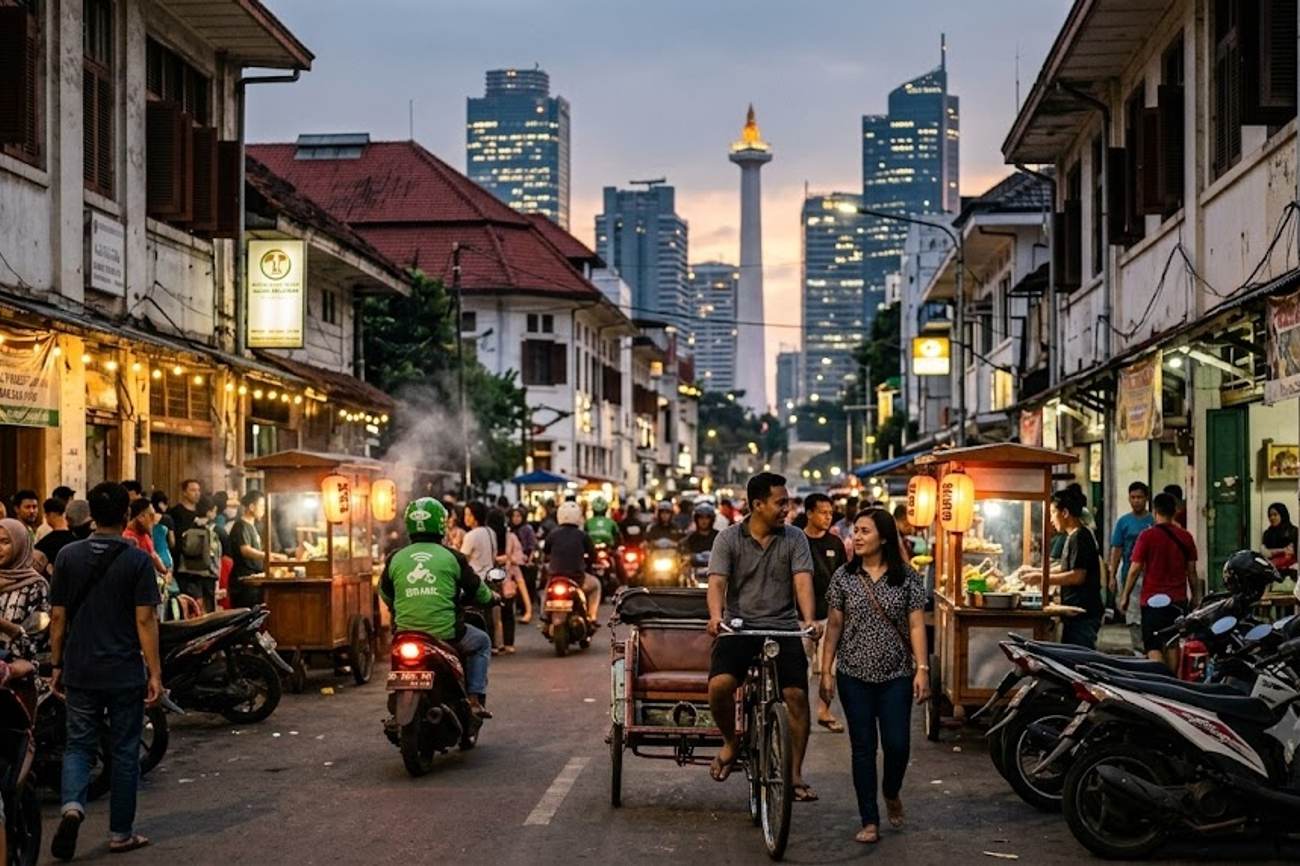
Image generated by AI
Nearly 42 million residents now call Jakarta home, catapulting the Indonesian capital to the position of the world’s most populous city. This staggering figure, derived from the United Nations’ latest harmonised urban definition, reveals a metropolitan scale that dwarfs traditional global hubs like Tokyo and New Delhi. Yet, despite this unprecedented demographic density, Jakarta remains a paradox in the global travel market: a megacity of unmatched proportions that has somehow avoided the saturation and "overtourism" currently plaguing other Asian capitals.
The Methodology Behind the Megacity
The sudden ascent of Jakarta in global rankings is not the result of a sudden population explosion, but rather a fundamental shift in how the United Nations measures urban environments. The introduction of the "Degree of Urbanization" method marks a departure from relying on narrow, country-specific administrative boundaries. Instead, this new framework captures contiguous, densely settled urban areas, providing a more accurate reflection of the actual lived experience of the city.
To understand the scale of this shift, one must look at the historical data. In the 2018 UN revision, Jakarta was recorded at approximately 12 million people based on national definitions. The jump to nearly 42 million represents a recognition of the sprawling urban ecosystem that surrounds the capital, rather than a literal addition of 30 million people. For the international traveler, this means Jakarta is not a compact city with a suburb, but a massive, interconnected urban fabric where the boundaries between the city center and the surrounding metropolis have effectively vanished.
Demographic Dominance and Tourism Divergence
While Jakarta leads the world in population, its international tourism profile remains disproportionately small. When compared to regional peers like Singapore or Bangkok, Jakarta operates as a "hidden" megacity. The gap between its resident population and its visitor volume creates a unique market dynamic: a global center of commerce and culture that lacks the artificiality of high-density tourist zones.
The following data illustrates the current hierarchy of the world's largest urban areas under the 2025 UN Degree of Urbanization standards:
| Global Position | City | 2025 Population (UN Degree of Urbanization) |
|---|---|---|
| 1 | Jakarta | Nearly 42 million |
| 2 | Dhaka | Almost 40 million |
| 3 | Tokyo | 33 million |
| 4 | New Delhi | 30 million |
| 5 | Shanghai | 30 million |
| 6 | Guangzhou | 28 million |
| 7 | Cairo | 26 million |
| 8 | Manila | 25 million |
| 9 | Kolkata | 23 million |
| 10 | Seoul | 22 million |
Despite this scale, the hospitality sector suggests a city with significant breathing room. In December 2025, BPS-Statistics Indonesia reported that classified hotels maintained an occupancy rate of 59.97%, while non-classified hotels sat at 45.29%. With 63,811 classified hotel rooms available, the city is not struggling with the capacity crises seen in other global capitals. The 2.77 million international tourists recorded in 2025 indicate that Jakarta is currently under-leveraged as a leisure destination, functioning primarily as a business hub or a transit point for those heading to the beaches of Bali.
Expert Analysis: The Logistics of an Under-Visited Megacity
For the modern traveler, the disconnect between Jakarta's population and its tourist numbers is the city's primary value proposition. The direct consequence of this imbalance is a lack of "tourist pricing" and the preservation of authentic urban interactions that have been erased in cities like Tokyo or Bangkok. However, the logistical reality of navigating a city of 42 million people is daunting.
The pricing pressure in Jakarta is not driven by tourist demand, but by the internal frictions of a megacity: extreme congestion, land subsidence, and chronic flooding. For those booking trips to the capital, the primary challenge is not finding a hotel room—given the sub-60% occupancy rates—but managing the "time tax" imposed by the city's infrastructure.
From a strategic standpoint, the rise of Nusantara (the planned new capital) creates a fascinating tension. As the administrative weight shifts, Jakarta may transition from a rigid bureaucratic center to a more fluid cultural and commercial hub. This shift allows the city to pivot toward "high-value urban tourism." Instead of chasing mass volume, Jakarta is positioned to attract the "adventurous urbanist"—travelers who find the friction of a sinking, sprawling, yet culturally rich megacity more appealing than a sterilized resort experience. The city is essentially offering a glimpse into the future of urban living: a place where colonial history, extreme density, and rapid modernization collide.
The Cultural Anchor: Kota Tua and the Hospitality Pivot
The most potent draw for the international visitor remains Kota Tua (Old Jakarta). This district serves as the physical record of the city's transition from the Dutch colonial outpost of Batavia to the heart of Indonesia. Fatahillah Square and the historic port of Sunda Kelapa—where traditional pinisi sailing vessels still operate—provide a maritime narrative that connects the city to the broader Indian Ocean trade routes.
The data from Kota Tua reveals a stark divide in visitor demographics. In 2025, the district saw over 2.4 million visitors, but only 67,019 of those were international. This suggests that while the local population recognizes the district's value, the global travel market has yet to integrate Kota Tua into the standard Southeast Asian itinerary.
Simultaneously, the luxury hotel sector is evolving into a cultural attraction. The Hotel Indonesia Kempinski, a landmark since 1962, represents the era of Indonesian independence and modernization. In contrast, the House of Tugu operates more as a private museum of Peranakan antiques than a traditional hotel. This shift toward "identity-driven hospitality" is a calculated move to attract travelers who prioritize cultural immersion over generic luxury. By turning hotels into repositories of national history, Jakarta is attempting to create "destination anchors" that give travelers a reason to stay in the city rather than immediately flying to the islands.
Key Takeaways
- Demographic Shift: Jakarta is now the world's largest city with nearly 42 million people, surpassing Tokyo and Dhaka due to new UN "Degree of Urbanization" metrics.
- Capacity Surplus: With classified hotel occupancy at 59.97% (December 2025), the city lacks the overcrowding seen in other Asian hubs, offering a more authentic, less commercialized experience.
- Cultural Undervaluation: Kota Tua attracts millions of domestic visitors but remains largely ignored by international tourists, with only 67,019 overseas visitors in 2025.
- Hospitality Evolution: The city is pivoting from business-centric hotels to cultural landmarks, such as the House of Tugu, to increase the average length of stay for leisure travelers.
- Infrastructure Risks: Travelers must account for systemic urban challenges, including flooding and land subsidence, which contrast with the city's luxury offerings.
FAQ: Jakarta Urban Travel 2025
Is Jakarta a good alternative to Bali for international tourists? Jakarta offers a completely different experience. While Bali is for leisure and nature, Jakarta is for those interested in urban exploration, Dutch colonial history, and the complexities of a 42-million-person megacity. It is best visited as a cultural supplement to a Bali trip.
How do I navigate the traffic in the world's most populous city? Given the extreme congestion, travelers should utilize the MRT and TransJakarta systems where possible. When using ride-sharing apps, allow significantly more time than GPS estimates suggest, especially during peak hours in the central business district.
What is the best area for historical sightseeing in Jakarta? Kota Tua (Old Jakarta) is the primary hub. Focus on Fatahillah Square for colonial architecture and the port of Sunda Kelapa to see traditional pinisi ships, which highlight Indonesia's maritime heritage.
Are the hotels in Jakarta overpriced for tourists? Actually, because occupancy rates for classified hotels are relatively low (around 60%), travelers often find better value and more availability in luxury accommodations compared to the saturated markets of Singapore or Tokyo.
The true allure of Jakarta lies not in its polish, but in the chaotic energy of a city that refuses to be contained by its own boundaries.
Tags: Jakarta 2025, UN World Urbanization Prospects, Kota Tua, Hotel Indonesia Kempinski, Indonesian Tourism, Nusantara Transition
Related Travel Guides
Disclaimer
This article is for informational and educational purposes only. It does not constitute legal, financial, or professional advice. While we strive to provide accurate and up-to-date information, travel policies, regulations, and conditions change rapidly. Always verify information with official sources before making travel decisions. Nomad Lawyer makes no representations about the accuracy, reliability, completeness, or suitability of the information provided. Readers should consult qualified professionals for advice specific to their circumstances. The views expressed in this article are those of the author and do not necessarily reflect the views of Nomad Lawyer.
Naina Thakur
Contributor & Travel Specialist
Travel enthusiast and legal writer covering visa regulations, responsible tourism, and cultural journeys across global destinations.
Learn more about our team →