
Italy Overtourism Analysis: Why 75% of Global Tourists Squeeze into 4% of Italian Territory
Data reveals 75% of global tourists in Italy visit just 4% of the country's land, causing severe urban overcrowding in Venice, Florence, and Rome.

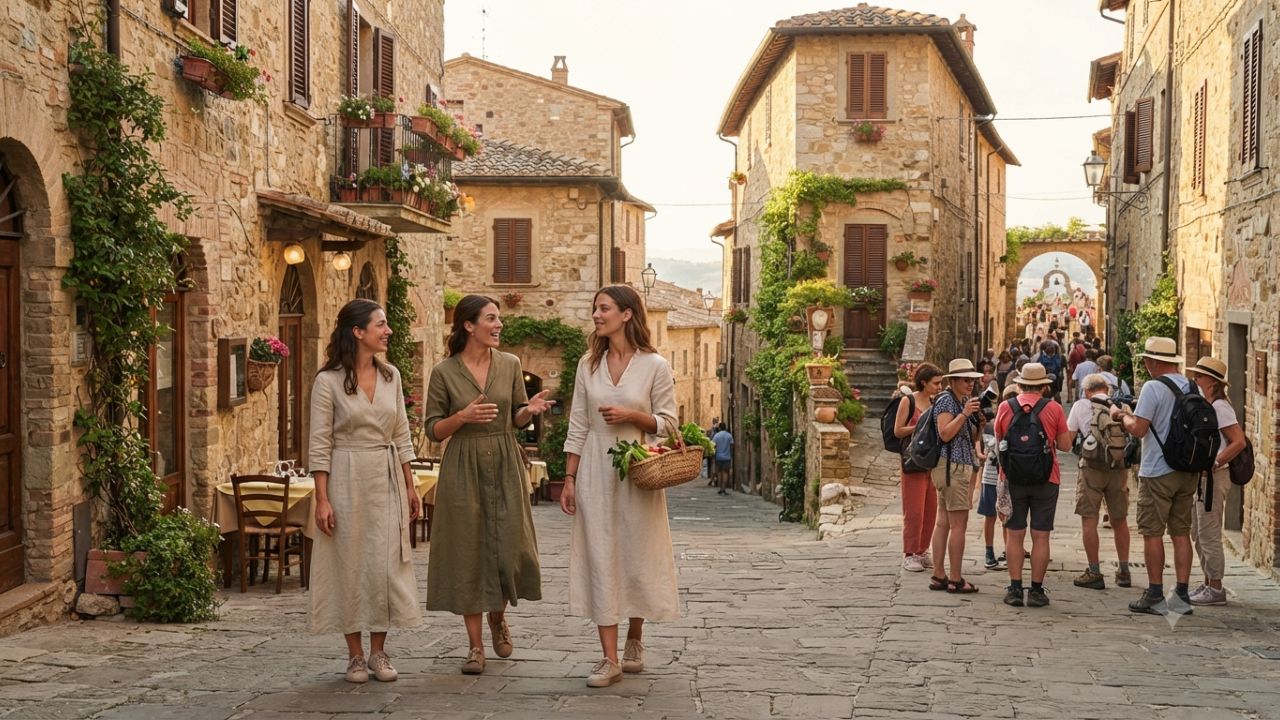
Image generated by AI
Tourism analytics reveal a profound spatial disparity across Italy, where 75 percent of global international travelers concentrate within just 4 percent of the national territory—leaving 96 percent of the country largely unvisited.
According to national visitor metrics published by the Italian National Institute of Statistics (ISTAT), over 87 million annual international tourist arrivals enter Italy. However, heavy reliance on standardized guidebooks, social media algorithms, and high-speed trunk-line rail routes funnels millions of visitors into compact urban centers like Venice, Florence, and Rome. This extreme geographic concentration creates severe municipal infrastructure strain, drives housing crises, and accelerates local depopulation in historical quarters.
The Urban Density Paradox: Venice vs. Rural Italy
The spatial imbalance is most severe in fragile historic centers. In Venice, upwards of 6.5 million annual overnight tourists—and over 10 million total provincial visitors—are compressed into a historic urban center measuring just 7.6 square kilometers. This human density has driven resident depopulation in Venice's historic core below 50,000 inhabitants.
Conversely, quiet rural provinces like Isernia in Molise record fewer than 2,000 international visitors annually. Similar patterns exist across secondary regions such as Abruzzo, Calabria, Basilicata, and Umbria, where historic villages, agricultural cooperatives, and culinary heritage operate far below their sustainable carrying capacity.
Economic Inflation, Stagnant Wages, and the Housing Crisis
While national tourism generates billions for the Italian economy, the micro-economic benefits remain concentrated among corporate hospitality chains and short-term rental operators.
- Wage Stagnation: Approximately 70 percent of frontline hospitality workers in Italy remain on seasonal or precarious employment contracts.
- Cost-of-Living Inflation: In Rome and Florence, cumulative consumer prices and living costs have inflated by over 60 percent over the past decade, while local wages have remained flat.
- Short-Term Rental Impact: In districts like San Marco in Venice and Centro Storico in Florence, real estate data shows up to four short-term vacation rentals for every single long-term residential lease.
High-Speed Rail Logistics Maintain the 4 Percent Transit Loop
Transportation infrastructure heavily influences tourist distribution across the peninsula. National railway data shows that over 65 percent of first-time international visitors purchase high-speed Frecciarossa or Italo train tickets exclusively along the primary Milan–Bologna–Florence–Rome–Naples trunk line.
While high-speed rail provides rapid connection between primary gateways, it bypasses regional branch lines that link to lesser-known provinces. Consequently, secondary regions struggle to capture independent travelers, while primary hubs handle municipal waste surges of up to 300 percent during peak summer months. In Rome, daily transient tourist inflows in core heritage zones around the Colosseum and Trevi Fountain exceed 100,000 visitors.
Shift Toward Slow Travel: Bypassing Mass Destinations
A growing shift in traveler psychology is driving alternative travel habits. Consumer surveys indicate that over 40 percent of millennial and Gen-Z travelers actively choose to bypass top-tier mass destinations in favor of secondary towns. This trend has fueled a 15 percent year-on-year increase in bookings for rural agriturismos and independent wine estates across regions like Piedmont and Puglia.
| Tourism & Economic Indicator | Core 4% Tourist Corridors (Rome, Florence, Venice) | Remaining 96% Regional Territory (Molise, Abruzzo, Puglia) |
|---|---|---|
| Visitor Distribution | 75% of global international arrivals | 25% distributed across 20 administrative regions |
| Urban Land Area Coverage | Concentrated in ~7.6 sq km in Venice; core historic districts | Covers vast rural, coastal, and mountain areas |
| Housing Market Impact | Up to 4 short-term rentals per 1 long-term lease | Stable local housing supply & authentic residency |
| High-Speed Rail Access | 65%+ of first-time visitors travel strictly on trunk line | Served primarily by regional branch lines & regional transit |
| Peak Summer Waste Surge | +300% municipal solid waste increase in historic centers | Minimal environmental utility strain |
Frequently Asked Questions
Why do 75 percent of tourists visit only 4 percent of Italy?
First-time travelers are funneled into Rome, Florence, and Venice due to standardized travel marketing, packaged tour routes, and high-speed rail connections along the main Milan-Naples axis.
How many people live in the historic center of Venice?
The permanent population in the historic center of Venice has dropped below 50,000 inhabitants due to housing cost inflation and the expansion of short-term vacation rentals.
How much have living costs increased in Florence and Rome?
Cost-of-living expenses and housing rentals in Florence and Rome have inflated by over 60 percent over the past decade, while local hospitality wages have remained flat.
What is the impact of overtourism on municipal waste in Italy?
Historic city centers in primary Italian tourist hubs experience up to a 300 percent surge in solid waste generation during peak summer travel months compared to off-season levels.
Related Travel Guides
Disclaimer
This article is for informational and educational purposes only. It does not constitute legal, financial, or professional advice. While we strive to provide accurate and up-to-date information, travel policies, regulations, and conditions change rapidly. Always verify information with official sources before making travel decisions. Nomad Lawyer makes no representations about the accuracy, reliability, completeness, or suitability of the information provided. Readers should consult qualified professionals for advice specific to their circumstances. The views expressed in this article are those of the author and do not necessarily reflect the views of Nomad Lawyer.
Raushan Kumar
Founder & Lead Developer
Full-stack developer with 11+ years of experience and a passionate traveller. Raushan built Nomad Lawyer from the ground up with a vision to create the best travel and law experience on the web.
Learn more about our team →