
Iraq Transforms Ancient Ur Into Global Tourism Hub With New Nasiriyah International Airport in 2026
Iraq is revolutionizing access to the Sumerian city of Ur through the Ur Tourist City project and the upcoming Nasiriyah International Airport to boost global heritage tourism.

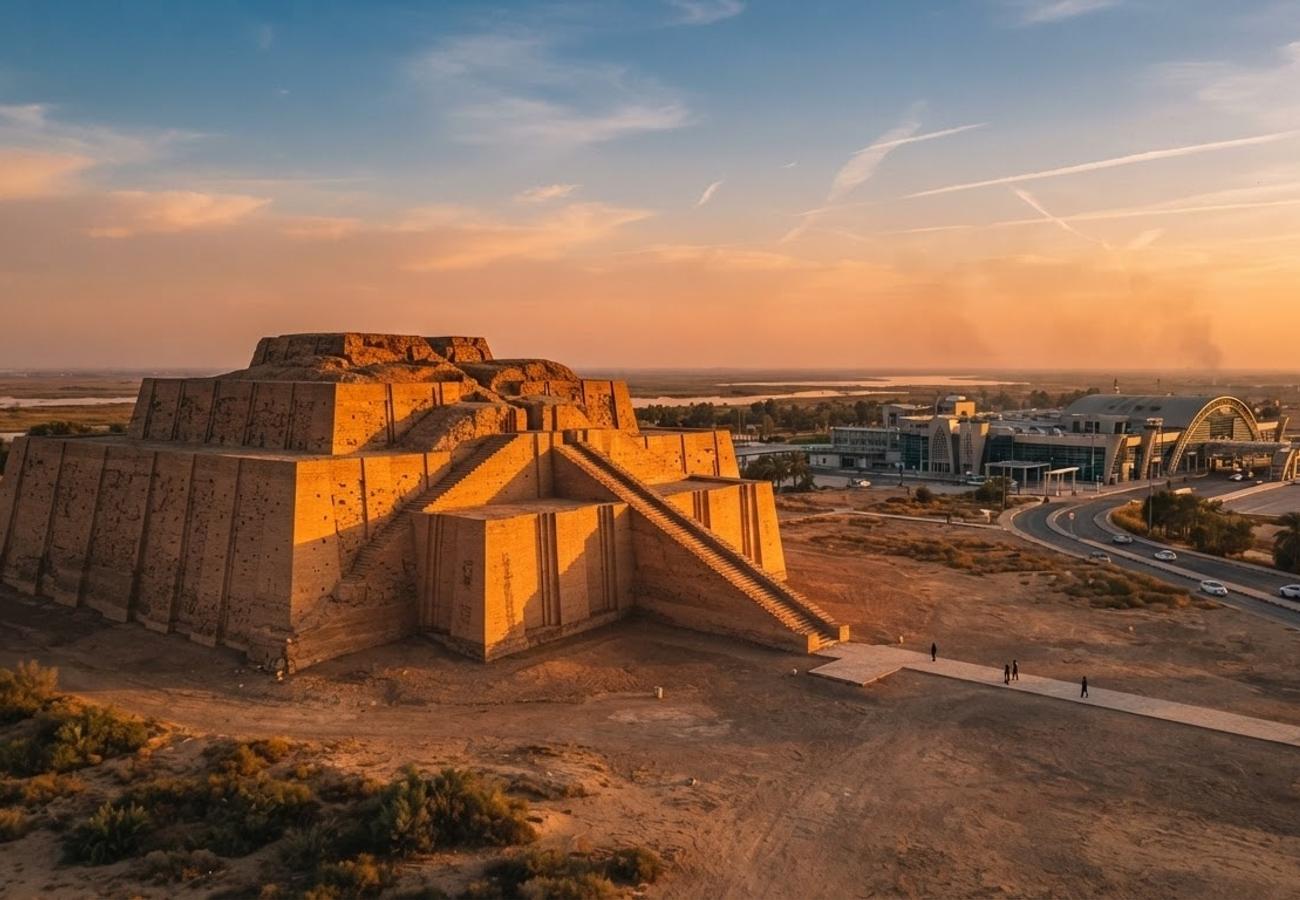
Image generated by AI
The ancient city of Ur is transitioning from a remote archaeological site into a comprehensive global destination, anchored by a new international airport capable of handling 750,000 passengers annually.
The Shift Toward Experiential Heritage
For decades, visiting the Ziggurat of Ur required arduous overland travel from Baghdad or Basra. That is changing as the Dhi Qar governorate implements a massive infrastructure pivot. The Ur Tourist City is no longer just about observing ruins; it is becoming a living cultural district.
The centerpiece of this evolution is the Ur International Museum, which is slated to house over 3,000 artefacts. By integrating service facilities and cultural programming directly into the heritage zone, Iraq is moving away from "stop-and-go" tourism toward a model where visitors stay for multiple days.
The most ambitious addition is "Drama City," a 25,000-square-metre production and cultural complex. This is the first facility of its kind in Iraq, featuring indoor filming studios and themed districts that recreate Babylonian and Sumerian life. For the visitor, this means the ability to walk through reconstructed historical quarters—complete with traditional houses and shops—bridging the gap between static archaeology and immersive experience.
Infrastructure and Cultural Capacity
To support this influx, the region is building a sophisticated performance network. The development includes:
| Facility | Capacity/Size | Purpose |
|---|---|---|
| Sumerian Theatre | 1,500 seats | Large-scale cultural performances |
| Iraq’s First Opera House | 1,250 seats | Classical music and arts |
| Ur Theatre | 500 seats | Intimate theatrical productions |
| Drama City | 25,000 sq m | Film production and heritage recreation |
| Ur International Museum | 3,000+ artefacts | Archaeological preservation and display |
The catalyst for this growth is the Nasiriyah International Airport. As of January 2026, officials confirmed that final obstacles to its opening have been resolved. The airport will launch with an initial capacity for 750,000 passengers per year, with a strategic roadmap to expand that figure to 2.5 million. This removes the primary barrier to entry for international scholars, pilgrims, and leisure travelers.
Cultural and Environmental Value
The expansion of Ur is not happening in a vacuum. The Dhi Qar regional strategy integrates the ancient city into a wider southern circuit. By linking Ur with the Mesopotamian Marshes, Basra, and Al-Jibaish, the region is promoting a diversified itinerary that blends human history with natural conservation.
There is also a significant push toward faith-based tourism. Since Ur is traditionally associated with the Prophet Abraham, the Iraq Tourism Authority highlighted in May 2026 that Christian and Abrahamic pilgrimage will be a primary pillar of the city's growth. This approach allows the site to serve as a bridge for interfaith dialogue while providing a steady economic stream for local communities.
Visitor Insider Tips
For those planning a journey to southern Iraq in 2026, keep these local nuances in mind:
- The Optimal Window: Visit between November and March. The southern heat in Dhi Qar can be extreme; the cooler winter months allow for full-day explorations of the Ziggurat and the Marshes.
- Marshland Etiquette: When visiting the Mesopotamian Marshes via the southern circuit, hire local guides from the marsh-dwelling communities. This ensures your tourism spend directly supports the indigenous economy.
- Logistics: Until Nasiriyah International Airport is fully operational for all global carriers, the most reliable route remains flying into Baghdad or Basra and arranging a licensed private driver for the journey to Ur.
- Cultural Note: When visiting religious sites associated with Abraham, modest dress is expected. Carrying a light scarf is recommended for both men and women.
Tourism Outlook
The long-term impact of the Ur Tourist City is the decentralization of Iraqi tourism. By creating a high-capacity gateway in the south, Iraq is reducing the pressure on Baghdad and opening up the Dhi Qar governorate to sustainable economic growth. The integration of film production (Drama City) with archaeology suggests a future where "screen tourism" drives a new generation of visitors to the cradle of civilization.
The rebirth of Ur marks a pivotal moment in Iraq's journey to reclaim its role as a global center for history and culture.
Related Travel Guides
Disclaimer
This article is for informational and educational purposes only. It does not constitute legal, financial, or professional advice. While we strive to provide accurate and up-to-date information, travel policies, regulations, and conditions change rapidly. Always verify information with official sources before making travel decisions. Nomad Lawyer makes no representations about the accuracy, reliability, completeness, or suitability of the information provided. Readers should consult qualified professionals for advice specific to their circumstances. The views expressed in this article are those of the author and do not necessarily reflect the views of Nomad Lawyer.
Kunal K Choudhary
Co-Founder & Contributor
A passionate traveller and tech enthusiast. Kunal contributes to the vision and growth of Nomad Lawyer, bringing fresh perspectives and driving the community forward.
Learn more about our team →