
Iran Reopens Hormuz Strait: Cruise Ships May Finally Escape Gulf Ports in 2026
Iran lifts wartime shipping restrictions through the Strait of Hormuz in 2026, potentially freeing thousands of cruise passengers stranded in Gulf ports during ceasefire period.

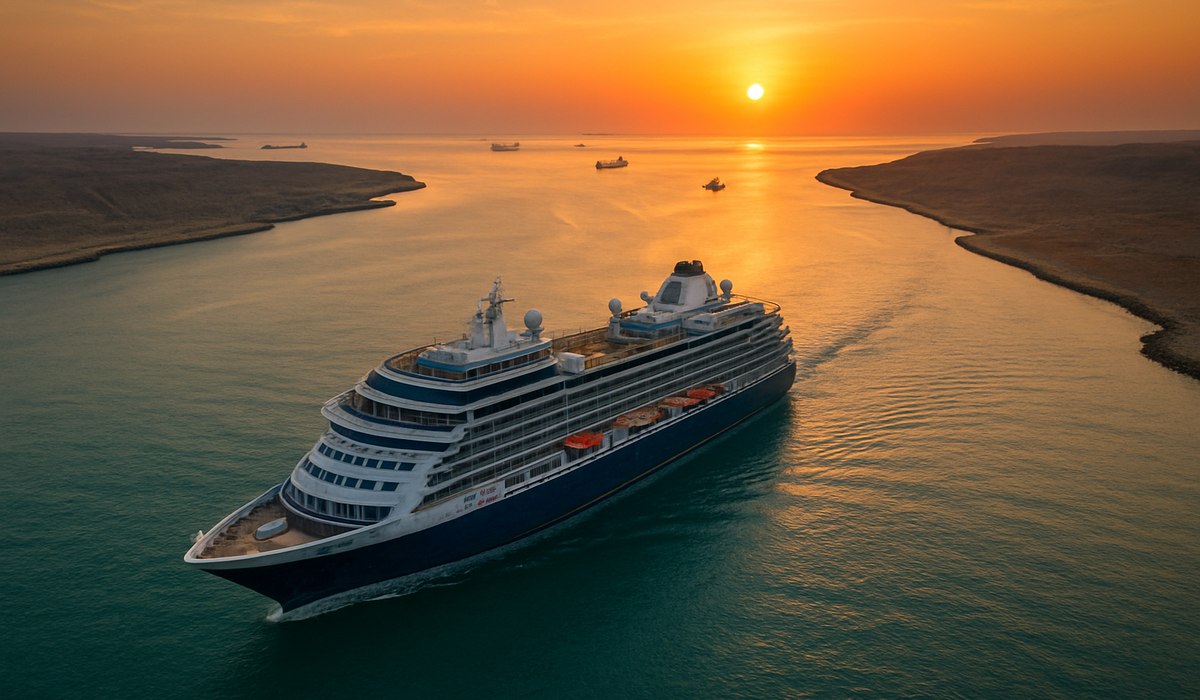
Image generated by AI
Iran Reopens Critical Shipping Route, Offering Lifeline to Stranded Cruise Passengers
Iran announced on April 17, 2026, that it is lifting wartime restrictions on the Strait of Hormuz, describing the critical waterway as "fully open" to commercial traffic during the current ceasefire period. The declaration offers potential relief for at least 15,000 cruise passengers and six major cruise vessels that have been effectively stranded in Gulf ports for weeks, unable to depart through the world's most vital maritime chokepoint.
The reopening marks a dramatic reversal after Iranian authorities employed radio warnings, naval patrols, and reported sea mines to curtail shipping traffic by over 80 percent compared to pre-conflict levels. Now, as both sides observe a temporary ceasefire, civilian vessels—including large cruise ships—can formally request passage through the Strait of Hormuz, the narrow waterway connecting the Persian Gulf to the Gulf of Oman.
However, cruise operators and passengers shouldn't expect immediate departures. Insurance considerations, security protocols, and lingering maritime risks mean the path to normal cruise operations through the strait remains uncertain and conditional.
What Changed: Hormuz Now "Fully Open" to Commercial Traffic
Iran's reopening of the Strait of Hormuz represents the most significant shift in regional maritime access since conflict intensified weeks ago. Iranian authorities have signaled that the narrow passage—through which roughly 21 percent of the world's traded oil flows annually—is now available to commercial shipping during the ceasefire window.
The shift affects all vessel categories, from oil tankers to container ships and, critically for the tourism sector, large cruise vessels. Prior to this announcement, a combination of Iranian restrictions and war-risk insurance limitations had effectively sealed the Gulf, trapping cruise ships inside regional ports.
According to maritime security updates and industry reporting, the Strait of Hormuz reopening applies to neutral commercial traffic requesting passage. Ships no longer face the de facto closure imposed through military control and navigational hazards that characterized the conflict's peak.
That said, implementation details remain fluid. Maritime security advisories continue to recommend prior coordination with Iranian authorities, route submissions, and compliance checks. Operators should consult resources like Cruise Critic for the latest passenger alerts and vessel movement updates.
The reopening has already triggered measurable market responses. Oil prices declined sharply on the news, reflecting expectations that energy exports can resume more normalized shipping flows through the strait.
Cruise Industry Implications and Insurance Considerations
The cruise industry faces unique challenges even with the Strait of Hormuz theoretically open. Passenger vessels are fundamentally different from cargo ships: they carry thousands of civilians, lack extensive defensive systems, and are designed for comfort rather than battle resilience.
Insurance underwriters and flag states have historically imposed stricter operating constraints on cruise ships in maritime flashpoints. War-risk premiums remain elevated, and many insurers require vessels to follow specific "safe corridors" monitored by naval assets. Without reliable search-and-rescue coverage pre-positioned along the transit route, cruise operators face significant liability exposure.
At least six major cruise ships currently sit in ports across the UAE, Qatar, Saudi Arabia, and Oman. Rather than attempting immediate departures, most operators are likely adopting a "wait-and-see" posture, monitoring the ceasefire's stability and gathering insurance quotes for Hormuz transits.
Cruise line websites and industry bodies like the Cruise Lines International Association are coordinating with regional port authorities—including those in Dubai, Doha, and Jeddah—to establish safe departure windows and security protocols. Until those frameworks solidify, many stranded cruise ships will remain in warm lay-up, functioning as floating hotels for passengers unable to complete their original itineraries.
Broader Security Challenges Remain Despite Corridor
Despite Iran's declarations, multiple security risks persist along the Strait of Hormuz route. U.S. and allied naval forces maintain an ongoing blockade focused on Iranian ports and coastline, rather than neutral shipping transits. However, the distinction offers limited comfort for cruise operators.
Drone activity, potential mine fields, and the risk of miscalculation or attacks by regional proxy forces remain real concerns. Maritime advisories from the U.S. Maritime Administration and International Maritime Organization continue to flag the corridor as a high-risk passage requiring enhanced security protocols.
Cruise ships are uniquely vulnerable in such environments. They cannot accelerate to evasive speeds, lack armor, and carry insufficient crew to manage complex security emergencies. Operators must therefore weigh passenger safety against commercial pressure to resume normal itineraries.
Iranian authorities have hinted at continuing to require ships navigate through monitored "safe corridors" with naval escorts or within designated lanes. This gatekeeper function grants Iran informal control over transit flows and reinforces the need for pre-authorization before any cruise vessel attempts passage.
Insurance claims, passenger litigation, and reputational damage could follow even a minor incident. Cruise lines are therefore unlikely to risk Hormuz transits until military and political conditions stabilize further and underwriters confirm normalized rates.
Market Impact and Oil Price Response
Financial markets responded immediately to Iran's Hormuz reopening announcement. Oil futures declined sharply as traders priced in the prospect of resumed energy exports from Iran and increased shipping flows through the strait.
Energy sector analysts noted that even a partial resumption of Iranian oil exports could add hundreds of thousands of barrels per day to global supply, dampening prices that had spiked during the conflict. Tanker operators and logistics firms similarly anticipated reduced freight rates as competition for Hormuz passage increases.
For the cruise industry, the economic calculus is more complicated. While lower energy costs reduce fuel expenses for cruise operators, the benefit is offset by elevated war-risk insurance premiums and the cost of security enhancements. Cruise lines cannot immediately resume discounted fares, as operational costs remain elevated.
However, the psychological impact of a reopened Strait of Hormuz is significant. Investors and consumers interpret the step as a marker of de-escalation, potentially stabilizing cruise bookings for regional itineraries and rebuilding confidence in Gulf port operations.
Longer-term, if the ceasefire holds and insurance markets normalize, cruise lines could begin deploying additional capacity to popular Gulf destinations like Abu Dhabi, Doha, and Muscat. Such expansions would benefit regional economies and cruise ports that have faced weeks of disruption.
Cruise Itinerary at a Glance
| Factor | Pre-Conflict Status | During Closure | Post-Reopening (Projected) |
|---|---|---|---|
| Strait of Hormuz Traffic | ~21% of global oil trade flows; 90%+ commercial vessel passage | 80%+ reduction; effective closure to cruise ships | Gradual normalization; safe corridors required |
| Typical Gulf Cruise Ports | Dubai, Abu Dhabi, Doha, Muscat, Jeddah | Operational but stranding passenger ships | Expected to resume normal scheduling |
| Insurance War-Risk Premium | Standard rates (0.5–1.5%) | Elevated (3–8%+) | Expected gradual decline if ceasefire holds |
| Vessel Transit Time | 8–12 hours through Hormuz | N/A; transits halted | 10–16 hours with security protocols |
| Search & Rescue Coverage | Regional navies + international assets | Minimal | To be re-established by allied forces |
| Prior Authorization Required | No | Yes (Iranian coordination) | Likely informal requirement persists |
What This Means for Travelers
For cruise passengers and potential bookers, the Strait of Hormuz reopening presents both opportunity and caution.
- Stranded Passengers May Exit Soon: Thousands of travelers marooned in Gulf ports should begin seeing departure windows within days to weeks
Disclaimer
This article is for informational and educational purposes only. It does not constitute legal, financial, or professional advice. While we strive to provide accurate and up-to-date information, travel policies, regulations, and conditions change rapidly. Always verify information with official sources before making travel decisions. Nomad Lawyer makes no representations about the accuracy, reliability, completeness, or suitability of the information provided. Readers should consult qualified professionals for advice specific to their circumstances. The views expressed in this article are those of the author and do not necessarily reflect the views of Nomad Lawyer.
Kunal K Choudhary
Co-Founder & Contributor
A passionate traveller and tech enthusiast. Kunal contributes to the vision and growth of Nomad Lawyer, bringing fresh perspectives and driving the community forward.
Learn more about our team →