
International Tourists Contribute 45% of Airport Retail Spending in 2026
International tourists now drive 35-45% of airport retail spending globally in 2026, reshaping terminal commerce strategies. Duty-free and luxury categories lead growth as airports adapt to traveler behavior patterns.

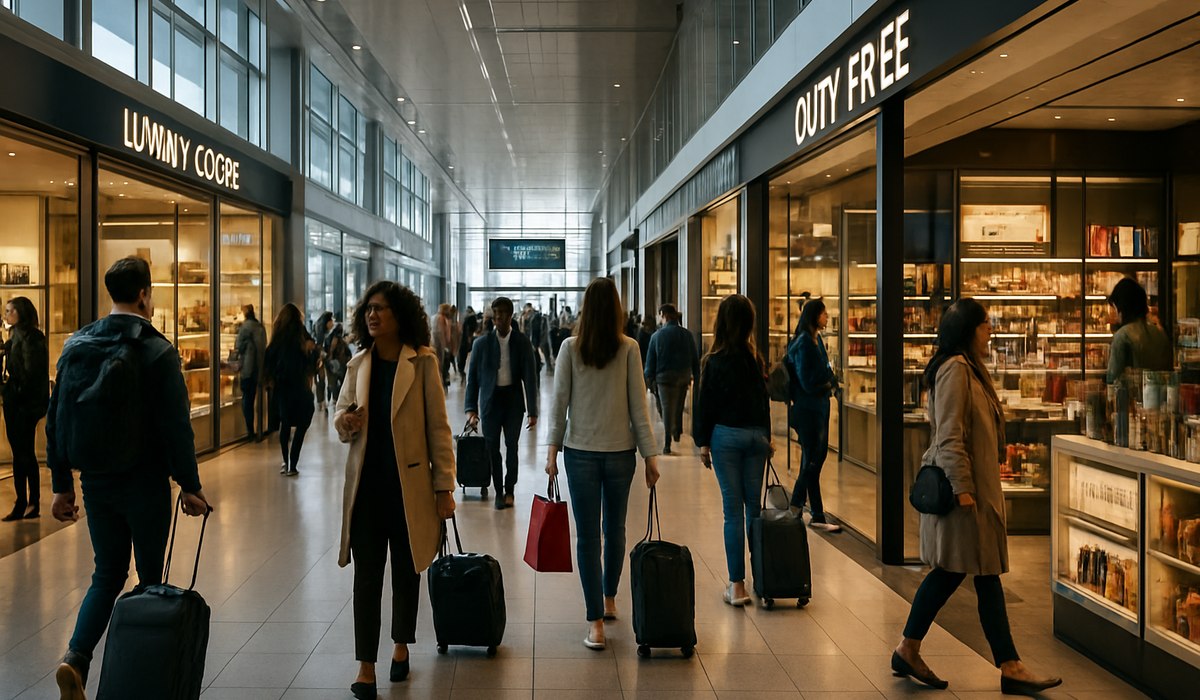
Image generated by AI
International Tourists Now Drive Airport Retail Economics Worldwide
International tourists account for 35 to 45 percent of airport retail spending globally, making them the dominant consumer segment reshaping how terminals operate and merchandise their products. This significant market influence reflects changing travel patterns and passenger preferences across major international hubs. Airport operators worldwide are fundamentally restructuring retail strategies to capitalize on this lucrative tourist demographic, fundamentally altering the landscape of terminal commerce in 2026.
The shift represents more than simple consumer statistics. International tourists contribute to airport economies through extended dwell times, higher average transaction values, and distinct purchasing behaviors compared to domestic travelers. Understanding these patterns has become critical for airport management and retail operators seeking competitive advantages in an increasingly crowded marketplace.
International Tourists Reshape Airport Retail Economics
The growing dominance of international tourists in airport retail reflects broader travel industry trends. Global passenger numbers continue climbing post-2025, with international routes recovering faster than domestic services. Airports capitalizing on this trend are investing heavily in retail expansion and premium brand partnerships.
International tourists contribute significantly more per transaction than domestic passengers. Research indicates visitors from abroad typically spend 2.5 to 3 times more than local travelers when purchasing goods at terminals. Currency exchange advantages, duty-free exemptions, and limited shopping access in travelers' home countries drive this behavior.
Major international hubs like Singapore Changi, Dubai International, and London Heathrow have restructured entire terminal sections around international passenger preferences. These airports report retail revenue increases of 18-28 percent following merchandise strategy shifts targeting overseas visitors. The trend validates investor confidence in airport retail as a growth category.
How Passenger Behavior Drives Terminal Commerce Strategy
Passenger dwell time directly correlates with retail spending across all airport categories. International tourists typically spend 45 to 90 minutes in terminals before departure, compared to 25 to 40 minutes for domestic passengers. This extended window creates multiple purchasing opportunities across food, beverage, luxury goods, and travel accessories.
Category behavior reveals distinct preferences among international visitors. Duty-free cosmetics and fragrances rank highest among female international tourists, while luxury watches and accessories appeal primarily to male travelers. These behavioral patterns influence everything from store locations to product assortments and promotional calendars.
Airport operators now employ sophisticated data analytics to predict international tourist arrivals by nationality and travel patterns. This intelligence allows retailers to stock merchandise aligned with specific visitor preferences. A terminal serving predominantly Asian tourists will feature different offerings than one primarily serving European passengers.
Dwell time optimization has become a critical KPI for airport management. By strategically placing retail outlets and creating appealing retail environments, terminals extend passenger shopping time and boost spending metrics. FlightAware passenger tracking data helps airports anticipate arrival flows and staff retail operations accordingly.
Duty-Free and Luxury Categories Lead Retail Growth
Duty-free shopping remains the cornerstone of airport retail strategy, accounting for 40-50 percent of terminal sales revenue. International tourists contribute disproportionately to this category, with alcohol, tobacco, and fragrances dominating purchase selections. The appeal of tax savings combined with limited availability in home markets drives robust demand.
Luxury goods represent the fastest-growing segment within airport retail environments. High-end watch brands, designer handbags, and premium skincare lines have expanded their airport footprints by 35-42 percent since 2024. International tourists contribute substantially to this growth, often purchasing luxury items exclusively during travel.
Convenience categories have also evolved to serve international passenger preferences. Premium snacking, travel-sized toiletries, and specialized dietary products now occupy significant retail floor space. These categories achieve higher margin rates while providing convenience-driven value propositions that resonate with time-constrained travelers.
Purchase occasion and travel purpose influence international tourist spending patterns significantly. Business travelers typically prioritize time-saving convenience purchases, while leisure tourists allocate more budget toward experiential and luxury categories. Airport retailers increasingly segment strategies around these behavioral distinctions.
What This Means for Airport Operators Globally
International tourists contribute essential revenue streams that fundamentally impact airport profitability and competitiveness. Terminals that successfully engage this demographic outperform competitors by significant margins. Strategic retail investment has become mandatory rather than optional for airports seeking financial sustainability.
The runway for growth remains substantial across emerging markets. Secondary cities and regional hubs are investing aggressively in retail infrastructure to capture international tourist spending. As global travel networks expand beyond major metropolitan centers, retail opportunities proliferate for forward-thinking airport operators.
Airport operators must balance retail expansion with operational efficiency and passenger experience quality. Overcrowded retail environments create friction that reduces spending and passenger satisfaction simultaneously. The most successful terminals achieve equilibrium between retail density and passenger flow optimization.
Capital investment requirements have increased significantly for airports pursuing aggressive retail expansion strategies. Modern duty-free zones require sophisticated inventory management systems, compliance technologies, and trained staff capable of serving multilingual customer bases. These infrastructure investments demand substantial upfront capital before generating returns.
Traveler Action Checklist for Airport Shopping Success
-
Identify duty-free eligible categories before arrival at your destination airport to maximize tax savings on planned purchases.
-
Verify your home country's customs allowances for duty-free goods, as restrictions vary significantly by nation and product category.
-
Compare airport retail prices against home market pricing beforehand, particularly for luxury and premium categories where margins vary substantially.
-
Allocate adequate dwell time for retail browsing by arriving at the airport earlier than minimum check-in requirements mandate.
-
Check exchange rate policies at airport retailers, as some outlets offer favorable rates while others impose significant premiums over spot rates.
-
Research brand presence at your specific airport terminal, as flagship luxury brands aren't available at all international hubs.
-
Monitor promotional calendars for seasonal sales events that create enhanced value opportunities compared to standard retail pricing.
-
Review passenger rights regarding purchases made at airports using the US DOT Airline Consumer Protection resources for dispute resolution if issues arise.
Key Data Table: International Tourist Airport Retail Metrics
| Metric | Value | Notes |
|---|---|---|
| International tourist share of retail spending | 35-45% | Global average across major hubs |
| Spending multiplier vs. domestic passengers | 2.5-3x | Per-transaction comparative advantage |
| Average dwell time (international) | 45-90 minutes | Enables multiple retail touchpoints |
| Duty-free category revenue share | 40-50% | Highest-margin retail segment |
| Luxury goods growth rate (2024-2026) | 35-42% | Fastest-expanding category |
| Top-performing categories for international tourists | Fragrances, watches, handbags | Gender and demographic variations exist |
Frequently Asked Questions
Q: Why do international tourists spend more at airports than domestic passengers?
A: International tourists benefit from duty-free tax exemptions, currency advantages, and products unavailable in home markets. Extended dwell times and vacation mindsets also encourage increased spending compared to routine domestic travel.
Q: Which airport retail categories perform best with international tourists?
A: Duty-free fragrances, luxury watches, designer accessories, and premium skincare dominate international tourist purchases. Convenience categories like specialty snacks and travel-sized products also perform strongly with time-conscious travelers.
Q: How can I find specific brands at my departure airport?
A: Most major airports publish comprehensive retail directories on their official websites. Contact your airport's retail office directly for brand location information and current inventory status before travel.
Q: Are airport retail prices competitive with duty-free shops or online retailers?
A: Airport prices vary significantly by category and location. Duty-free goods typically offer genuine savings, while luxury items sometimes carry premiums. Compare prices beforehand for categories you plan to purchase.
What This Means for Travelers in 2026
International tourists contribute meaningfully to airport revenues through retail spending, and airports are responding by enhancing
Disclaimer
This article is for informational and educational purposes only. It does not constitute legal, financial, or professional advice. While we strive to provide accurate and up-to-date information, travel policies, regulations, and conditions change rapidly. Always verify information with official sources before making travel decisions. Nomad Lawyer makes no representations about the accuracy, reliability, completeness, or suitability of the information provided. Readers should consult qualified professionals for advice specific to their circumstances. The views expressed in this article are those of the author and do not necessarily reflect the views of Nomad Lawyer.
Preeti Gunjan
Contributor & Community Manager
A passionate traveller and community builder. Preeti helps grow the Nomad Lawyer community, fostering engagement and bringing the reader experience to life.
Learn more about our team →