
Airbus A380's Massive Weight Forces Global Airports to Rebuild Infrastructure Beyond Boeing 747 Standards
Breaking airline news and aviation industry updates for 2026.

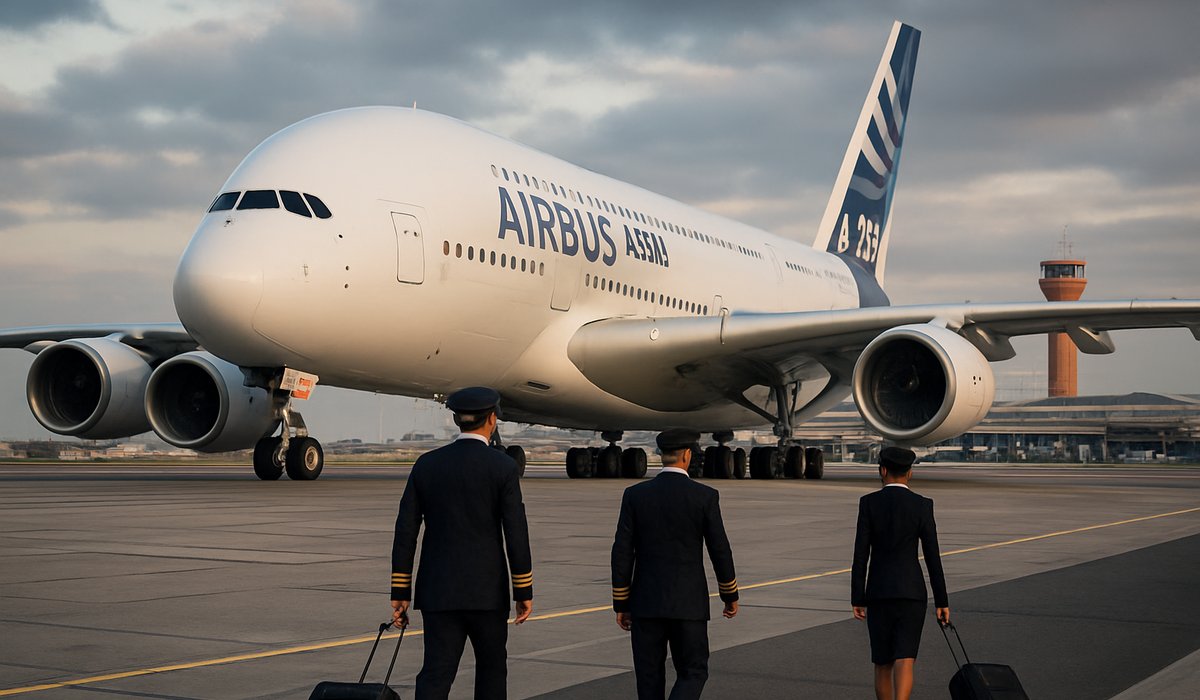
Image generated by AI
Airbus A380's Massive Weight Forces Global Airports to Rebuild Infrastructure Beyond Boeing 747 Standards
The superjumbo's 575-tonne maximum takeoff weight has triggered unprecedented redesign of runways, taxiways, and terminal gates worldwide
A Giant Arrives, Infrastructure Crumbles
The introduction of the Airbus A380 has fundamentally reshaped airport infrastructure planning across the globe, forcing aviation authorities to confront a critical reality: decades-old facilities designed around the Boeing 747 are inadequate for a new generation of ultra-heavy aircraft. With a maximum takeoff weight of 575 tonnes—substantially heavier than the previous standard-bearer—the double-deck superjumbo has triggered a multi-billion-dollar cascade of structural upgrades at major international hubs.
For decades, the Boeing 747 served as the de facto architectural baseline for modern airport design. Terminal gates, runway load-bearing capacity, taxiway thickness, and ground support infrastructure were uniformly calibrated around this industry standard. Yet the A380's arrival shattered that singular paradigm, demanding comprehensive reinvestment in facilities that were never engineered to accommodate such concentrated weight distribution.
The Infrastructure Challenge
The A380's structural demands extend far beyond simple runway expansion. Airports have been forced to reinforce taxiway surfaces, upgrade apron pavements, and restructure gate complexes to accommodate the aircraft's extended wingspan and unprecedented mass. The financial burden has been staggering, with major airports—including Dubai, Singapore, London Heathrow, and Frankfurt—investing billions to remain competitive for A380 operations.
Load-bearing calculations have proven particularly challenging. The superjumbo's weight concentration on eight landing gear wheels creates stress patterns that conventional pavements cannot sustain without complete replacement. Additionally, the aircraft's 79.8-meter wingspan requires wider taxiway corridors and expanded holding areas, effectively rendering some existing infrastructure obsolete.
Global Compliance and Competitive Pressure
Airports worldwide face a strategic dilemma: failing to accommodate the A380 risks losing premium long-haul routes and the substantial revenue they generate. Airlines operating superjumbos—primarily Emirates, Singapore Airlines, and Lufthansa—strategically deploy these aircraft on ultra-high-capacity routes, making terminal compatibility a commercial necessity rather than optional investment.
Ground support equipment has similarly evolved, with specialized tow tractors, baggage handling systems, and fueling infrastructure requiring complete overhauls. Some regional airports have elected not to pursue A380 certification, effectively limiting their competitiveness in premium intercontinental markets.
Long-term Industry Implications
While A380 production has slowed significantly—with Airbus halting deliveries in 2021—the aircraft's infrastructure legacy remains embedded in global aviation. The operational lessons learned from retrofitting aging facilities continue to influence new airport design standards, ensuring that future aircraft programs receive adequate infrastructure planning from initial concept phases.
FAQ: Understanding A380 Infrastructure Impact
Q: Why did airports need to rebuild infrastructure for the A380? A: The A380's 575-tonne maximum weight far exceeds the Boeing 747's design parameters, requiring stronger pavements, reinforced taxiways, and structurally upgraded terminal gates.
Q: How much did global airport upgrades cost? A: While specific totals vary, major hubs invested billions collectively. Dubai, Singapore, and London Heathrow each spent hundreds of millions on A380 compatibility upgrades.
Q: Which airports cannot accommodate the A380? A: Regional airports with weight limitations, shorter runways, and aging infrastructure lack certification for A380 operations, effectively excluding them from premium long-haul markets.
Q: Are new aircraft facing similar infrastructure challenges? A: Modern aircraft programs now integrate early infrastructure consultation with airport operators, preventing the costly retrofitting challenges the A380 created.
Q: Will the A380's infrastructure legacy influence future airport design? A: Yes—design standards now incorporate contingency planning for heavier, larger aircraft, making infrastructure more adaptable to technological evolution.
Related Travel Guides
External Resources
Disclaimer
This article is for informational and educational purposes only. It does not constitute legal, financial, or professional advice. While we strive to provide accurate and up-to-date information, travel policies, regulations, and conditions change rapidly. Always verify information with official sources before making travel decisions. Nomad Lawyer makes no representations about the accuracy, reliability, completeness, or suitability of the information provided. Readers should consult qualified professionals for advice specific to their circumstances. The views expressed in this article are those of the author and do not necessarily reflect the views of Nomad Lawyer.
Raushan Kumar
Founder & Lead Developer
Full-stack developer with 11+ years of experience and a passionate traveller. Raushan built Nomad Lawyer from the ground up with a vision to create the best travel and law experience on the web.
Learn more about our team →