
IndiGo Suspends Six Asian Routes Through September 2026 as Fuel Costs Crush Indian Aviation
India's largest low-cost carrier IndiGo halts operations to Langkawi, Krabi, Ho Chi Minh City, Hong Kong, Shanghai, and Siem Reap until October 1 amid soaring jet fuel prices and weakening demand.

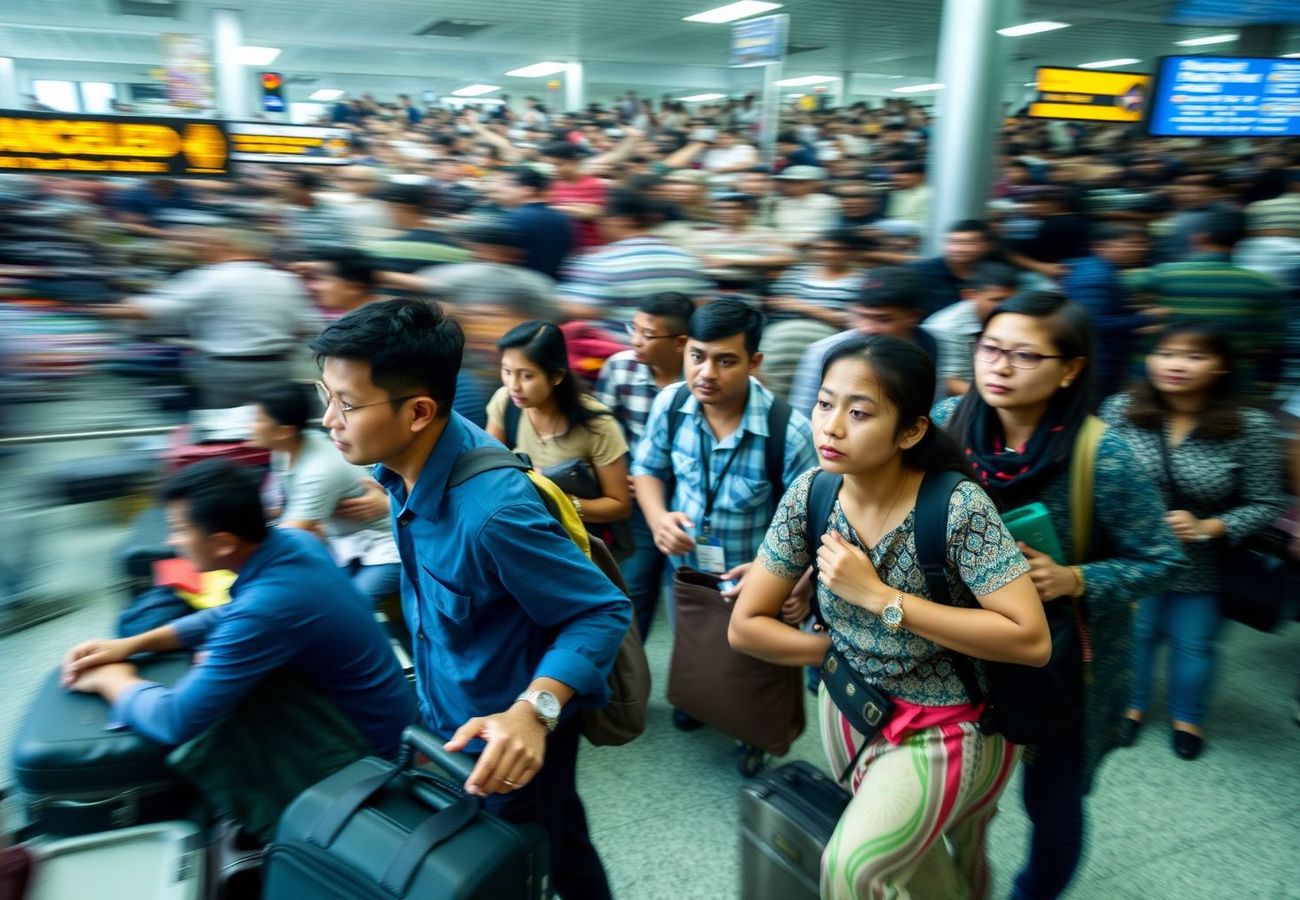
Image generated by AI
On June 4, 2026, India's largest low-cost carrier IndiGo dropped a bombshell on the aviation sector: six international routes across Southeast and East Asia would be suspended starting July 1—a dramatic network retrenchment driven by crushing fuel costs and anemic summer demand. This isn't a minor schedule adjustment. This is a strategic retreat revealing the existential pressure weighing on India's airline industry.
The decision marks a watershed moment. When carriers the size of IndiGo—which operates over 1,800 weekly international flights—start cutting routes, it signals systemic distress rippling through the entire Indian aviation ecosystem. The airline industry in India is caught between a geopolitical squeeze and a macroeconomic vise, and something has to give.
The Six Routes Going Dark
Langkawi, Krabi, Ho Chi Minh City, Hong Kong, Shanghai, and Siem Reap are the doomed corridors. All operations pause effective July 1, 2026, except Siem Reap, which halts July 3. The suspension runs through September 30, 2026—precisely the monsoon and northern hemisphere summer window when leisure travel collapses and corporate traffic evaporates.
The airline isn't hiding the logic. Beach destinations like Krabi and Langkawi hemorrhage passengers during this period. Meanwhile, Hong Kong and Shanghai—major commercial hubs—are still reeling from subdued India-China trade volumes and uneven post-pandemic recovery. Why burn fuel flying half-empty aircraft to destinations where demand has flatlined?
Reddit: "My flight to Hong Kong just got cancelled. IndiGo says October 1st reopening, but I need to go in August. No alternatives listed. This is a disaster for business travelers." — r/IndiaTravel
The Fuel Price Apocalypse
Here's the brutal reality: aviation turbine fuel (ATF) represents 40 percent of operational costs for Indian carriers—spiking to 60 percent during market volatility. In March 2026, ATF traded at 60.50 rupees per litre. By May, it had exploded to 142 rupees per litre. That's a 135 percent price shock in two months.
The culprit? Geopolitical chaos in West Asia, Brent crude volatility, and airspace closures forcing longer, fuel-intensive flight paths. Just days before this announcement, IndiGo also suspended its indefinite Mumbai-Manchester nonstop service effective August 31, 2026—forcing the return of a leased Boeing 787-9 Dreamliner to Norse Atlantic Airways ahead of schedule. One aircraft, one route, millions in losses.
This isn't speculation. Aviation fuel costs have become the dominant variable in airline profitability, and when prices surge 135 percent in 60 days, route viability collapses overnight.
The Broader Bloodbath
IndiGo isn't alone. The entire Indian aviation sector is hemorrhaging capacity. The airline previously signaled 5-7 percent domestic capacity cuts and 17 percent international capacity reductions. Simultaneously, Air India announced a domestic flight reduction of approximately 22 percent during summer season—a devastating contraction orchestrated by the Tata Group.
These aren't minor prunings. These are wholesale dismantling of networks that took years to build. A weakening Indian rupee, jet fuel costs that have doubled, and muted travel demand are strangling every major carrier operating from India.
Government Steps In (Sort of)
Recognizing the catastrophe unfolding, the Central Government introduced the ATF Price Stabilisation Fund—a new pricing mechanism attempting to cap aviation turbine fuel at approximately 115 rupees per litre in Delhi for both domestic and international operations.
Union Minister Ashwini Vaishnaw announced financial assistance not exceeding 10,000 crore rupees to state-run Oil Marketing Companies, designed to cushion airlines against international price spikes. It's a band-aid on a hemorrhage. The support is temporary, the underlying cost structure remains shattered, and the government's interventions, while substantial, cannot indefinitely shield carriers from global energy markets.
What's Actually Safe
Despite the carnage, IndiGo will continue operating over 1,800 weekly international flights across its remaining network. The carrier is prioritizing high-yield domestic corridors and robust international sectors—essentially abandoning marginal routes while defending profitable ones. This is ruthless triage, not network collapse.
Bookings for all suspended routes reopen October 1, 2026—provided, IndiGo notes, that "a favorable operating environment is restored." Translation: if fuel prices crash and demand rebounds, routes come back. If not, they stay suspended or fold permanently.
What Travelers Need to Know
If you've booked flights on any of these six routes between July 1 and September 30, 2026, IndiGo's customer service is proactively notifying passengers. You'll get options: rebooking on alternative flights, refunds, or travel credits. But realistically, alternatives are limited—competing carriers are slashing capacity too.
For future bookings on these routes, verify real-time operational updates before finalizing plans. The September 30 restart is not guaranteed. Route suspensions frequently become permanent when margins remain underwater.
The Structural Verdict
This isn't a temporary crisis. It's a structural realignment. Indian airlines are being forced to shrink, rationalize, and concentrate capacity on defensible, profitable routes. The era of aggressive network expansion—fueled by cheap fuel and optimistic demand forecasts—is over.
IndiGo's announcement on June 4 signals that the low-cost carrier model cannot sustain losses indefinitely, regardless of market position. When the largest budget airline in India starts cutting routes, legacy carriers accelerate reductions, and government subsidies prove inadequate, the industry has entered a new, leaner phase. Expect more suspensions, more bankruptcies, and tighter capacity across Asian routes throughout 2026.
The skies over India are clearing—by force, not by choice.
Related Travel Guides
Qatar Travel Flights Grounded: 63 Cancelled Routes Strand Thousands Across Gulf
Norwegian Air Launches Nonstop Stockholm to Gran Canaria Route: March 2026
Disclaimer
This article is for informational and educational purposes only. It does not constitute legal, financial, or professional advice. While we strive to provide accurate and up-to-date information, travel policies, regulations, and conditions change rapidly. Always verify information with official sources before making travel decisions. Nomad Lawyer makes no representations about the accuracy, reliability, completeness, or suitability of the information provided. Readers should consult qualified professionals for advice specific to their circumstances. The views expressed in this article are those of the author and do not necessarily reflect the views of Nomad Lawyer.
Preeti Gunjan
Contributor & Community Manager
A passionate traveller and community builder. Preeti helps grow the Nomad Lawyer community, fostering engagement and bringing the reader experience to life.
Learn more about our team →