
IndiGo Joins Air China and China Southern to Open Groundbreaking Direct Corridors in 2026
As geopolitical tensions tentatively thaw in 2026, direct passenger air corridors between India and China are dramatically expanding. IndiGo, aligning with mainland supercarriers, is fueling a massive economic resurgence.

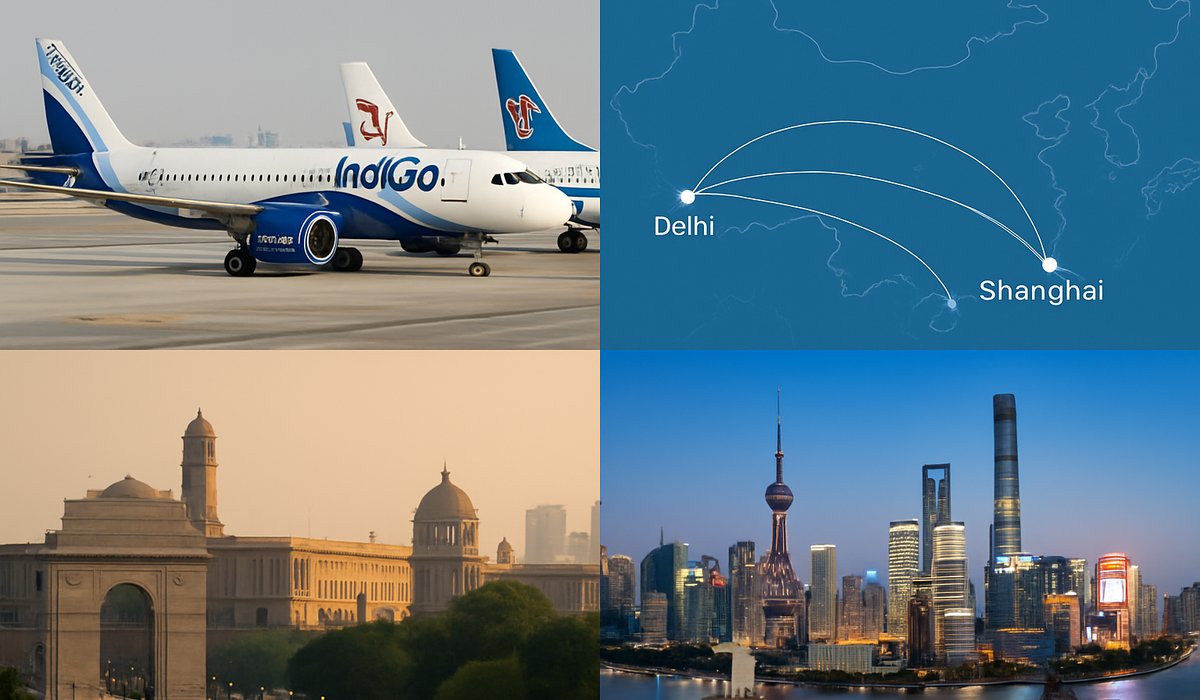
Image generated by AI
Reconnecting Giants: The 2026 Expansion of the India-China Air Corridors
In a profound shift characterizing regional aviation geopolitics in 2026, direct flight corridors connecting the massive domestic markets of India and China are witnessing a profound and heavily coordinated expansion. Led aggressively by India's low-cost juggernaut, IndiGo, connecting in parallel alongside state-backed titans Air China and China Southern Airlines, the strategic normalization of these fractured aviation ties marks a gigantic win for transcontinental economic mobility.
For years, the airspace connecting the world's two most populous nations suffered severe disruption, burdened by volatile geopolitical standoffs and pandemic-era inertia. Now, business executives, international students, and heavy-cargo logistics chains are rejoicing as flight durations plummet and multi-leg layover nightmares evaporate.
The Economic and Trade Ripple Effect
The reinstitution of direct point-to-point flights serves as the immediate circulatory system for massive trade networks. Previously severed supply chains are rapidly reattaching.
- Technology and Pharmaceuticals: High-value, time-sensitive cargo can now be vaulted between manufacturing hubs in Shenzhen and IT corridors in Bengaluru without tedious multi-day customs transit in third-party hubs like Dubai or Singapore.
- Business Agility: Executives previously reliant on convoluted, exhausting 18-hour multi-hop itineraries can now execute agile, efficient turnarounds for partnerships and factory audits. Bilateral trade volumes are statistically projected to surge alongside this newfound logistical freedom.
The Geopolitical Symbolism of Opened Airspace
Aviation experts note that aircraft rarely fly purely on jet fuel—they fly on diplomacy. The rapid acceleration of route licensing by civil aviation authorities in both New Delhi and Beijing signals a highly deliberate, top-down strategy to stabilize relations through "soft" economic linkage.
Direct flights function as an active, daily bridge for dialogue. When commercial jets traverse sovereign airspace unhindered, geopolitical tensions historically experience a cooling effect. These stabilized travel channels provide a fertile environment for regional collaboration across South and East Asia.
Travel Efficiency: Bypassing the Third-Country Exhaustion
For the average consumer traversing the continent, the difference is night and day. Prior to 2026, tourists and students were completely subjected to grueling routings heavily dependent on Thai Airways, Emirates, or Singapore Airlines to eventually reach their destination across the Himalayas.
Today, passengers unequivocally benefit from violently reduced transit durations. Flight durations have essentially been halved. Furthermore, simplified direct-route visa planning has stripped immense logistical friction from the corporate booking process.
What Guests Get
- Massively reduced transit times, dropping a 14-hour indirect slog down to a streamlined 5-hour direct jump
- Coordinated baggage handling without complex third-nation hub re-checks
- Elevated wide-body product deployment from Chinese carriers guaranteeing heavy cargo haulage capacity
- Sharply improved visa simplicity without needing complex multi-nation transit documentation
- Sustainable aviation fuel (SAF) pilot programs deployed on these dense corridors to manage environmental output
Future Projections for 2026 Corridors
| Carrier | Hub Focus | Primary Route Network Focus | Primary Market Function |
|---|---|---|---|
| IndiGo | Delhi / Mumbai | Guangzhou & Shanghai | High-Frequency, Low-Cost Traffic |
| Air China | Beijing | Delhi & Chennai Expansions | State & Diplomatic Mobility |
| China Southern | Guangzhou | Expanding Secondary Indian Tech Hubs | Manufacturing & Cargo Logistics |
| Vistara / Air India (Projected) | Intercontinental | TBD - Deep Continental China | Full-Service Premium Long-Haul |
What This Means for Travelers
If you operate within the technology, textiles, or pharmaceutical sectors linking India and mainland China, 2026 fundamentally restructures your annual corporate strategy. Budgeting for complex cross-Asian business travel will aggressively fall as direct competition drives ticket prices downward and erases expensive multi-night layovers.
However, environmental regulatory scrutiny heavily shadows this rapid airline capacity explosion. To aggressively counteract soaring carbon footprints generated by massive new route frequencies, travelers may slowly notice added "opt-out" carbon offset initiatives built directly into the booking software from carriers eager to appease new emission compliance frameworks. Always secure the appropriate direct-entry business visas immediately; sudden bursts of travel capacity often cause consular bottlenecks for last-minute approvals.
FAQ: India-China Direct Flights
Why were India-China direct flight connections previously so difficult? Geopolitical tensions regarding border disputes, coupled with the lingering remnants of rigorous pandemic-era border lockdowns in China, effectively snapped the bilateral aviation agreements for several years. Airlines could not secure the required sovereign routing rights.
Are these flights only focusing on major capital cities? Initially, operations were incredibly hub-centric (Beijing, Delhi, Shanghai). However, China Southern Airlines and IndiGo are actively targeting the lucrative secondary manufacturing and IT hubs in Southern India and Southern China.
Is it actually cheaper to fly direct instead of connecting through Southeast Asia? Yes. By stripping out the massive operating costs of landing at intermediate airports, fighting for highly expensive connecting takeoff slots, and employing third-party baggage logistics teams, point-to-point flights generally offer far superior consumer pricing.
Related Travel Guides
The Top Tech Hubs in China: Navigating Shenzhen and Beyond in 2026
Business Visa Updates: Fast-Tracking Approvals for the Asia-Pacific Region
Sustainable Aviation 2026: How Do Carbon Offset Booking Fees Actually Work?
Disclaimer
This article is for informational and educational purposes only. It does not constitute legal, financial, or professional advice. While we strive to provide accurate and up-to-date information, travel policies, regulations, and conditions change rapidly. Always verify information with official sources before making travel decisions. Nomad Lawyer makes no representations about the accuracy, reliability, completeness, or suitability of the information provided. Readers should consult qualified professionals for advice specific to their circumstances. The views expressed in this article are those of the author and do not necessarily reflect the views of Nomad Lawyer.
Raushan Kumar
Founder & Lead Developer
Full-stack developer with 11+ years of experience and a passionate traveller. Raushan built Nomad Lawyer from the ground up with a vision to create the best travel and law experience on the web.
Learn more about our team →