
The Crisis of Confidence: How Mechanic Shortages Are Reshaping Traveler Trust in 2026
A startling new public survey reveals that massive shortages in airline mechanics are fundamentally eroding safety confidence among US, Canadian, and UK travelers. Airlines must now fiercely market their maintenance transparency.

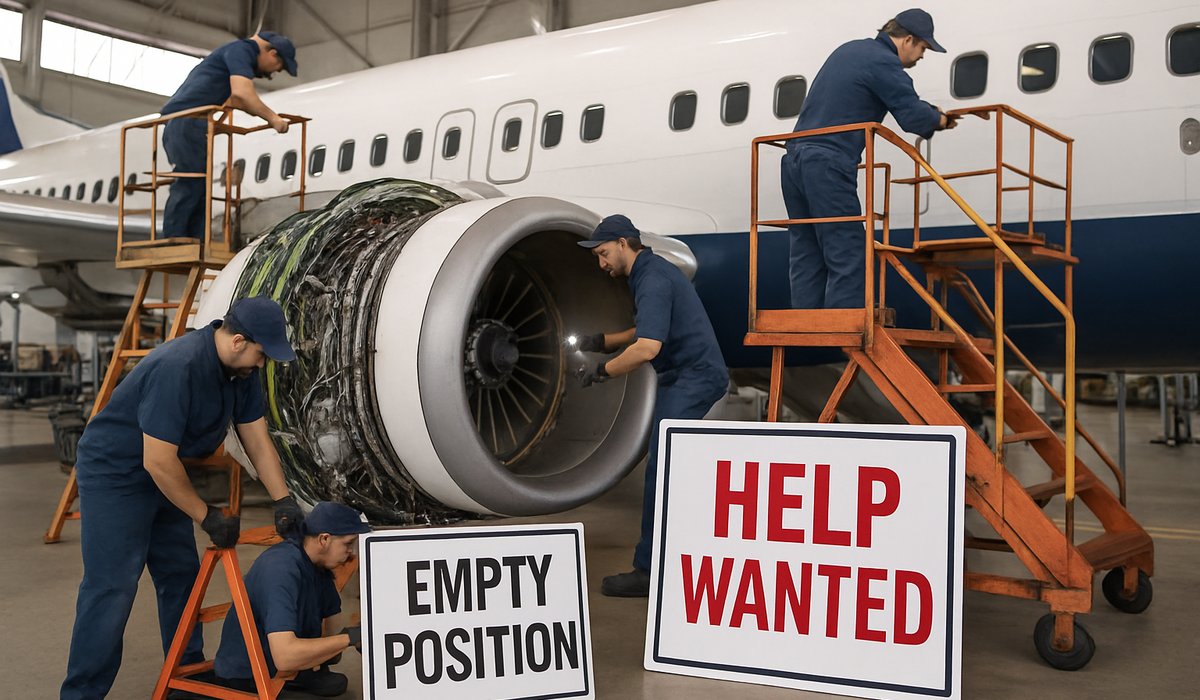
Image generated by AI
The Hidden Threat to Airline Loyalty: Maintenance Staffing
A profound psychological shift is occurring within the global aviation consumer base in 2026: the fear of flying is no longer strictly tied to turbulence or pilot error; it is now deeply anchored in the hangar. As structural shortages of certified airline mechanics become a highly visible mainstream issue, leisure and corporate travelers aggressively traversing the U.S., Canada, and the United Kingdom are overtly rethinking their airline allegiances.
A devastatingly clear picture emerges from the highly scrutinized Thrust Flight 2026 Aircraft Mechanic Shortage Survey Report. The data exposes a massive vulnerability in brand loyalty: 78% of U.S. adults explicitly stated they would feel actively uncomfortable boarding an aircraft if they possessed knowledge that the operating carrier was suffering a critical shortage of maintenance technicians. Travel anxiety has officially expanded past the check-in desk and directly onto the aircraft's mechanical reliability.
The Core Data: Transparency Becomes Absolute Currency
Historically, aviation safety perceptions rested almost entirely on the shoulders of the pilots and the sheer physical age of the aircraft. That paradigm is functionally dead.
When survey respondents were briefed on the genuine realities of the 2026 mechanic drain:
- 66% immediately registered severe concern regarding baseline airline operations.
- 56% directly linked the technician shortage to compromised flight safety outcomes.
- 51% correctly identified the shortage as a primary driver behind chronic delays and sudden cancellations.
Strikingly, 69% of those polled now view the individuals holding the wrenches as equally critical to their personal survival as the individuals gripping the yoke. The structural labor gaps—heavily exacerbated by massive post-pandemic retirements and insufficient technical school pipelines—are no longer hidden industry secrets; they are mainstream consumer fears actively driving booking metrics.
Passenger Defection: The 2026 Booking Reality
The Thrust Flight data isolates a terrifying reality for airline marketing executives: 80% of consumers would actively defect, choosing to fly a competitor if they perceived that rival airline possessed a stronger, well-staffed maintenance division.
This dynamic aggressively threatens transcontinental market share. Data indicates a noticeable cooling in bookings across grueling transatlantic routes—specifically massive heavy-haul legs terminating in London and Frankfurt. While spiking ticket prices bear some responsibility, deeply rooted safety anxiety regarding the mechanical stress of crossing an ocean on an under-maintained fleet is actively suppressing demand. Airlines that suffer highly publicized mechanical turnback events in 2026 are experiencing immediate, measurable drops in forward-booking velocity.
Rebuilding Trust: Training as a Marketing Tool
The aviation industry does not have the luxury of time to slowly patch this leak. The survey clearly dictates the precise recovery mechanism: 95% of passengers declare that visible airline investment into rapid mechanic training and advanced certification apprenticeships directly improves their perception of the carrier's safety.
Consequently, airlines operating out of North American and UK mega-hubs must radically shift their consumer engagement strategies. The glamorous marketing campaigns entirely focused on lie-flat pods and celebrity chef menus are failing to resonate with an anxious public. The new currency of loyalty is aggressive transparency. By prominently showcasing their heavy financial investments in modernized maintenance hangars and robust technical academies, carriers can successfully weaponize safety as their ultimate competitive advantage.
What Guests Get
- Aggressive transparency metrics from highly trusted carriers regarding their localized maintenance staffing
- Higher baseline reliability when choosing airlines boasting internal technical apprenticeship academies
- Increased routing stability, avoiding localized mechanical cancellations by flying heavily staffed legacy carriers
- The ability to track on-time performance metrics heavily tied to mechanical dispatch reliability
- Consumer pressure effectively forcing airlines to raise mechanic compensation to secure safety retention
Tracker: Mechanical Shortage Impact on Consumer Trust
| Consumer Metric | Percentage Affected | Primary Implication for Airlines |
|---|---|---|
| Uneasy flying an understaffed carrier | 78% | Massive potential defection of loyalty base |
| Mechanics viewed as critical as pilots | 69% | Total shift in public safety perception |
| Concern over general airline operations | 66% | Degradation of brand credibility |
| Link shortage to safety compromises | 56% | Direct consumer fear regarding structural failure |
| Would switch airlines for better staffing | 80% | Total obliteration of cost-first purchasing models |
What This Means for Travelers
In 2026, the cheapest ticket is occasionally the highest risk. When planning critical family holidays or rigid corporate travel, you must execute deep due diligence regarding the carrier's operational integrity. Ultra-low-cost carriers (ULCCs), which frequently run razor-thin margins and utilize outsourced contract maintenance, inherently pose a higher statistical risk of cancellation if a mechanical fault is detected remotely.
Aggressively check the historical "on-time" and "cancellation" metrics of your intended route using independent tracking software before surrendering your credit card. If you are flying incredibly demanding routes—such as transoceanic heavy-haul or deep winter operations over Canada—heavily consider paying the premium to utilize legacy carriers that visibly invest heavily in maintaining robust, in-house mechanical divisions. Lastly, if a flight is suddenly scrubbed for "maintenance," appreciate the transparency; a delayed flight is infinitely preferable to a compromised aircraft taking to the sky.
FAQ: Airline Mechanic Shortages
Why is there suddenly a severe shortage of airline mechanics in 2026? The crisis stems closely from the pandemic. Thousands of highly experienced senior mechanics accepted early retirement buyouts during the 2020 aviation collapse. Simultaneously, technical aviation schools experienced a massive drop in enrollment, failing to replace the retiring generation rapidly enough to service the surging 2026 travel demand.
Does a mechanic shortage mean airplanes are flying unsafe? No. Aviation regulations strictly prohibit an aircraft from legally flying if it requires mandatory maintenance. Instead of flying unsafely, the shortage means flights are simply aggressively cancelled or delayed because there is no one immediately available to fix the broken plane. Safety is maintained through grounding.
How can I know if my airline has enough mechanics? While airlines rarely publish exact hangar staffing numbers to the public, you can infer reliability. Airlines that frequently publish announcements regarding their massive investments in internal mechanic academies, and carriers boasting historically low mechanical cancellation rates, demonstrate stable maintenance pipelines.
Related Travel Guides
- Breaking Airline News: Massive Travel Chaos Engulfs Newark Liberty as United and Republic Trigger 268 Transatlantic and Domestic Flight Disruptions
- Spain's Third-Largest City Remains Cut Off From Direct US Air Routes Despite Tourism Boom
- Aviation Updates: Massive Tourism Shift Hits Europe as Travelers Prioritize Authentic Experiences Over Destinations
Disclaimer
This article is for informational and educational purposes only. It does not constitute legal, financial, or professional advice. While we strive to provide accurate and up-to-date information, travel policies, regulations, and conditions change rapidly. Always verify information with official sources before making travel decisions. Nomad Lawyer makes no representations about the accuracy, reliability, completeness, or suitability of the information provided. Readers should consult qualified professionals for advice specific to their circumstances. The views expressed in this article are those of the author and do not necessarily reflect the views of Nomad Lawyer.
Raushan Kumar
Founder & Lead Developer
Full-stack developer with 11+ years of experience and a passionate traveller. Raushan built Nomad Lawyer from the ground up with a vision to create the best travel and law experience on the web.
Learn more about our team →