
IndiGo Flight 6E 6115 Diverts to Hyderabad After Suspected Power Bank Smoke Triggers Mid-Air Emergency
IndiGo flight 6E 6115 from Delhi to Chennai made an emergency diversion to Hyderabad on 11 October 2026 after smoke from a passenger's battery device triggered in-flight panic.

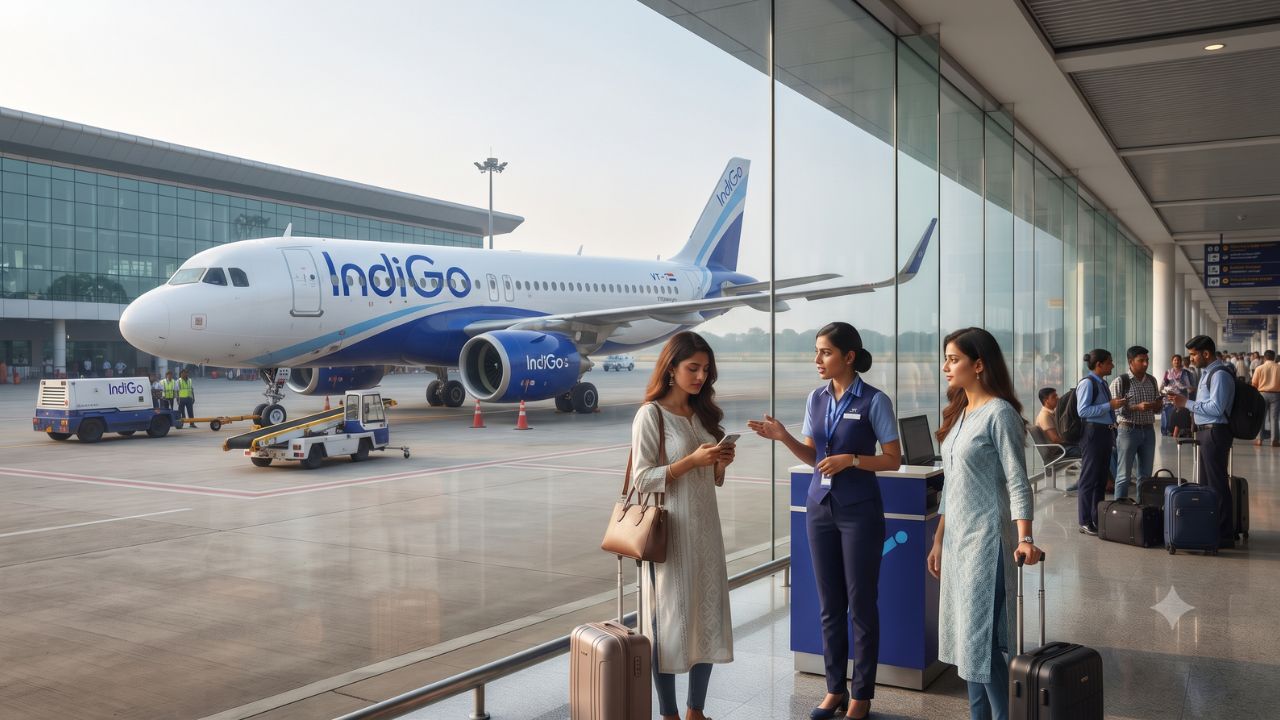
A strict international cap limiting travelers to two power banks per person and prohibiting in-flight recharging did not prevent IndiGo flight 6E 6115 from executing an emergency diversion to Hyderabad on 11 October 2026 after smoke poured from a passenger's personal electronic device. Operating from Delhi's Indira Gandhi International Airport to Chennai, the scheduled domestic flight initiated an immediate descent into Rajiv Gandhi International Airport in Shamshabad after cabin crew detected thermal runaway symptoms inside the passenger cabin. The aircraft touched down without reported injuries, prompting IndiGo to isolate the damaged hardware, coordinate emergency ground handling, and deploy a replacement aircraft to transport stranded passengers to their final destination.
While preliminary operational reports pointed to a consumer lithium-ion power bank as the source of combustion, official statements from the airline confirmed only that smoke emanated from a passenger's portable electronic device. The incident exposes the persistent operational vulnerability facing commercial aviation in managing consumer battery technology. Despite revised technical instructions enacted by the International Civil Aviation Organization (ICAO) on 27 March 2026, personal electronics remain among the volatile hazards carried unchecked into pressurized passenger cabins.
Emergency Descent and Cabin Protocol Execution
The in-flight emergency developed mid-route as flight 6E 6115 cruised toward southern India. When visible smoke and acrid chemical odors spread through passenger rows, cabin crew initiated dangerous goods emergency checklists to contain the device and prevent open flame propagation. Flight deck crew declared an operational priority and veered away from the planned Chennai airway, securing immediate landing clearance at Hyderabad.
Ground emergency teams met the aircraft upon touchdown at Rajiv Gandhi International Airport, inspecting the airframe and confirming that the smoldering hardware had been rendered chemically stable. The airline provided terminal refreshments and status briefings while dispatching a substitute airframe to complete the delayed Chennai rotation. Although the carrier did not publish exact passenger manifests, total delay duration, or the specific make of the failed hardware, India's Directorate General of Civil Aviation (DGCA) maintains stringent reporting mandates requiring full technical reviews for any in-flight fire event.
Incident Log: Operational Sequence and Emergency Response
The technical parameters and operational sequence governing flight 6E 6115 are detailed in the operational summary below:
| Incident Parameter | Recorded Event Metric | Operational & Regulatory Context |
|---|---|---|
| Operating Carrier | IndiGo | India's largest domestic carrier by fleet and passenger share |
| Flight Identification | Flight 6E 6115 | Scheduled non-stop metropolitan trunk service |
| Origin & Destination | Delhi (DEL) to Chennai (MAA) | Core high-density domestic business and transit corridor |
| Incident Date | 11 October 2026 | Mid-flight diversion during midday cruising phase |
| Diversion Aerodrome | Rajiv Gandhi Int'l Airport, Hyderabad (HYD) | Designated alternate equipped for dangerous goods emergency handling |
| In-Flight Catalyst | Dense cabin smoke from personal device | Suspected lithium-ion power bank thermal runaway |
| Flight Outcome | Safe emergency landing | Zero airframe damage; zero verified passenger injuries |
| Crew Mitigation | Dangerous goods fire drill executed | Thermal containment procedures enacted prior to landing |
| Passenger Recovery | Replacement aircraft deployed | Continuation service arranged from Hyderabad to Chennai |
| Investigation Status | DGCA & airline internal review | Forensic hardware evaluation pending official laboratory report |
Regulatory Constraints and the Mechanics of Thermal Runaway
Lithium-ion cells power modern personal mobility, but their chemical composition introduces acute fire risks under cabin pressure differentials and mechanical stress. When a battery experiences physical crushing, micro-fracturing from prior drops, or internal manufacturing contamination, the separator between the cathode and anode breaks down. This triggers thermal runaway—an uncontrollable, self-sustaining chemical reaction where cell temperatures rapidly exceed 600 degrees Celsius, releasing dense toxic smoke, flammable electrolyte vapors, and intense localized heat that can ignite adjacent seats or baggage lining.
Recognizing this threat, ICAO issued a high-level regional safety advisory in June 2025 cautioning operators against the severe hazard of power banks stored out of sight in overhead compartments. When an overheated battery combusts inside an enclosed locker, delayed detection allows thermal runaway to spread across multiple carry-on bags before fire extinguishers can be brought to bear.
This advisory culminated in the binding 27 March 2026 ICAO global regulatory standards, which align with IndiGo's published passenger baggage policies:
- Strict Quantity Restrictions: Passengers may carry a maximum of two power banks, restricted to devices rated up to 160 watt-hours (Wh).
- Prohibition on Charging: In-flight recharging of power banks via seat power outlets is strictly banned across all cabin classes.
- Device-to-Device Bar: Connecting a power bank to recharge smartphones or tablets during flight is heavily restricted or outright prohibited.
- Hand Baggage Only: Power banks and spare lithium cells remain strictly banned from checked luggage and must never be stowed in overhead storage bins; they must remain within immediate passenger reach under the forward seat.
Expert Analysis: Cabin Fire Risks, Enforcement Gaps, and Airline Operational Liability
For air travelers, the direct consequence of battery combustion in pressurized flight is swift, non-negotiable operational disruption. Pilots operate under strict orders to divert to the nearest suitable airport whenever cabin smoke cannot be instantly extinguished, because smoldering lithium cells produce dense carbon monoxide and combustible gases that threaten passenger respiration and flight deck control systems.
The recurring problem for carriers like IndiGo lies in enforcement asymmetry. While airport security screeners at Delhi confiscate loose batteries packed into checked luggage, passenger carry-on items rarely undergo wattage verification or structural health checks at departure gates. Travelers regularly carry degraded, counterfeit, or physically damaged power banks bought from uncertified third-party vendors. If a device drops between seat tracks and gets crushed during motorized seat adjustments, instantaneous catastrophic thermal runaway can occur within seconds.
From an airline liability and legal perspective, in-flight diversions generate substantial unscheduled costs, including emergency landing fees, fuel dumping expenses, hotel accommodations, and replacement aircraft positioning. While carriers absorb these operational expenses to safeguard lives, passengers carrying unapproved, non-compliant, or defective lithium devices face mounting legal exposure. Under civil aviation dangerous goods regulations, travelers who deliberately conceal damaged batteries or violate in-flight recharging bans can face regulatory fines and potential civil claims from airlines seeking recovery of diversion operating losses.
Key Takeaways
- Mid-Air Diversion: IndiGo flight 6E 6115 diverted to Hyderabad on 11 October 2026 after smoke from a passenger's electronic device spread through the cabin.
- Safe Outcome: The aircraft landed safely at Rajiv Gandhi International Airport; cabin crew contained the smoldering hardware and a replacement aircraft completed the flight to Chennai.
- Regulatory Framework: The incident follows ICAO's 27 March 2026 technical mandates capping passengers at two power banks and strictly prohibiting in-flight battery recharging.
- Stowage Rules: Aviation safety rules prohibit storing power banks in overhead bins or checked luggage; all portable chargers must remain within direct physical reach.
- Traveler Compliance: Passengers must never use swollen, dented, or uncertified power banks on commercial aircraft and must notify crew immediately at the first sign of overheating.
FAQ: In-Flight Lithium Battery Safety 2026
What caused IndiGo flight 6E 6115 to divert to Hyderabad?
The flight diverted on 11 October 2026 after cabin crew detected smoke from a passenger's portable electronic device, suspected to be a lithium-ion power bank.
How many power banks is a passenger permitted to carry on a flight?
Under ICAO regulations and airline policies, travelers are restricted to a maximum of two power banks, which must not exceed 160 watt-hours each.
Can travelers charge their phones using a power bank during a flight?
No. Current safety regulations prohibit charging power banks during flight and restrict using power banks to charge personal electronic devices onboard.
Are power banks permitted in checked baggage or overhead lockers?
Power banks are strictly banned from checked luggage and prohibited from overhead lockers; they must be carried in hand luggage and kept within personal reach.
Preventing in-flight battery fires depends entirely on travelers respecting dangerous goods storage rules long before an aircraft leaves the gate.
Related Travel Guides
Disclaimer
This article is for informational and educational purposes only. It does not constitute legal, financial, or professional advice. While we strive to provide accurate and up-to-date information, travel policies, regulations, and conditions change rapidly. Always verify information with official sources before making travel decisions. Nomad Lawyer makes no representations about the accuracy, reliability, completeness, or suitability of the information provided. Readers should consult qualified professionals for advice specific to their circumstances. The views expressed in this article are those of the author and do not necessarily reflect the views of Nomad Lawyer.
Kunal K Choudhary
Co-Founder & Contributor
A passionate traveller and tech enthusiast. Kunal contributes to the vision and growth of Nomad Lawyer, bringing fresh perspectives and driving the community forward.
Learn more about our team →