
Intrepid Travel Establishes Climate Department as Australian Tourism GDP Hits A$81.1 Billion in 2026
Intrepid Travel's new Climate Department and A$2 million annual fund signal a shift toward operational resilience as Australia's tourism sector manages an A$81.1 billion GDP contribution amid rising environmental risks.

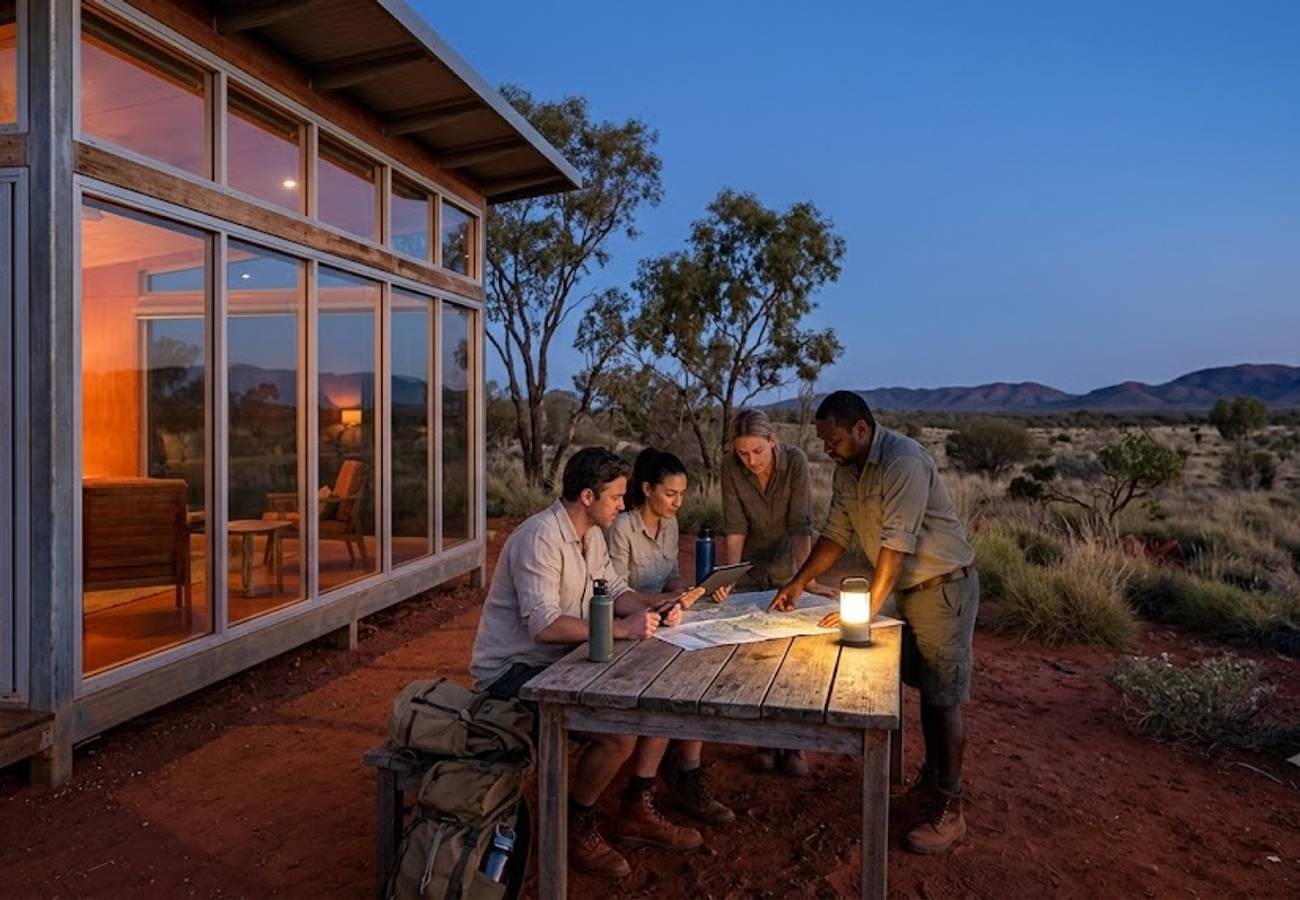
Image generated by AI
Australian direct tourism GDP reached A$81.1 billion in the 2024–25 financial year, while international tourism consumption surged by 6.8% in volume terms. This growth occurs alongside a systemic pivot toward climate resilience, highlighted by Intrepid Travel’s January 7, 2026, appointment of Dr. Susanne Etti to lead a newly formed Climate Department. The alignment of record-breaking revenue with institutionalized climate risk management suggests that the industry is no longer treating sustainability as a marketing tool, but as a core operational requirement to protect multi-billion dollar asset streams.
The Resilience Pivot in Numbers
The institutionalization of climate risk at Intrepid Travel is backed by aggressive commercial expansion. According to the company's 2025 Integrated Annual Report, revenue climbed to approximately A$809 million—a 29% increase—while bookings rose by 26% to approximately A$873 million. By March 2026, the company reported underlying earnings before interest, tax, depreciation, and amortisation (EBITDA) of A$53.9 million.
To sustain this trajectory, Intrepid has committed to an annual A$2 million Climate Impact Fund starting in 2026. This fund is specifically earmarked for decarbonization initiatives and emissions reductions across its supply chain. With a workforce that grew 3% to 3,574 employees and tour leaders, the company is scaling its human capital to match its environmental mandates. This move mirrors broader shifts tracked by the World Tourism Organization (UNWTO), where destination resilience is becoming a primary metric for long-term viability.
Comparative Market Analysis: Corporate vs. National Data
When placing Intrepid’s growth against the Australian Bureau of Statistics (ABS) data, a clear pattern emerges: international demand is recovering faster than domestic consumption. While international volume grew by 6.8%, domestic consumption lagged at a modest 0.7% increase. This disparity places higher pressure on operators to manage complex, long-haul itineraries that are more susceptible to climate-driven disruptions.
The following table illustrates the scale of the industry's current state compared to the specific movements of one of its largest operators.
| Metric | Intrepid Travel (2025/26) | Australian National Tourism (FY 2024-25) | Growth/Change |
|---|---|---|---|
| Revenue/GDP | A$809 Million (Revenue) | A$81.1 Billion (Direct GDP) | Intrepid: +29% / National: +0.7% (adj) |
| Bookings/Consumption | A$873 Million (Bookings) | N/A | Intrepid: +26% / Intl Consumption: +6.8% |
| Workforce | 3,574 Employees | 696,000 Filled Jobs | Intrepid: +3% / National: +2% |
| Climate Investment | A$2 Million Annual Fund | THRIVE 2030 Framework | Shift to Resilience-Based Growth |
What This Means for Travelers
For the individual traveler, the creation of "Climate Departments" and "Resilience Frameworks" is not merely corporate jargon; it directly impacts the legal and logistical nature of travel contracts. As operators integrate climate risk reporting, the "Force Majeure" clauses in booking terms are likely to become more specific.
Actionable Advice for 2026-2027 Bookings:
- Audit Your Contractual Flexibility: Because Intrepid and other operators utilize partner providers, your protections vary by region. Review the specific booking conditions for your destination rather than assuming a global policy.
- Verify "Resilience" Claims: When a company cites a climate fund, ask how that translates to your itinerary. Does it mean better real-time communication during weather events, or simply carbon offsets?
- Insurance Alignment: Ensure your travel insurance explicitly covers climate-related disruptions. With national strategies like the Austrade THRIVE 2030 Action Plan focusing on business resilience, the burden of "unexpected" weather events is shifting more toward the traveler's insurance policy.
- Booking Windows: Given the 6.8% increase in international volume, booking 12-16 weeks in advance for Australian regional experiences is recommended to avoid the volatility of "resilience-capped" capacities.
Forward Projection: The 2030 Horizon
The trajectory suggests that by 2030, "Climate Risk Reporting" will be as standard as financial auditing for travel firms. The transition from simple decarbonization (reducing footprints) to operational resilience (managing disruption) is the next frontier. We expect to see a shift where tour operators provide "Risk Ratings" for specific itineraries based on seasonal climate data.
As the Australian government pushes its THRIVE 2030 goals—focusing on workforce development and business modernization—the industry will likely move toward a model of "Sustainable Capacity." This means destinations may intentionally limit visitor numbers to maintain the resilience of local infrastructure, potentially leading to higher premium pricing for "guaranteed" access to fragile ecosystems.
FAQ: Australia Travel Resilience 2026
Will Intrepid’s new climate fund increase tour prices? Current data from March 2026 announcements does not show a direct price hike linked to the A$2 million fund. However, industry-wide shifts toward sustainability often lead to gradual premium pricing.
Does the creation of a Climate Department mean my trip is at risk? No. The department focuses on long-term decarbonization and risk reporting, not active trip cancellations. It is a preventative measure to ensure future business continuity.
How do I know which booking conditions apply to my Australia trip? Intrepid specifies that conditions accepted at the time of booking are binding. Check your specific regional agreement and partner operator terms, as these vary by product.
Is Australian tourism currently stable for international visitors? Yes. With a direct GDP of A$81.1 billion and a 6.8% increase in international consumption, the sector is growing, though it is actively restructuring to handle environmental volatility.
The transition from growth-at-all-costs to resilience-based expansion is no longer optional for the global travel economy.
Related Travel Guides
Disclaimer
This article is for informational and educational purposes only. It does not constitute legal, financial, or professional advice. While we strive to provide accurate and up-to-date information, travel policies, regulations, and conditions change rapidly. Always verify information with official sources before making travel decisions. Nomad Lawyer makes no representations about the accuracy, reliability, completeness, or suitability of the information provided. Readers should consult qualified professionals for advice specific to their circumstances. The views expressed in this article are those of the author and do not necessarily reflect the views of Nomad Lawyer.
Kunal K Choudhary
Co-Founder & Contributor
A passionate traveller and tech enthusiast. Kunal contributes to the vision and growth of Nomad Lawyer, bringing fresh perspectives and driving the community forward.
Learn more about our team →