
Indian Railways Launches 7 New Amrit Bharat Express Routes Connecting Uttar Pradesh, Maharashtra, and Tamil Nadu in 2026
Indian Railways expands the Amrit Bharat Express network with seven new long-distance routes designed to provide affordable, high-capacity transit between major urban hubs and regional centers across India.

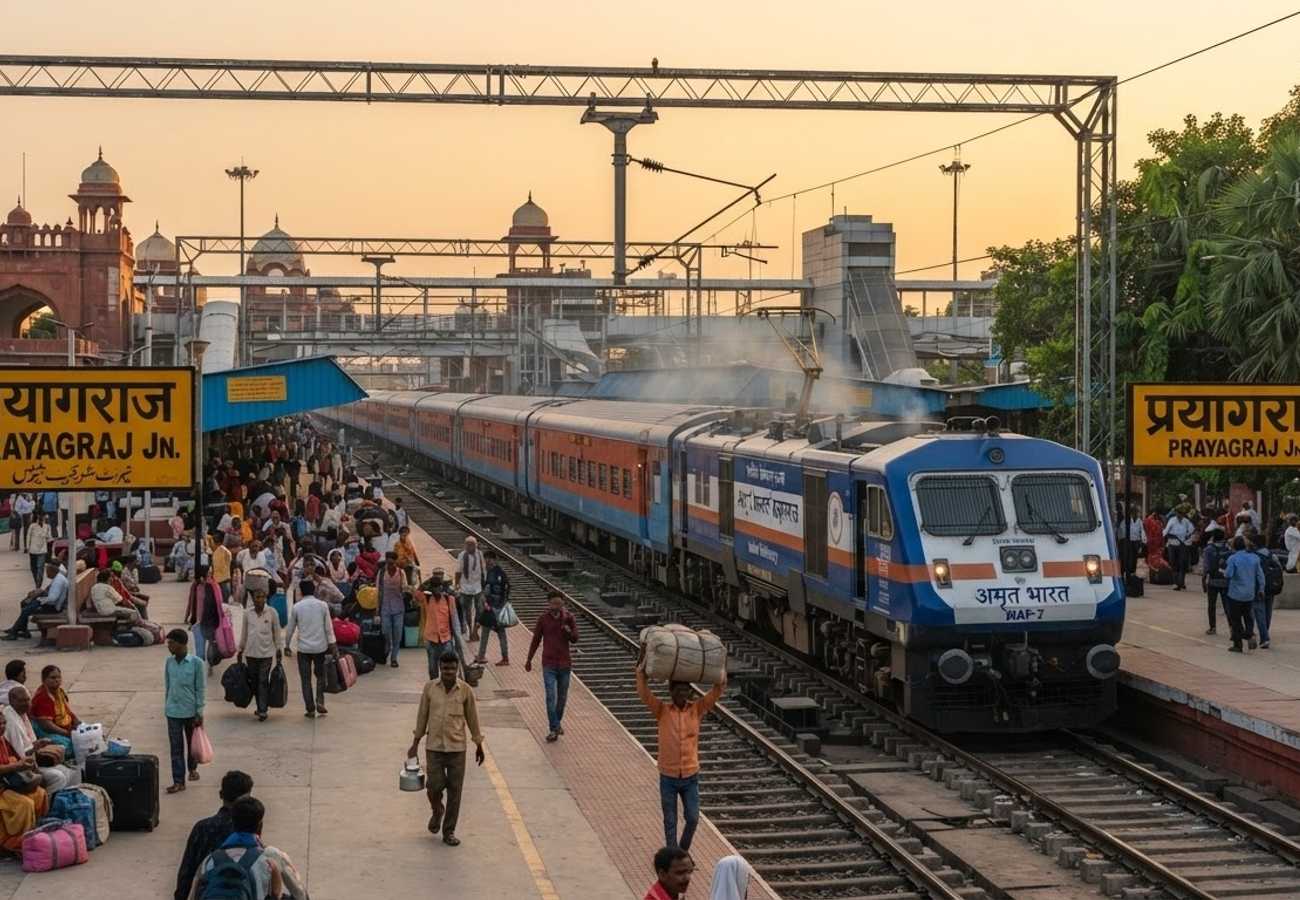
Image generated by AI
Indian Railways has approved seven new Amrit Bharat Express routes to bridge critical transit gaps between northern, southern, eastern, and western India. This expansion prioritizes budget-conscious long-distance mobility, specifically targeting migrant workers, students, and regional traders.
The Amrit Bharat Express project is a strategic initiative by the Ministry of Railways to deploy a North-South-East-West connectivity grid. Unlike premium services like Vande Bharat, which target high-income demographics with higher tariffs, the Amrit Bharat fleet is engineered for affordability and high-volume passenger movement. The 2026 expansion focuses on linking major metropolitan financial hubs—such as Mumbai—with regional centers in Uttar Pradesh, Jharkhand, and Telangana.
New Route Specifications and Schedules
The expanded network introduces weekly services across high-demand corridors. The following table details the newly approved operational parameters:
| Route | Frequency | Key Transit Points | Primary Connection |
|---|---|---|---|
| Dhanbad $\rightarrow$ Coimbatore | Weekly (Sat/Tue) | Gomoh, Gaya, Prayagraj Chheoki, Nagpur, Vijayawada | Jharkhand $\rightarrow$ Tamil Nadu |
| Charlapalli $\rightarrow$ Gorakhpur | Weekly (Fri/Sun) | Kazipet, Nagpur, Bhopal, Jhansi, Lucknow | Telangana $\rightarrow$ Uttar Pradesh |
| Gorakhpur $\rightarrow$ Bandra | Weekly (Fri/Sat) | Basti, Agra Fort, Kota, Vadodara, Surat | Uttar Pradesh $\rightarrow$ Maharashtra |
| Gorakhpur $\rightarrow$ Delhi | Weekly (Thu/Fri) | Basti, Sitapur, Bareilly, Moradabad | Uttar Pradesh $\rightarrow$ NCR |
| Subedarganj $\rightarrow$ LTT | Weekly | Banda, Satna, Jabalpur, Itarsi, Nashik Road | Uttar Pradesh $\rightarrow$ Maharashtra |
| Prayagraj $\rightarrow$ Udhna | Weekly | Govindpuri, Etawah, Agra, Ratlam | Uttar Pradesh $\rightarrow$ Gujarat |
| Prayagraj $\rightarrow$ LTT | Weekly | Satna, Jabalpur, Itarsi, Bhusaval | Uttar Pradesh $\rightarrow$ Maharashtra |
Traveler Logistics Guide: Navigating Budget Long-Haul Rail
From a ground-level perspective, navigating these long-distance budget routes requires a different strategy than booking premium expresses. Because these trains serve high-demand corridors for migrant and student populations, tickets often exhaust within minutes of the booking window opening.
Booking and Connection Strategies:
- The Booking Window: For weekly services, ensure you are logged into the IRCTC portal exactly when the Advance Reservation Period (ARP) opens. Given the "affordable" nature of these fares, demand typically outweighs supply.
- Layover Management: For those connecting from the Dhanbad-Coimbatore or Charlapalli-Gorakhpur lines, allow a minimum of 4-6 hours for transfers at major junctions like Nagpur or Vijayawada. Budget trains are more susceptible to scheduling shifts than premium rakes.
- Digital Transit Integration: Travelers are encouraged to use the Digi Yatra ecosystem at supported stations to expedite biometric boarding and reduce congestion at entry points.
On-Board Logistics: Since these trains prioritize capacity over luxury, passengers should carry their own power banks and basic sustenance for the longest legs (such as the Dhanbad to Coimbatore stretch), as pantry services on budget rakes can vary in consistency compared to Rajdhani or Shatabdi services.
Infrastructure Impact Assessment
This expansion represents a shift in Indian Railways' regional connectivity strategy. By adding direct links between eastern industrial zones (Dhanbad) and southern economic hubs (Coimbatore), the government is reducing the reliance on expensive flight connections or fragmented multi-train journeys.
The concentration of routes in Gorakhpur and Prayagraj underscores a push to integrate the "Purvanchal" region more tightly with the national capital and the financial centers of the west. This is expected to stimulate regional trade and provide a safety valve for the overcrowded premium corridors. By decentralizing transit options, the Amrit Bharat project lowers the barrier to entry for inter-state labor migration and educational mobility.
Affordable transit is the backbone of regional economic integration.
Related Travel Guides
Disclaimer
This article is for informational and educational purposes only. It does not constitute legal, financial, or professional advice. While we strive to provide accurate and up-to-date information, travel policies, regulations, and conditions change rapidly. Always verify information with official sources before making travel decisions. Nomad Lawyer makes no representations about the accuracy, reliability, completeness, or suitability of the information provided. Readers should consult qualified professionals for advice specific to their circumstances. The views expressed in this article are those of the author and do not necessarily reflect the views of Nomad Lawyer.
Kunal K Choudhary
Co-Founder & Contributor
A passionate traveller and tech enthusiast. Kunal contributes to the vision and growth of Nomad Lawyer, bringing fresh perspectives and driving the community forward.
Learn more about our team →