
India's Hidden Rainforest Paradises: Western Ghats, Northeast Wilderness, and Nicobar Islands in 2026
World Rainforest Day 2026 shines light on India's most spectacular rainforest destinations, from the Western Ghats to remote Nicobar islands. Discover where to travel responsibly.

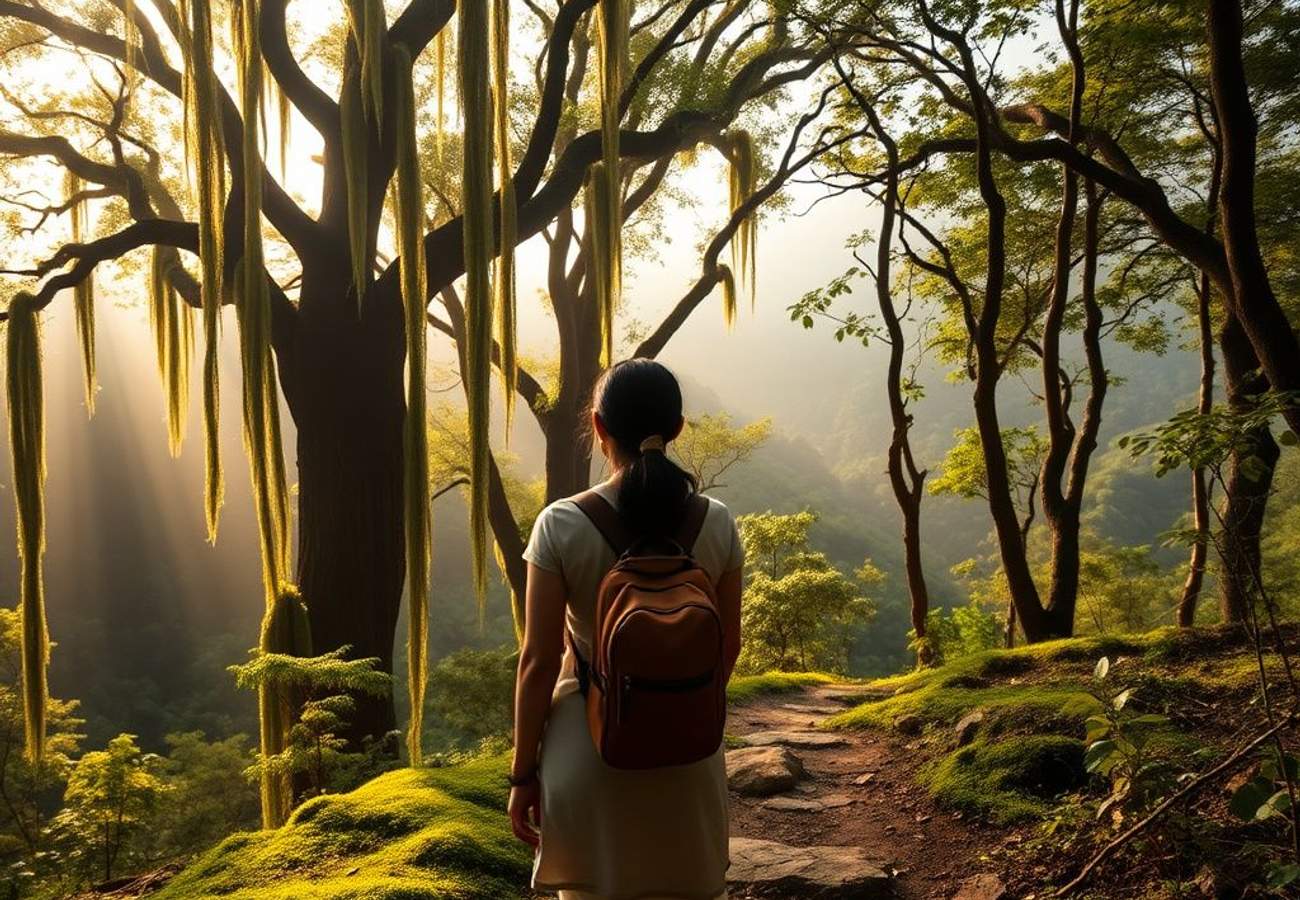
Image generated by AI
The Rainforest Awakening: Why 2026 is the Year to Explore India's Verdant Heartlands
World Rainforest Day 2026 has arrived with a striking theme: The Forest Within You. As the global community reflects on our spiritual connection to Earth's lungs, one nation stands out as a custodian of some of the world's most pristine rainforest ecosystems.
India possesses rainforest treasures that rival any destination on the planet. Yet most international travellers remain oblivious to their existence.
These ancient forests awaken during monsoon season, when seasonal rains transform dormant landscapes into emerald cathedrals teeming with life. For discerning travellers, they represent something increasingly rare: genuine escape from the modern world.
Reddit: "I went to the Western Ghats in June and it felt like stepping into another realm. The mist, the silence, the way the jungle just envelops you—unforgettable." — r/travel
The Western Ghats: India's UNESCO-Recognized Biodiversity Crown Jewel
The Western Ghats stretch like a verdant spine along India's western coast, spanning over 1,600 kilometers. This UNESCO World Heritage Site ranks among the planet's most critical biodiversity hotspots, rivaling the Amazon in species density.
Locals call this mountain range Sahyadri—draped in emerald foliage and serving as sanctuary for thousands of endemic species found nowhere else on Earth. The ecosystem is so delicate that even small disruptions trigger cascading ecological consequences.
Travellers venturing into these forests discover:
Mist-laden peaks offering transcendent sunrise vistas that justify the pre-dawn trek. Sprawling tea and coffee plantations that merge seamlessly into unbroken canopy. The hypnotic symphony of rushing streams, hidden waterfalls, and unseen wildlife.
Coorg, in Karnataka, carries the nickname Scotland of India. Coffee plantations here don't disrupt the landscape—they harmonize with it, creating a patchwork of cultivation and wilderness. Wayanad in Kerala presents another narrative entirely: dense jungles punctuated by rolling hills that transform into something otherworldly after the monsoon breaks.
Walking through these forests post-monsoon is transformative. The air becomes heavy with petrichor—that irreplaceable scent of wet earth mixing with ancient growth. Visibility drops to mere meters in places, making you feel small, present, and alive in ways urban existence rarely permits.
Northeast India: The Untamed Frontier Where Rainforest Rules
The landscape shifts dramatically as you venture into India's northeastern territories. Here, the rainforest cover remains vibrant year-round, uninterrupted by dry seasons that plague southern regions.
Namdapha National Park in Arunachal Pradesh epitomizes raw, unfiltered rainforest majesty. This remote wilderness features dramatic topographical variation: swampy plains hosting rare flora, high-altitude alpine ridges with panoramic vistas, and dense jungles that serve as fortresses for endangered big cats.
But the Northeast's rainforest crown jewel may be Meghalaya, particularly during monsoon season when the region transforms into an ethereal realm. Mawlynnong, often called the wettest place on Earth, receives over 11 meters of annual rainfall. The result? Living root bridges that have evolved over centuries, cascading waterfalls that create their own weather systems, and a landscape so green it seems photosynthetically impossible.
These destinations carry the epithet Amazon of the East—not as hyperbole, but as ecological truth. According to Panda.org, rainforests function as massive carbon sinks, absorbing vast quantities of CO2 and mitigating global warming effects. Northeast India's forests serve precisely this function while sheltering some of the rarest species on the Indian subcontinent.
Great Nicobar: The Rainforest Time Machine
For travellers seeking true seclusion, the Great Nicobar Biosphere Reserve stands unmatched. This remote rainforest ecosystem sits geographically closer to Southeast Asia than mainland India, creating a unique ecological bubble largely untouched by mass tourism.
The biosphere harbors species found nowhere else: the Nicobar megapode, saltwater crocodiles, and vegetation types that predate human civilization. Stepping into this landscape feels like rewinding biological time, observing the natural world in a pristine, undisturbed state.
Because mass tourism infrastructure barely exists here, sustainable travel isn't optional—it's intrinsic. Visitors must observe with extreme care, understanding that their presence directly impacts fragile ecosystems. CCarbon USP research emphasizes how rainforests manage water cycles by capturing, storing, and gradually releasing precipitation—a function Nicobar's systems perform with millennial precision.
The Sustainable Travel Imperative for 2026
As the travel industry adopts conscious practices in 2026, how we navigate these rainforest destinations carries unprecedented importance. Responsible tourism has shifted from aspirational to essential.
Travellers must prioritize low-impact activities that protect delicate soil structures and wildlife corridors. Fortunately, forward-thinking resorts and tour operators now embrace sustainable models:
Farm-to-table dining experiences sourcing exclusively from local producers. Community-led conservation tours where visitor fees directly support indigenous livelihoods. Educational treks that illuminate the intricate web of biodiversity and ecological interdependence.
By selecting these pathways, travellers become active conservation participants rather than passive consumers. Green Earth's research demonstrates how complex root systems of ancient trees bind soil together, preventing catastrophic erosion during heavy monsoon rains—a function worth protecting through responsible visitation.
Why Rainforest Travel Matters Now
The significance of India's rainforests for environmental stability cannot be overstated. These forests regulate climate, manage water cycles, preserve biodiversity, and mitigate natural hazards. Visiting represents more than simple tourism—it's an invitation to witness the heartbeat of the Earth.
Through the lens of World Rainforest Day 2026, travellers are encouraged to venture forth with profound respect and heightened awareness. Whether observing a hornbill at Athirapally Falls or trekking through Silent Valley, these experiences forge lasting bonds between human consciousness and the natural world.
The silence of these forests—their most underrated feature—permits a clarity increasingly extinct in modern life. It reminds us of our fundamental interdependence with the environment we're only beginning to understand.
The rainforest doesn't need your visit—but your visit might just save the rainforest.
Related Travel Guides
Disclaimer
This article is for informational and educational purposes only. It does not constitute legal, financial, or professional advice. While we strive to provide accurate and up-to-date information, travel policies, regulations, and conditions change rapidly. Always verify information with official sources before making travel decisions. Nomad Lawyer makes no representations about the accuracy, reliability, completeness, or suitability of the information provided. Readers should consult qualified professionals for advice specific to their circumstances. The views expressed in this article are those of the author and do not necessarily reflect the views of Nomad Lawyer.
Kunal K Choudhary
Co-Founder & Contributor
A passionate traveller and tech enthusiast. Kunal contributes to the vision and growth of Nomad Lawyer, bringing fresh perspectives and driving the community forward.
Learn more about our team →