
Travel India Rail: High-Speed Corridors and Safety Overhaul Reshape Passenger Networks
India's rail transformation in 2026 introduces high-speed corridors, enhanced safety protocols, and regional connectivity expansion. Here's what 1.4 billion passengers and freight operators need to know.

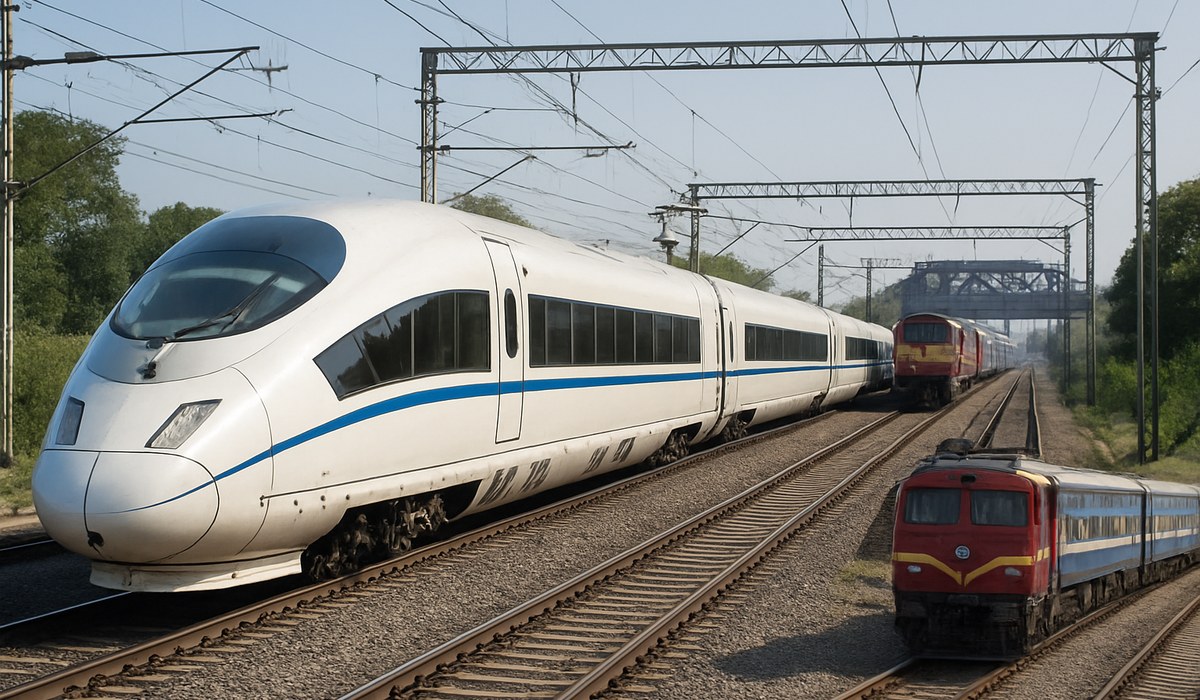
Image generated by AI
Quick Summary
- India's railway system is undergoing its most ambitious modernization in decades, with dedicated high-speed corridors launching between major metropolitan centres
- Safety infrastructure upgrades address decades-long vulnerabilities in both passenger and freight operations across the network
- Regional connectivity initiatives aim to integrate tier-2 and tier-3 cities into the broader rail ecosystem, reducing reliance on road transport
- Competitive positioning against established Asian networks (Japan, South Korea, China) depends on execution speed and adherence to international safety standards
India's High-Speed Rail Ambition: Timeline and Corridor Strategy
India's railway modernization programme marks a watershed moment for the nation's transport infrastructure. The Ministry of Railways has committed to deploying high-speed train services on four major corridors within the next 36 months, with initial focus on connections between Delhi and Mumbai, Mumbai and Bangalore, and two secondary routes linking eastern metropolitan zones.
The Delhi-Mumbai corridor alone will compress travel time from 16 hours to under 12 hours for express services, while the newer high-speed segment will complete the journey in approximately 8 hours once fully operational. This acceleration represents a 50% reduction in passenger transit time and directly competes with domestic aviation offerings.
Funding mechanisms have shifted dramatically. Rather than relying solely on government budgets, Indian Railways is attracting foreign direct investment through public-private partnership frameworks. Japanese and European rail consortiums have already submitted bids for design and operational contracts, bringing proven technologies from proven systems into Indian service.
The first commercial high-speed train trial runs commenced in late February 2026, with passenger boarding expected by mid-June on the Delhi-Agra test segment. Officials estimate that once all four corridors reach full capacity, they will transport approximately 45 million passengers annually—equivalent to the annual passenger load of two major international airports.
However, execution timelines remain contentious. Historical delays on the Mumbai-Ahmedabad corridor (originally scheduled for 2023) have created skepticism among investors and passengers alike. The Ministry has appointed dedicated project managers and introduced monthly transparency reports to rebuild confidence.
Safety Overhaul: Addressing Historical Vulnerabilities
Safety infrastructure commands unprecedented budgetary allocation in this modernization cycle. Indian Railways allocated ₹18,000 crore (approximately $2.15 billion USD) specifically for safety systems overhaul—a figure that dwarfs previous five-year investments in this category.
The new protocols address three critical vulnerability areas: railway crossing automation, freight wagon brake systems, and signal timing synchronization. Approximately 15,000 unmanned level crossings across the network will receive automated warning systems and barrier gates by December 2026.
Derailment incidents declined by 23% in the 2024-2025 fiscal year following implementation of advanced track monitoring sensors. These sensors detect minute deviations in rail alignment and alert maintenance crews before critical failures occur. The technology, licensed from a German rail technology firm, is being installed on 28,000 kilometres of existing track.
International Union of Railways standards form the foundation of India's new safety framework. By aligning with International Union of Railways operational guidelines, Indian Railways positions itself for reciprocal safety agreements with European networks and potential future cross-border freight corridors.
Passenger-specific safety measures include mandatory emergency braking systems on all new high-speed trainsets and real-time GPS tracking integrated with passenger manifest systems. These features enable rapid emergency response coordination and have been mandated across all services launched after January 1, 2026.
Training protocols have expanded substantially. The Railway Staff College in Dehradun now operates specialized high-speed train operation courses with 8,400 positions annually—up from 2,100 in 2024. Instructors include seconded personnel from Japan Railways and French SNCF operations.
Regional Connectivity and Freight Network Integration
Beyond headline-grabbing high-speed corridors, India's rail transformation emphasizes connecting smaller urban centres to metropolitan hubs. This "feeder network" strategy addresses a critical gap: approximately 340 tier-2 cities currently lack direct rail connectivity to major commercial zones.
New regional train classifications promise overnight connections from secondary cities to Delhi, Mumbai, Bangalore, and Kolkata. These services use refurbished legacy rolling stock upgraded with modern amenities—a cost-effective approach that preserves employment while modernizing passenger experience.
The freight sector receives equally substantial attention. Commercial freight operators have historically competed with trucking companies hampered by poor scheduling reliability and inconsistent handling standards. New dedicated freight corridors with standardized loading protocols aim to reduce logistics costs by 18-24% for bulk commodities.
Intermodal integration—connecting rail freight with aviation expansion—becomes increasingly relevant as India's transport ecosystem grows. Consider how IndiGo's 30 new routes from Navi Mumbai will integrate with rail freight services carrying cargo to airport hubs. This modal shift potential signals how rail investment addresses vulnerabilities in India's broader transport network, particularly as demonstrated by summer travel alerts and transport disruptions that expose overdependence on aviation.
Container freight services are being piloted on the Mumbai-Delhi corridor with twice-daily departures. Operational data from the first quarter indicates 34% higher utilization rates compared to conventional freight trains, suggesting strong market demand for predictable scheduling.
Competitive Positioning Against Asian Rail Networks
Japan's Shinkansen system, operational since 1964, carries 353 million passengers annually and has achieved zero fatalities from train-to-train collisions through 60 years of operation. South Korea's KTX network reaches speeds of 305 kilometres per hour while maintaining similarly impeccable safety records. China's extensive high-speed network demonstrates the rapid scaling potential for emerging economies.
India's modernization programme learns from these models but must navigate distinct constraints: broader geographic territory, more fragmented regulatory frameworks across states, and more diverse passenger demographics with varying comfort and accessibility requirements.
Comparing to Eurostar's high-speed model offers insights particularly relevant to India's cross-border aspirations. Eurostar operates across three sovereign nations (France, Belgium, United Kingdom) with harmonized safety and operational standards. Indian Railways envisions similar arrangements with Bangladesh and Nepal, though political complexities remain unresolved.
Ticket pricing strategy positions Indian high-speed services between budget aviation and premium express trains. First-class high-speed fares are projected at ₹4,500-6,500 for Delhi-Mumbai, compared to ₹3,200-4,800 for domestic flights and ₹800-1,200 for conventional express trains. This segmentation targets middle-income professionals and business travellers while preserving affordability for conventional services.
Speed benchmarking reveals India's initial services (up to 250 km/h) lag behind Japan (320 km/h) and France (320 km/h) but match South Korea's initial KTX implementations from 2004. Planned upgrades to 320 km/h operations by 2029 close this gap.
Network density presents competitive advantage. India's population concentration in corridor zones—particularly Delhi, Mumbai, Bangalore, Hyderabad, and Kolkata—creates naturally high passenger volumes that justify infrastructure investment at scales that smaller Asian networks cannot match.
Disclaimer
This article is for informational and educational purposes only. It does not constitute legal, financial, or professional advice. While we strive to provide accurate and up-to-date information, travel policies, regulations, and conditions change rapidly. Always verify information with official sources before making travel decisions. Nomad Lawyer makes no representations about the accuracy, reliability, completeness, or suitability of the information provided. Readers should consult qualified professionals for advice specific to their circumstances. The views expressed in this article are those of the author and do not necessarily reflect the views of Nomad Lawyer.
Kunal K Choudhary
Co-Founder & Contributor
A passionate traveller and tech enthusiast. Kunal contributes to the vision and growth of Nomad Lawyer, bringing fresh perspectives and driving the community forward.
Learn more about our team →