
IHM Hyderabad Launches Two New Hospitality Books on Indian Culinary Heritage and Language in 2026
The Institute of Hotel Management (IHM) Hyderabad has introduced two pioneering publications focusing on culinary idioms and Indian gastronomy to enhance hospitality education.
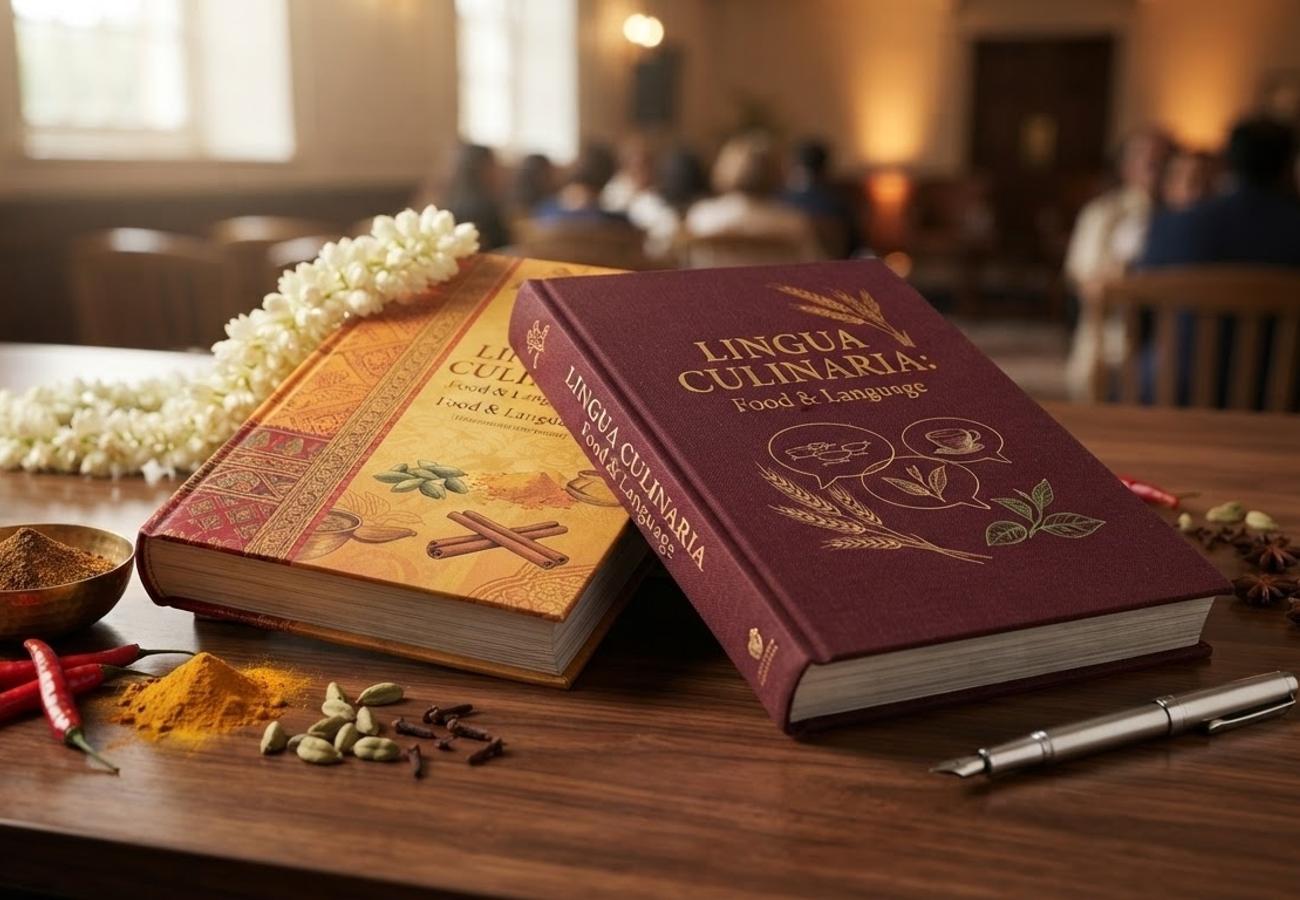
Image generated by AI
Two new academic publications from the Institute of Hotel Management (IHM) Hyderabad are redefining hospitality training by blending linguistic study with India's vast gastronomic history. These works, authored by senior faculty, aim to provide future industry professionals with a deeper understanding of how food, culture, and communication intersect.
The introduction of these texts marks a shift toward research-driven learning within the Indian hospitality sector. By moving beyond standard textbooks, the institute is integrating creative pedagogical tools to prepare students for the nuanced demands of international guest relations and cultural diplomacy.
Telangana Government Officials Lead Book Launch at DD Colony Campus
The official unveiling of the publications took place at the IHM Hyderabad DD Colony campus, where high-ranking government and industry leaders gathered to support the initiative. Ms. A. Vani Prasad, IAS, Special Chief Secretary of the Youth Advancement, Tourism and Culture Department for the Government of Telangana, presided over the ceremony. During the event, she emphasized the vital role that educational institutions play in fostering creativity and academic research to drive the tourism and hospitality economy forward.
The event served as a networking hub for the region's hospitality elite, featuring a diverse group of attendees. Key figures present included:
- Mr. D. Venkatesan, Regional Director (South) for the Ministry of Tourism, Government of India
- Mr. Arun Kumar Gupta, Area Director at Lemon Tree Hotels
- Mr. Jitendra Nakhwa, General Manager of Hotel Green Park
- Mr. G. Giri Babu, Deputy Director (Technical) from the Commissioner of Technical Education, Government of Telangana
- Mr. S. Ratnakar, Chartered Accountant
- Mr. P. Santosh Kumar, AAO at IHM Hyderabad
The presence of these stakeholders underscores the industry's appetite for specialized knowledge that bridges the gap between theoretical classroom instruction and the practical realities of luxury service and cultural management.
Exploring the Intersection of Gastronomy and Linguistics
One of the primary releases, The Language Buffet: A Feast of Food and Drink Idioms and Phrases, is authored by Mr. Sanjay Thakur, the Principal of IHM Hyderabad. This work departs from traditional culinary manuals by examining the symbiotic relationship between what we eat and how we speak.
The publication analyzes how food and beverage references have permeated global languages, evolving into idioms that convey complex emotions, social statuses, and cultural traditions. For the modern hospitality professional, understanding these linguistic nuances is not merely an academic exercise but a critical tool for effective communication.
In high-pressure, customer-facing environments, the ability to navigate cultural idioms allows staff to build quicker rapport with international guests. By studying the origins of food-related phrases, students can better understand the storytelling aspect of dining, transforming a simple meal into a curated guest experience. This approach encourages learners to see gastronomy as a form of human interaction that extends far beyond the physical plate.
Interactive Learning Through India's Culinary Diversity
The second publication, A Kaleidoscope of Indian Palates: The Ultimate Culinary Quiz Digest, authored by Mr. Puneet Razdan, Head of the Department of Food & Beverage Service, takes a more interactive approach to heritage. India’s culinary landscape is one of the most complex in the world, defined by regional variances, ancient techniques, and a vast array of indigenous ingredients.
Rather than a standard narrative, this book utilizes a quiz-based format to engage the reader. This methodology serves several purposes:
- Active Recall: It forces students and professionals to actively retrieve information regarding regional specialties and cooking methods.
- Gamified Learning: By turning culinary history into a challenge, it makes the study of lesser-known food traditions more accessible.
- Preservation: It documents traditional recipes and practices that might otherwise be lost in the move toward globalized fast-food trends.
The digest is designed for a wide spectrum of users, from aspiring chefs and culinary students to seasoned hospitality managers and food enthusiasts. By focusing on the "why" and "how" of Indian gastronomy, the book helps ensure that the next generation of chefs can represent India's culinary identity with authenticity and precision.
IHM Hyderabad's Strategic Shift Toward Academic Research
The release of these titles is part of a broader institutional strategy at IHM Hyderabad to elevate its status as a center for hospitality innovation. By incentivizing faculty members to publish original research and creative resources, the institute is expanding its influence beyond the boundaries of the classroom.
This commitment to intellectual growth is intended to create a more robust knowledge base for the entire sector. As the hospitality industry evolves to include more experiential and culturally immersive offerings, the demand for professionals who possess deep historical and linguistic knowledge is increasing.
Industry observers suggest that this move toward faculty-led publication sets a precedent for other hotel management institutes across India. It signals a transition from a purely vocational training model to one that incorporates academic rigor and intellectual curiosity.
Why This Matters: The Impact on the Modern Traveler and Professional
For the hospitality professional, these publications represent a shift toward "cultural intelligence." In an era where luxury travel is defined by authenticity, a concierge or server who understands the linguistic roots of a dish or the regional history of an ingredient provides significantly more value than one who simply follows a service script.
From a logistical standpoint, the integration of quiz-based and idiom-based learning reduces the friction of training. It transforms dry historical facts into usable social capital. For the traveler, this means encountering staff who can engage in meaningful storytelling, thereby enhancing the overall emotional connection to the destination.
Ultimately, these works prove that the "soft skills" of communication and cultural awareness are just as technical and essential as the "hard skills" of food preparation and room management. By codifying this knowledge into books, IHM Hyderabad is professionalizing the art of cultural hospitality.
The fusion of academic research and culinary art continues to redefine the standards of Indian hospitality education.
Related Travel Guides
Disclaimer
This article is for informational and educational purposes only. It does not constitute legal, financial, or professional advice. While we strive to provide accurate and up-to-date information, travel policies, regulations, and conditions change rapidly. Always verify information with official sources before making travel decisions. Nomad Lawyer makes no representations about the accuracy, reliability, completeness, or suitability of the information provided. Readers should consult qualified professionals for advice specific to their circumstances. The views expressed in this article are those of the author and do not necessarily reflect the views of Nomad Lawyer.
Naina Thakur
Contributor & Travel Specialist
Travel enthusiast and legal writer covering visa regulations, responsible tourism, and cultural journeys across global destinations.
Learn more about our team →