
Iceland Introduces Golden Circle Nature Pass and Overnight Visitor Levy Alongside Europe-Wide Tourist Tax Expansion in 2026
Iceland joins European nations in imposing a dual-tiered visitor system featuring the Golden Circle Nature Pass and overnight accommodation levies to fund wilderness preservation and regional infrastructure.

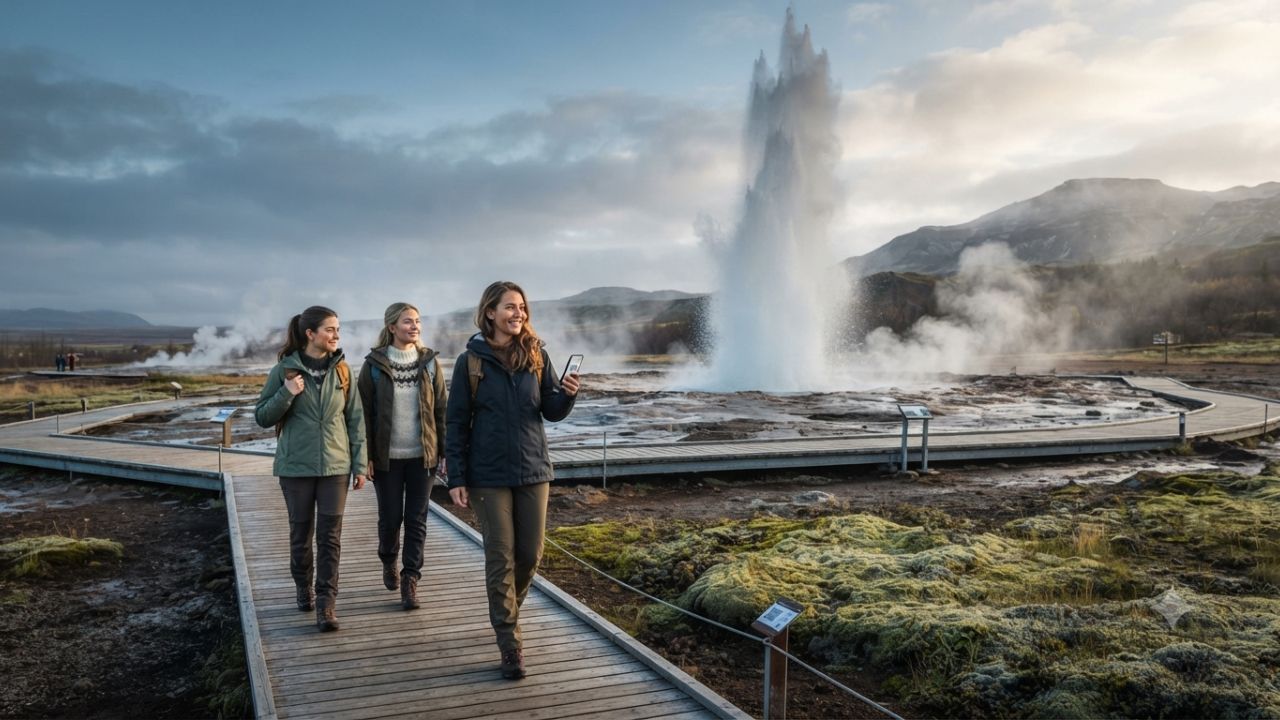
Iceland's new double-tiered visitor system introduces digital nature passes for iconic Golden Circle attractions.
Iceland is enacting a landmark double-tiered visitor taxation system—combining a digital Seasonal Pass for iconic natural attractions with an overnight accommodation levy—joining European nations in restructuring how travelers fund wilderness conservation and municipal infrastructure.
[Reykjavík, Oct 6, 2026] — Long celebrated as a destination where raw volcanic wilderness could be explored without entry charges, Iceland is overhauling its tourism access rules. The Icelandic Ministry of Climate, Energy, and the Environment has introduced draft legislation establishing a dual-layer financial model: a digital Seasonal Pass for state-managed natural sites on the Golden Circle, paired with the country's ongoing overnight accommodation tax.
With annual visitor numbers exceeding 1.5 million against a resident population under 400,000, fragile geothermal fields, volcanic moss ecosystems, and rural roadways face intense physical strain. Iceland’s policy reflects a broader European trend across Italy, Spain, the Netherlands, Greece, Scotland, Norway, Belgium, and Romania, where targeted visitor fees generate revenue to maintain heritage sites, improve public transport, and protect natural landscapes.
Iceland Golden Circle Nature Pass Pricing and Exemptions
| Parameter / Tier | Specific Details & Statutory Rates | Currency Equivalent (USD / EUR) | Operational Rules & Conditions |
|---|---|---|---|
| Summer Peak Fee | 4,500 ISK per adult (June 1 – October 31) | ~$33 USD / €30 EUR | Applies to all visitors aged 18 and older |
| Winter / Off-Peak Fee | 3,000 ISK per adult (November 1 – May 31) | ~$22 USD / €20 EUR | Applies to all visitors aged 18 and older |
| Pass Validity Period | 12-Month Annual Digital Access Pass | 365 Days from Purchase | Unlimited entries to all 3 Golden Circle state sites |
| Exempt Categories | Icelandic Tax Residents & Minors under 18 | Fully Exempt ($0 / €0) | Must present valid local ID or residency proof |
| Covered State Sites | Þingvellir National Park, Geysir, Gullfoss | All 3 state-influenced landmarks | Universal QR verification across sites |
The Golden Circle Nature Pass Architecture
The flagship element of Iceland’s legislative proposal is a mandatory digital pass targeting its primary travel corridor: the Golden Circle. The pass covers three state-influenced landmarks along the circuit:
- Þingvellir (Thingvellir) National Park: A UNESCO World Heritage Site located in a rift valley between the Eurasian and North American tectonic plates, home to Iceland's ancient parliament.
- Geysir Geothermal Area: The geothermal basin containing the active Strokkur geysir, which erupts every 6 to 10 minutes amid sensitive silica crusts.
- Gullfoss Waterfall: A massive two-stage waterfall cascading into a deep canyon, requiring continuous boardwalk and safety railing upkeep.
Iceland Golden Circle Nature Pass Framework:
├── Covered Landmarks
│   ├── Þingvellir National Park (UNESCO Tectonic Rift)
│   ├── Geysir Geothermal Area (Strokkur Spout)
│   └── Gullfoss Waterfall (River Hvítá Canyon)
├── Fee Structure (Valid 365 Days)
│   ├── Summer Peak (Jun 1 – Oct 31): 4,500 ISK (~$33 USD)
│   └── Winter Off-Peak (Nov 1 – May 31): 3,000 ISK (~$22 USD)
└── Exemptions
    ├── Children & Youth under 18
    └── Registered Icelandic Tax Residents
To maintain smooth traffic flows, enforcement will rely on an end-to-end digital verification framework managed alongside the Icelandic Tourist Board. Visitors must secure a digital QR code online before or upon arrival. Tour operators can purchase bulk passes for coach passengers, embedding entry validation directly into excursion tickets. Mobile wardens and camera systems will monitor parking areas and trailheads.
Under the proposed rules, state-managed land cannot stack separate parking fees on top of the nature pass, prompting Þingvellir National Park to eliminate its 1,000–1,200 ISK vehicle parking fee. However, because parking lots at Gullfoss and Geysir sit on privately owned parcels, private landowners retain the right to collect separate parking charges.
The Icelandic Treasury projects that the Golden Circle nature pass will generate 6 to 7 billion ISK (~$44 to $51 million USD) annually. Legally earmarked revenues will fund three core areas:
- Ecosystem Stabilization: Building elevated wooden and steel boardwalks over fragile geothermal moss and managing foot-traffic erosion.
- Safety & Infrastructure: Upgrading public sanitation facilities, search-and-rescue huts, and cliffside safety barriers.
- Geographic Redistribution: Marketing and maintaining road infrastructure in less-visited regions like the Westfjords, North Iceland, and the East Fjords to reduce congestion in the south.
Comprehensive Breakdown of European Tourist Taxes in 2026
| Country / Region | Primary Tax Mechanism | Average Cost Range per Traveler | Primary Earmarked Expenditure Target |
|---|---|---|---|
| Iceland | Nature Pass + Overnight Accommodation Tax | 3,000 – 4,500 ISK (~$22–$33 USD) annual pass | Wilderness boardwalks, safety, Westfjords road links |
| Italy | Venice Day-Entry Fee + City Hotel Night Tax | €3 – €12/night (Hotel); €5 – €10 (Venice Day Entry) | Historic restoration, municipal sanitation, canal dredging |
| Spain | Regional Surcharges & Island Transit Levy | €3 – €15/night; up to €85 vehicle tax (Balearics) | Eco-housing funds, coastal green transit, trail maintenance |
| Netherlands | Municipal Room Tax + VAT + Cruise Fee | 12.5% room tax + 21% VAT + €14.50 cruise fee | Amsterdam public maintenance, housing protection |
| Greece | Climate Resilience Fee + Cruise Port Fee | €1.50 – €15.00/night (Peak season) | Climate disaster recovery, wildfire defense, island water |
| Scotland (UK) | Municipal Visitor Levy (Edinburgh) | 5% of pre-VAT nightly room rate | Public transit, affordable housing, festival maintenance |
| Norway | Municipal Accommodation Percentage Tax | Up to 3% of accommodation cost | Sherpa trail stairs, mountain toilets, fjord rescue hubs |
| Belgium | Fixed City Hotel Room Tax (Brussels) | €5.00 flat per room, per night | Public transit, urban safety, street cleaning |
| Romania | Flat Municipal Night Levy (Bucharest) | 10 RON (~€2.00) per person, per night | Historic city center preservation, tourism promotion |
Regional Breakdown of European Tourist Tax Frameworks
Italy: Venice Day-Tripper Fees and City Hotel Taxes
Italy enforces multi-layered tourism taxes across its heritage centers. Venice charges day-trippers entering the historic lagoon city center on peak dates a standard fee of €5 when booked four days in advance, rising to €10 for walk-up arrivals. Overnight hotel guests are exempt from the day fee as they pay the municipal hotel tax. Milan charges €3 to €7 per night for 1-star to 3-star hotels, reaching €12 per night for 5-star properties. Rome imposes tiered nightly charges from €3 to €10 per person, capped at 10 consecutive nights.
Spain: Catalonia Surcharges and Balearic Vehicle Levies
Barcelona combines the regional Catalan tourist tax with a municipal city surcharge, resulting in total nightly taxes of €10 to €15 per person for luxury hotels and short-term rentals. The Balearic Islands (Mallorca, Ibiza, Menorca) collect a Sustainable Tourism Tax of €1 to €4 per night, alongside a seasonal transit fee of up to €85 per non-local vehicle brought onto the islands to reduce coastal traffic congestion.
Netherlands: Amsterdam Accommodation Taxes
Amsterdam collects a flat 12.5% municipal tourist tax calculated directly on room rates. On a $250-per-night hotel room, the tax adds over $31 USD per night. Combined with national VAT adjustments, total effective taxes on Dutch lodging exceed 30%. Ocean and river cruise ships docking in Amsterdam pay a daily passenger transit fee of €14.50 per person.
Greece: Climate Resilience Fees and Island Cruise Port Taxes
Greece replaces standard hotel taxes with a mandatory Climate Resilience Fee scaled by property rating and season. During peak summer months (March through October), fees range from €1.50 per night for 1-to-2-star properties up to €10 to €15 per night for 5-star luxury resorts and villas. High-density cruise ports in Santorini and Mykonos enforce dedicated disembarkation fees during peak operational hours.
Scotland (UK), Norway, Belgium, and Romania
- Scotland (Edinburgh): A 5% visitor levy calculated on pre-VAT room rates across hotels, bed-and-breakfasts, and short-term rentals, capped at five consecutive nights. Funds support affordable housing, street cleaning, and festival infrastructure.
- Norway: Municipalities like Tromsø, the Lofoten Islands, and Geiranger collect up to a 3% accommodation tax to build stone sherpa stairs on fjord trails, install mountain sanitation facilities, and support Arctic search-and-rescue teams.
- Belgium & Romania: Brussels enforces a flat €5.00 per room, per night hotel tax, while Bucharest collects a flat municipal fee of 10 RON (~€2.00) per person, per night.
Strategic Benefits of European Tourism Levies
Destination authorities across Europe leverage visitor fees to balance tourism growth with asset protection:
- Infrastructure Resilience: Direct funding for elevated boardwalks in Iceland and stone trails in Norway keeps high-density routes accessible year-round without damaging soil or moss.
- Flow Redistribution: Earmarked funds support marketing and infrastructure for under-visited regions, such as Iceland's Westfjords Way or Spain's inland cycling routes.
- Preserving Urban Livability: Hotel taxes fund public sanitation, historic building restoration, and municipal services in high-density cities like Venice, Florence, and Edinburgh.
Frequently Asked Questions
How much does the Iceland Golden Circle Nature Pass cost?
The pass costs 4,500 ISK ($33 USD / €30 EUR) during peak summer (June 1 – October 31) and 3,000 ISK ($22 USD / €20 EUR) during off-peak winter months (November 1 – May 31). It remains valid for 365 days from the date of purchase.
Who is exempt from paying Iceland's natural attraction fees?
Minors under the age of 18 and registered Icelandic tax residents (upon presenting valid local ID or residency proof) are fully exempt from paying the nature pass fee.
How do tourist tax rates compare across major European cities in 2026?
Amsterdam levies a 12.5% room tax; Barcelona collects combined taxes of €10–€15 per night; Venice charges €5–€10 for day-tripper entry; Greece charges a seasonal Climate Resilience Fee of up to €15 per night; and Edinburgh enforces a 5% accommodation levy.
Related Travel Guides
Disclaimer
This article is for informational and educational purposes only. It does not constitute legal, financial, or professional advice. While we strive to provide accurate and up-to-date information, travel policies, regulations, and conditions change rapidly. Always verify information with official sources before making travel decisions. Nomad Lawyer makes no representations about the accuracy, reliability, completeness, or suitability of the information provided. Readers should consult qualified professionals for advice specific to their circumstances. The views expressed in this article are those of the author and do not necessarily reflect the views of Nomad Lawyer.
Raushan Kumar
Founder & Lead Developer
Full-stack developer with 11+ years of experience and a passionate traveller. Raushan built Nomad Lawyer from the ground up with a vision to create the best travel and law experience on the web.
Learn more about our team →