
Hyatt 2026 Research: 90% of Business Travelers Use Hotel Rooms as Private Sanctuaries
New data from Hyatt reveals a significant shift in corporate travel, with 90% of professionals viewing hotel rooms as the only space to truly disconnect from work.

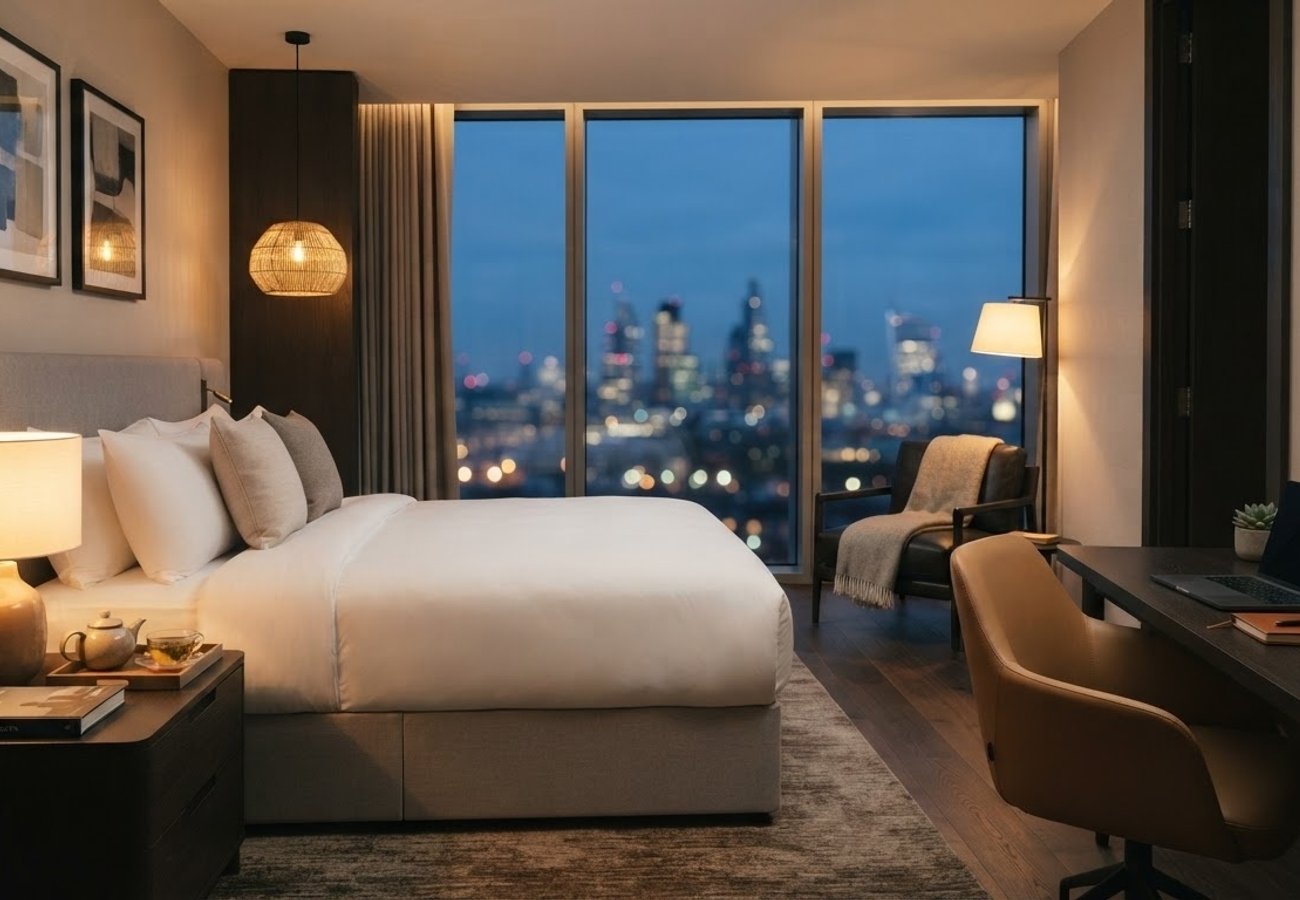
Image generated by AI
Ninety percent of corporate travelers now identify their hotel rooms as the sole location where they feel truly "off the clock" during a work trip. This striking statistic, revealed in new research commissioned by Hyatt, signals a fundamental transformation in how professionals perceive accommodation, shifting the hotel room from a mere sleeping quarters to a critical mental health sanctuary.
The Psychological Shift in Corporate Travel
For the modern professional, the boundary between professional obligations and personal time has become increasingly porous. The research indicates that the hotel room has evolved into a private fortress where travelers can recover from the cognitive load of their workday. This trend suggests that the traditional "networking" culture of business travel is facing a decline, as individuals prioritize solitude and mental decompression over optional social engagements.
The data reveals a stark preference for isolation over corporate socializing; 47% of business travelers admitted they would rather spend their limited free time alone in their room than attend optional networking events or work-related gatherings. This preference highlights a growing demand for "protected time" to maintain emotional and physical balance while away from home.
Tactical Avoidance of Professional Obligations
The drive for privacy has led some travelers to employ creative, and sometimes humorous, strategies to avoid the pressure of constant availability. The study found that professionals are increasingly inserting fake appointments into their digital calendars or inventing elaborate excuses to bypass non-mandatory events.
Reported excuses ranged from the mundane to the absurd, including claims of needing to attend urgent family video calls or even the need to care for a pet anaconda. While these examples are light-hearted, they underscore a serious underlying tension: the desperate need for uninterrupted personal moments in an era of constant connectivity.
Prioritizing Performance Through Room Quality
The relationship between accommodation quality and professional output is now quantifiable. According to the findings, 79% of respondents believe that staying in a high-quality hotel directly enhances their ability to perform effectively during their trip. Reliability has become a primary metric of luxury; 46% of travelers cited consistency across different stays as a hallmark of a premium hotel experience.
To balance productivity with recovery, travelers identified a specific set of "non-negotiable" amenities:
- High-comfort bedding for restorative sleep.
- Stable, high-speed in-room Wi-Fi.
- 24-hour dining access to accommodate varying time zones.
- Complimentary breakfast for efficient morning transitions.
- Flexible early check-in options to reduce travel stress.
Integrating Work and Wellness in the Essentials Portfolio
Recognizing that nearly 75% of business travelers continue to work from their rooms after official hours, Hyatt has aligned its "Essentials" portfolio—comprising Hyatt Place, Hyatt House, and Hyatt Studios—to support this dual-purpose usage. These properties are designed to facilitate a seamless transition from a professional workspace to a relaxation zone.
Jason Ballard, Senior Vice President and Global Brand Leader for Essentials at Hyatt, emphasizes that the "little things" define the modern travel experience. By focusing on the fundamentals—reliable connectivity, thoughtful room design, and efficient breakfast services—the goal is to remove the friction of travel, allowing guests to focus on their recovery and readiness.
Loyalty Incentives and Strategic Rewards
Loyalty programs are no longer just about free nights; they are strategic tools for the business traveler. The research shows that 80% of corporate travelers factor loyalty rewards into their hotel selection process, valuing the ability to convert work-mandated trips into future personal vacations.
Through the World of Hyatt program, members can leverage their business stays to unlock milestone rewards, late checkouts, and free night awards. Currently, Hyatt is offering targeted incentives for those staying within the Essentials Portfolio:
| Brand | Requirement | Reward | Deadline |
|---|---|---|---|
| Hyatt Place & Hyatt Select | 3+ consecutive nights | Up to 30,000 bonus points | September 30, 2026 |
| Hyatt House & Hyatt Studios | 5+ consecutive nights | Up to 50,000 bonus points | December 31, 2026 |
Global Expansion of Essential Accommodations
To meet this rising demand for reliable "sanctuaries," Hyatt is aggressively expanding its footprint. The Essentials Portfolio now exceeds 700 hotels across seven distinct brands. The growth trajectory remains steep, with nearly 70 new properties added in the first half of 2026 alone.
Recent and upcoming strategic openings include:
- Airport Hubs: Hyatt Place JFK Airport, Hyatt Place Asheville Airport, Hyatt House Portland Airport, and Hyatt Place Ontario Airport.
- Urban & Regional Centers: Hyatt Select Wooster, Hyatt Studios Tallahassee / I-10, Hyatt Studios Texarkana, Hyatt Studios Chesapeake, Hyatt Select Galveston – Beachfront, Hyatt Place Vancouver / Metrotown, and Hyatt Studios Jacksonville / St. Johns Town Center.
Methodology of the Study
The insights were derived from a comprehensive survey conducted by Talker Research. Between May 29 and June 11, 2026, 2,000 business travelers in the United States were polled. The sample was split evenly between 1,000 extended-stay professionals and 1,000 transient business travelers to ensure a balanced understanding of different travel durations and behaviors.
Why This Matters: The Shift Toward "Slow" Business Travel
For the traveler, this data confirms that the "grind" mentality of business travel is being replaced by a wellness-centric approach. From a logistical standpoint, the hotel room is no longer just a place to crash—it is a multifunctional hub that must serve as an office, a gym, a dining room, and a spa.
When booking future trips, professionals should look beyond the brand name and evaluate the "recovery potential" of the room. The ability to truly disconnect—facilitated by soundproofing, lighting control, and intuitive workspaces—is now as important as the proximity to the conference center. This shift forces corporations to rethink their travel policies, potentially moving away from mandatory networking dinners toward a culture that respects the traveler's need for solitude.
The hotel room has officially evolved from a transit point into a destination for mental recovery.
Related Travel Guides
Disclaimer
This article is for informational and educational purposes only. It does not constitute legal, financial, or professional advice. While we strive to provide accurate and up-to-date information, travel policies, regulations, and conditions change rapidly. Always verify information with official sources before making travel decisions. Nomad Lawyer makes no representations about the accuracy, reliability, completeness, or suitability of the information provided. Readers should consult qualified professionals for advice specific to their circumstances. The views expressed in this article are those of the author and do not necessarily reflect the views of Nomad Lawyer.
Kunal K Choudhary
Co-Founder & Contributor
A passionate traveller and tech enthusiast. Kunal contributes to the vision and growth of Nomad Lawyer, bringing fresh perspectives and driving the community forward.
Learn more about our team →