
Hupac Group Launches Duisburg-Barcelona Rail Service: Three Weekly Rotations Transform European Freight Logistics in June 2026
Hupac Group debuts a major intermodal rail corridor connecting Duisburg and Barcelona starting June 22, 2026, with three weekly rotations offering sustainable freight solutions across Europe.

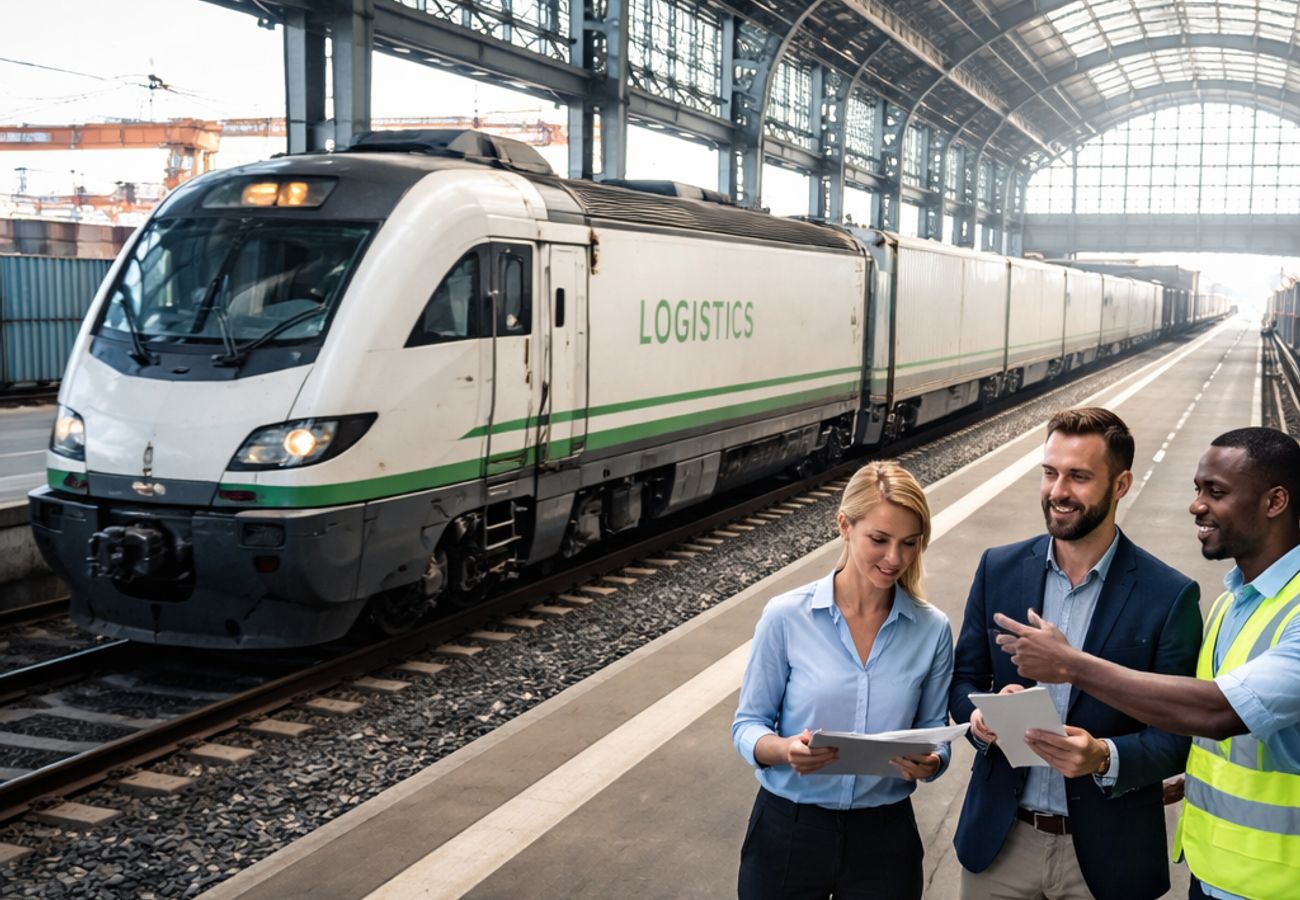
Image generated by AI
Hupac Group is about to reshape European freight logistics. On June 22, 2026, the Swiss intermodal specialist will launch a groundbreaking rail corridor connecting Duisburg, Germany to Barcelona, Spain—with three weekly rotations that promise to transform how cargo moves across the continent. Operating in partnership with LINEA FIGUERAS PERPIGNAN S.A., this service represents a decisive shift away from congested highways toward electrified, sustainable rail alternatives.
The timing couldn't be sharper. European supply chains are strangled. Road networks groan under truck congestion. Port facilities scramble for efficiency. This new rail artery cuts through all of it.
Why Duisburg and Barcelona Matter
Duisburg isn't just another German city—it's home to Europe's largest inland port, a 2,000-hectare logistics colossus where the Rhine meets continental trade. Manufacturers here pump automotive components, electronics, and industrial goods across Europe. Now, instead of watching those goods crawl south on overcrowded highways, shippers can dispatch them via rail to Barcelona, one of the Mediterranean's busiest ports.
Barcelona's position is equally strategic. Container vessels from Africa, the Middle East, and Asia dock here regularly. Refrigerated containers of Spanish produce ship out daily. By establishing a direct rail link from Germany's manufacturing heartland, Hupac has created what amounts to a continental cargo superhighway—one that doesn't depend on truck fuel, driver availability, or weather-clogged motorways.
Reddit: "Finally something that makes sense for European shipping. Rail instead of trucks means faster, cheaper, greener." — r/logistics
The Operational Blueprint
Three weekly rotations mean consistent, predictable service—not sporadic shipments. ISO-standard containers flow in both directions, including refrigerated units for perishable goods, temperature-sensitive pharmaceuticals, and high-value electronics. Hupac's digital booking and tracking platforms give shippers real-time visibility: know exactly where your cargo sits, when it arrives, how long the transit takes.
LINEA FIGUERAS PERPIGNAN S.A. brings cross-border expertise built over decades. These aren't amateurs—they understand French rail corridors, Spanish terminal procedures, German customs protocols. The partnership ensures smooth handoffs at each junction, reducing delays and bottlenecks that plague traditional multimodal routes.
Customers gain transparency they don't get from trucking companies. No more guessing. No more phone calls to dispatch. Real data. Real time. Real control.
Economic Shockwaves Across Europe
This isn't just logistics—it's economics. Trade between Germany and Spain will accelerate. Shorter transit times mean faster cash conversion cycles. Reduced logistics costs translate to lower product prices. Duisburg-based exporters suddenly have unfettered access to Mediterranean shipping lanes. Barcelona warehouses will hum with activity from Nordic suppliers.
New jobs emerge: warehouse handlers, rail technicians, customs brokers, logistics coordinators. Duisburg's port authority gains volume. Barcelona's terminal operators scramble to absorb new container flows. Local economies benefit from the friction of commerce moving faster.
The math works: one train replaces roughly 30 trucks. Those 30 trucks eat fuel, require drivers, jam highways. A train doesn't.
The Sustainability Argument That Actually Sticks
Here's where this gets urgent. The European Union's decarbonisation agenda is no longer optional—it's law. Shippers face mounting pressure to slash carbon footprints. Hupac's electrified rail infrastructure slashes CO2 emissions per tonne of cargo compared to diesel trucks.
Modern rail transport produces approximately 4-5 times lower emissions than equivalent road freight, according to transport climate experts. A single train operating three weekly rotations between Duisburg and Barcelona removes hundreds of truck journeys monthly from European highways.
For businesses shipping automotive parts, consumer goods, or perishables, this service becomes a competitive advantage. Marketing teams can tout their commitment to sustainable logistics. Supply chain officers can demonstrate environmental responsibility to investors. Compliance teams check EU carbon reporting boxes.
It's not virtue signalling—it's business necessity.
What This Means for European Logistics Networks
The Duisburg-Barcelona corridor is a blueprint. Industry analysts predict Hupac will replicate this model across additional corridors: Frankfurt to Valencia, Munich to Marseille, potentially extending through Italy, France, and Portugal. A Europe-wide network of electrified rail links would fundamentally restructure freight movement.
Research from the International Union of Railways shows that intermodal rail services face strongest adoption when operators offer frequency, transparency, and digital integration—exactly what Hupac is delivering.
Competitors will notice. Deutsche Bahn. SNCF. ÖBB. Every major European rail operator will either build similar services or lose market share to Hupac's innovation. The freight transport industry is shifting in real time.
The Booking Mechanics: How Shippers Access the Service
Starting June 22, 2026, logistics managers can reserve container capacity through Hupac's digital platform. The process mirrors airline booking: select departure week, confirm container type, lock in pricing. Digital confirmation arrives instantly. Tracking begins the moment containers load onto the train at Duisburg.
Transit time? Expect 4-5 days from Duisburg terminal to Barcelona dockside—competitive with trucking but without the exhaustion factor for drivers or the unpredictability of highway congestion.
Pricing remains confidential, but industry sources suggest rates will undercut road freight once volume scales, making rail an economic no-brainer for high-volume shippers.
What's Next: Expansion on the Horizon
Hupac hasn't hidden its ambitions. Expansion is coming. Additional industrial hubs across Central Europe sit in the pipeline. Eastern European suppliers now have a gateway to Mediterranean markets. German manufacturers gain southern European distribution advantages. Spanish exporters access Baltic and Nordic markets without relying on trucking chaos.
The Duisburg-Barcelona service opens on June 22. Watch for capacity constraints by Q3 2026—a sign that demand outpaces supply, triggering additional rotations. Within 24 months, expect announcements of parallel routes, extended corridors, and possibly overnight rail services for time-sensitive cargo.
This is how European logistics infrastructure modernizes: one corridor, three weekly trains, endless ripple effects.
The age of European freight moving exclusively on highways just entered its final chapter.
Related Travel Guides
Germany Flight Chaos Grounds Hundreds at Frankfurt, Munich in April 2026
Marriott India Tells Staff: Clock Off on Time in 2026
Negros Oriental Emerges as Philippines' Premier Sports Tourism East
Disclaimer
This article is for informational and educational purposes only. It does not constitute legal, financial, or professional advice. While we strive to provide accurate and up-to-date information, travel policies, regulations, and conditions change rapidly. Always verify information with official sources before making travel decisions. Nomad Lawyer makes no representations about the accuracy, reliability, completeness, or suitability of the information provided. Readers should consult qualified professionals for advice specific to their circumstances. The views expressed in this article are those of the author and do not necessarily reflect the views of Nomad Lawyer.
Kunal K Choudhary
Co-Founder & Contributor
A passionate traveller and tech enthusiast. Kunal contributes to the vision and growth of Nomad Lawyer, bringing fresh perspectives and driving the community forward.
Learn more about our team →