
Hundreds Stranded Fresh Wave Delays Hit European Air Travel
Over 1,700 flights delayed across European hubs in early April 2026 as cascading disruptions strand hundreds of passengers. Major carriers including Lufthansa, KLM, and Finnair face widespread rebookings and missed connections.

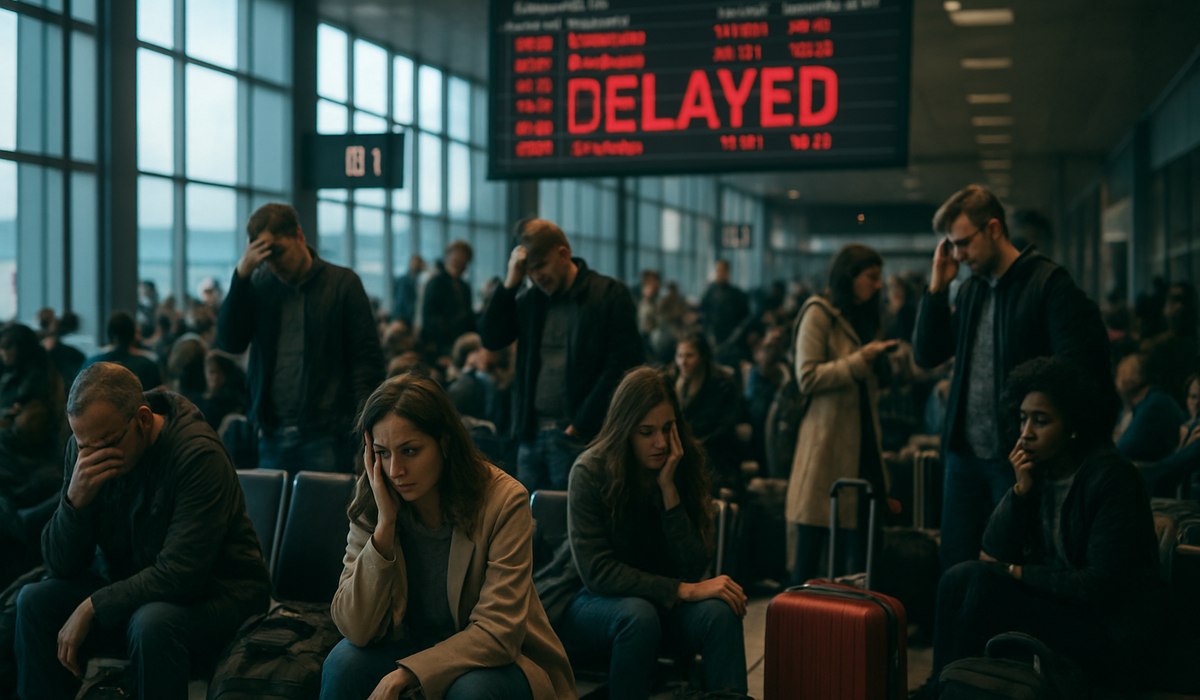
Image generated by AI
Hundreds Face Missed Connections as Cascading Disruption Sweeps European Aviation Network
Major European aviation hubs ground to a halt this week as a domino effect of delays and cancellations strands hundreds of travellers across the continent. Between April 5 and 9, 2026, more than 1,700 flights experienced delays while over 170 cancellations disrupted schedules at key transfer points in London, Paris, Amsterdam, and Frankfurt. The cascade began at Italian and Dutch hubs but quickly spread to airports across Germany, France, and the Nordic region, affecting passengers booked on Lufthansa, KLM, British Airways, and Finnair services.
The disruption illustrates how tightly interconnected modern European air travel has become. When primary bottlenecks develop at Rome Fiumicino, Milan Malpensa, or Amsterdam Schiphol, the ripple effect reaches distant airports within hours. Passengers relying on complex connecting itineraries face the greatest risk of missing onward flights, overnight airport stays, and mandatory rebookings onto later departures.
Scale of Disruption: 1,700+ Flights Delayed Across Europe
The magnitude of this week's disruption marks one of the most significant operational crises affecting European aviation since early 2026. Real-time tracking data from platforms monitoring continental flight movements confirms that delays accumulated rapidly from April 5 onward, with peak disruption occurring on April 6 and April 9.
On single days during this period, delays affecting hundreds stranded passengers created bottlenecks at every major hub. Lufthansa's Frankfurt hub registered over 200 affected departures on April 6 alone, while London Heathrow documented more than 300 delayed or cancelled flights in a 24-hour window. Amsterdam Schiphol's historically challenging operational environment—compounded by winter weather aftereffects and capacity strain—contributed significantly to the overall numbers.
The precise composition of delayed flights reveals how network carriers face greater vulnerability than point-to-point operators. Airlines maintaining complex hub-and-spoke networks, where dozens of flights feed into concentrated waves of onward services, experience amplified disruption when even modest primary delays occur. Check FlightAware for real-time tracking of European flight status during recovery operations.
Cascade Effect: How Italian and Dutch Hub Problems Spread Globally
The disruption chain began at Italy's two primary long-haul gateways: Rome Fiumicino and Milan Malpensa. Operational challenges on April 5-6 left aircraft and crews unable to rotate for scheduled onward services. These initial delays had immediate consequences for connecting passengers and subsequent departure waves, but the geographic impact extended far beyond Italy.
Amsterdam Schiphol's vulnerability proved equally critical in transmitting disruption across northern Europe. KLM's operations, already strained by winter recovery efforts, deteriorated further when inbound flights from affected Italian hubs arrived behind schedule. This forced cancellations of tightly scheduled onward services and contributed to widespread rebooking backlogs.
The knock-on effect targeted London Heathrow and Paris Charles de Gaulle—Europe's two most critical connection hubs. These airports depend on precisely timed banks of arrivals feeding into departures. When multiple inbound flights from Rome, Milan, or Amsterdam arrive delayed simultaneously, departure slots cannot be used, and subsequent flights miss their scheduled window. The cascading delays hundreds stranded at these terminals for extended periods, creating customer service crises across major carriers' operations centers. The FAA maintains documentation of how transatlantic disruptions impact U.S. flight operations.
Impact on Passengers: Missed Connections and Rebookings at Major Hubs
Passengers booked through connecting airports experienced the most severe consequences. A traveller scheduled to connect in London from a delayed Rome flight faced two scenarios: either a missed connection requiring reboking onto next-available service, or a cancelled connection flight due to crew positioning failures.
Customer service desks at Heathrow and Charles de Gaulle faced unprecedented queues throughout April 6-9. Passengers with tight connections discovered that their onward flights had departed without them while rebooking options extended departure times by 24-48 hours. Airlines offered various accommodations, ranging from hotel vouchers for overnight stays to meal allowances, depending on contract terms and passenger status.
The passenger experience deteriorated further for those holding non-refundable economy tickets on low-cost carriers or code-share partners. Complex booking arrangements sometimes meant travellers could not reach the airline responsible for rebooking, creating extended periods of uncertainty about compensation eligibility and alternative routing options.
Which Airlines and Routes Are Most Affected
Lufthansa faced multilayered disruption affecting its Frankfurt, Munich, and Berlin operations, with particular strain on services connecting through London and Paris. The airline's April 10 cabin crew strike amplified existing delays, threatening additional cancellations across German operations and network feeds.
KLM's Amsterdam Schiphol hub remained vulnerable throughout the disruption period, with the airline's winter-challenged schedule leaving minimal buffer for unexpected delays. Finnair's operations suffered cascading consequences as connecting traffic from affected southern European hubs failed to arrive on schedule.
British Airways absorbed significant disruption at London Heathrow, where the airline operates its primary hub. Inbound delays from continental Europe created departure wave failures throughout April 6 and April 9, extending the operational pressure across BA's entire European network.
Routes particularly affected include London-Rome, London-Milan, Paris-Rome, Paris-Milan, Paris-Amsterdam, Frankfurt-Amsterdam, and multiple Nordic connections. Transatlantic services experienced knock-on delays as aircraft failed to arrive on schedule for westbound departures. Passengers on these routes should monitor booking status closely, using FlightAware for real-time confirmation before proceeding to airports.
Real-Time Tracking and Status Monitoring
Affected passengers should monitor flight status through official airline apps and flight-tracking websites providing live data feeds. Major carriers' customer service lines experienced extended wait times during April 6-9, so electronic channels provided faster status information.
The U.S. Department of Transportation maintains comprehensive passenger rights documentation applicable to European operations subject to EU261 regulations. Passengers entitled to compensation should document disruption details, obtain airline PIR (Passenger Incident Report) numbers, and file claims within regulatory timeframes.
Traveler Action Checklist: Immediate Steps for Affected Passengers
-
Verify flight status immediately using official airline apps or FlightAware before departing for the airport.
-
Contact your airline's customer service through digital channels if delays exceed two hours, requesting rebooking onto next available service or alternative routing.
-
Document all disruption details, including confirmation numbers, departure gate information, and times spent waiting at airports.
-
Request a Passenger Incident Report (PIR) from airlines for any flight cancelled or delayed beyond two hours.
-
Photograph receipts for meals, accommodation, transportation, and other costs incurred due to airline-caused disruptions.
-
Check EU261 or applicable regional compensation eligibility, which typically requires airline operational failures (not force majeure) and specific delay thresholds.
-
File compensation claims within regulatory timeframes (typically 2-6 years depending on jurisdiction) using airline websites or specialized claim management services.
-
Monitor rebooking status if rebooked onto alternative flights, confirming seat assignments and arrival times 24 hours before departure.
-
Verify travel insurance coverage for missed connection claims, hotel expenses, and meal costs not refunded by airlines.
10
Disclaimer
This article is for informational and educational purposes only. It does not constitute legal, financial, or professional advice. While we strive to provide accurate and up-to-date information, travel policies, regulations, and conditions change rapidly. Always verify information with official sources before making travel decisions. Nomad Lawyer makes no representations about the accuracy, reliability, completeness, or suitability of the information provided. Readers should consult qualified professionals for advice specific to their circumstances. The views expressed in this article are those of the author and do not necessarily reflect the views of Nomad Lawyer.
Kunal K Choudhary
Co-Founder & Contributor
A passionate traveller and tech enthusiast. Kunal contributes to the vision and growth of Nomad Lawyer, bringing fresh perspectives and driving the community forward.
Learn more about our team →