
HSMAI Mike Leven Leadership Conference Exposes Cruise Industry's Recognition Gap
HSMAI Mike Leven leadership conference in Los Angeles March 2026 highlights missing maritime focus, sparking debate on cruise hospitality strategy frameworks.

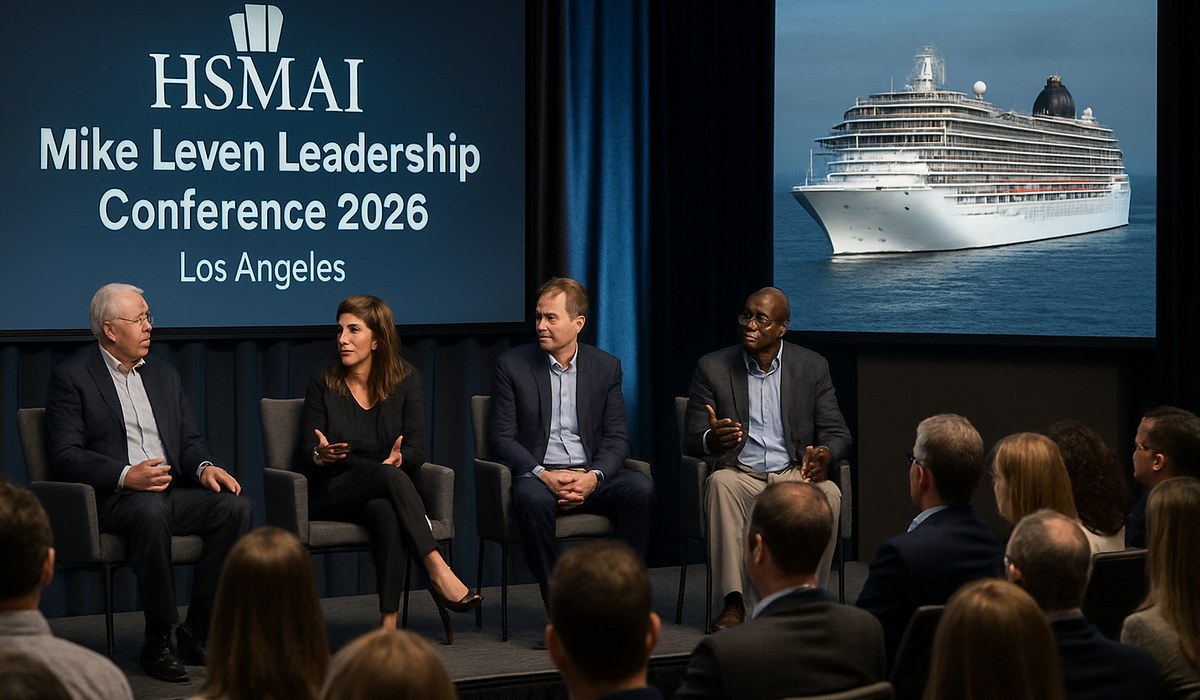
Image generated by AI
Quick Summary • Los Angeles hospitality leadership gathering reveals maritime sector's underrepresentation in professional development forums • Hotel-focused awards models fail to capture unique shipboard operational challenges faced by cruise executives • Port destination partnerships require specialized recognition frameworks distinct from land-based hospitality • Cruise operators adapting shore-based leadership principles to onboard service delivery and itinerary planning
When a landlocked hospitality conference gets tagged as cruise content, it exposes a glaring gap in how the maritime travel sector approaches leadership development and industry recognition. The HSMAI Mike Leven gathering scheduled for Los Angeles in late March 2026 exemplifies how hotel-centric professional development events dominate hospitality discourse, leaving cruise executives searching for relevant frameworks tailored to their unique operational environments.
This misclassification isn't merely taxonomic confusion. It signals a fundamental disconnect between shore-based hospitality strategy and the specialized needs of maritime hospitality leadership. While hotel operators grapple with urban market dynamics and property-level revenue management, cruise directors navigate complex multi-port itineraries, international regulatory frameworks, and self-contained community operations thousands of miles from headquarters.
The contrast becomes stark when examining awards criteria. Traditional hospitality accolades celebrate room-night growth, local market penetration, and fixed-location guest experience metrics—none of which directly translate to measuring a cruise director's success in orchestrating seamless guest journeys across twelve countries in fourteen days, or coordinating shore excursion partnerships across volatile geopolitical landscapes.
Why Hospitality Leadership Conferences Matter to Cruise Operators
Cruise executives don't dismiss hotel-focused conferences outright. The fundamental principles of service excellence, team motivation, and revenue optimization remain universal. A housekeeping supervisor on a 3,000-passenger vessel faces similar labor management challenges as her counterpart at a 400-room resort property, though the stakes multiply when crew members live and work in the same confined environment for months without shore leave.
The Cruise Lines International Association has documented this parallel in its professional certification programs, which increasingly incorporate land-based hospitality best practices into maritime-specific curricula. CLIA's 2025 workforce development report noted that 68 percent of new cruise executives now hold dual certifications spanning both hotel operations and maritime safety—a credential combination unheard of a decade ago.
Yet Los Angeles conferences like the HSMAI gathering rarely feature cruise-specific case studies in their agenda tracks. The March 2026 schedule emphasizes urban hotel revenue strategies, restaurant partnership models, and city-destination marketing—valuable topics, but distant from the operational realities of floating resorts that operate as sovereign entities under multiple flags of convenience.
Seatrade Cruise Global, the maritime sector's premier conference series, addresses this gap by centering discussions on shipboard hospitality innovation, port infrastructure partnerships, and regulatory compliance across international waters. The attendance differential tells the story: Seatrade's 2025 Miami event drew 11,400 cruise-specific professionals, while general hospitality leadership conferences rarely allocate more than two breakout sessions to maritime topics.
The leadership development void becomes especially apparent when examining succession planning. Hotel chains possess clear advancement pathways from property-level roles to regional management to C-suite positions. Cruise lines struggle with parallel structures. A successful hotel manager can transfer skills across properties within the same brand with relative ease. A cruise director transferring between ship classes faces entirely new operational configurations, crew nationality mixes, and itinerary compliance requirements.
Translating Hotel Strategy to Shipboard Excellence
Despite structural differences, certain hotel leadership principles transfer effectively to cruise operations when properly adapted. Dynamic pricing models pioneered by urban hotels now drive sophisticated cabin inventory management systems that adjust rates hourly based on booking velocity and competitive positioning. Norwegian Cruise Line Holdings reported in February 2026 that AI-driven yield management borrowed from Las Vegas resort operators increased per-passenger revenue by 14 percent across their fleet.
The awards-and-recognition frameworks championed at Los Angeles conferences also merit maritime adaptation. Hotels celebrate employee-of-the-month programs and service milestone anniversaries. Cruise lines must reimagine these programs for crews working back-to-back six-month contracts with limited family contact. Carnival Corporation's crew recognition initiative, launched in partnership with leading hotel brands, now incorporates video messages from passengers, shore leave extensions, and cabin upgrade incentives—adaptations unavailable to landlocked properties.
Leadership communication strategies require similar translation. Hotel general managers conduct weekly all-staff meetings and maintain visible presence in public areas. Cruise ship captains operate under strict maritime hierarchy and bridge protocols that limit casual interaction. Progressive operators like Virgin Voyages have introduced hybrid leadership models where hotel operations directors adopt more accessible communication styles borrowed from boutique hotel practices while preserving essential maritime command structures.
This cross-pollination extends to sustainability initiatives. The Port of Miami's shore power infrastructure project draws directly from hotel energy management best practices, enabling docked vessels to shut down diesel generators and connect to municipal grids—a concept proven in large convention hotels decades earlier. The port authority's 2026 environmental report credits hotel industry collaboration for accelerating adoption timelines by eighteen months.
Training methodologies also bridge sectors. Ritz-Carlton's legendary customer service protocols now inform Royal Caribbean's Gold Anchor training program, with modifications for the unique challenge of training crew members from seventy-plus nationalities working in confined spaces. The adapted curriculum incorporates cultural intelligence modules absent from most hotel training—recognizing that a housekeeper from the Philippines and a waiter from Croatia must coordinate seamlessly while navigating language barriers hotel staff rarely encounter at this scale.
Awards and Recognition Models for Maritime Hospitality
Traditional hospitality awards struggle to evaluate cruise excellence using criteria designed for fixed-location properties. The AAA Five Diamond Award and Forbes Travel Guide ratings systems both require physical inspections of static facilities—a challenge when the property in question sails through international waters on constantly changing itineraries.
Industry watchers note that cruise-specific recognition programs lag two generations behind hotel equivalents in sophistication. The Cruise Critic Editors' Picks Awards, while respected, rely heavily on passenger surveys that often conflate itinerary appeal with onboard service quality. No cruise equivalent exists for the rigorous inspection protocols that hotel awards deploy—arriving unannounced, evaluating 900 separate service touchpoints, and conducting blind testing of reservation and concierge services.
This gap matters for talent recruitment. Ambitious hospitality graduates gravitate toward employers whose awards carry industry weight. When hotel brands accumulate prestigious accolades and cruise lines settle for passenger-poll recognition, the talent pipeline tilts landward. Silversea Cruises acknowledged this challenge in January 2026 when announcing a partnership with Cornell University's School of Hotel Administration to develop cruise-specific service excellence benchmarks modeled after the institution's hotel rating methodologies.
The recognition deficit extends to individual leadership awards. HSMAI's prestigious revenue management awards rarely acknowledge cruise yield optimization specialists, despite their management of inventory complexity that dwarfs most hotel scenarios. A hotel revenue manager optimizes rooms, meeting space, and restaurant covers. A cruise revenue director simultaneously manages cabins across twelve deck levels and ten category types, specialty dining venues with dynamic pricing, shore excursions in multiple currencies, and spa services in international waters—all while factoring weather routing changes that can alter itineraries mid-voyage.
Strategic partnerships between hotel and cruise sectors could reshape recognition frameworks. Marriott International's minority stake in several expedition cruise operators positions the hotel giant to develop hybrid evaluation criteria that respect maritime operational uniqueness while maintaining service standards honed across their 8,000 hotel properties. Industry analysts project such collaboration could produce the first universally accepted cruise service rating system by late 2027.
Growth Strategies: Port Partnerships and Destination Development
Leadership conferences in Los Angeles typically emphasize urban market penetration and property-level revenue growth. Cruise operators require fundamentally different strategic frameworks centered on destination development and port infrastructure partnerships. A hotel chain expanding into Southeast Asia selects property sites and negotiates leases. A cruise line entering the same region must coordinate with multiple port authorities, negotiate pilotage fees, ensure adequate tender operations where deep-water berths don't exist, and establish shore excursion networks across dozens of cities.
The strategic complexity multiplies when examining the Coral Princess Singapore-to-Alaska route, which requires coordinating with fifteen port jurisdictions across three continents, managing crew visa requirements for forty-three countries, and maintaining cold-weather and tropical operational readiness simultaneously. No hotel operations course addresses this level of multi-jurisdictional strategic planning.
Port partnerships extend beyond docking rights to encompass economic development collaboration. When Royal Caribbean announced homeporting expansion in Galveston, Texas, the agreement included joint marketing initiatives with the port authority, infrastructure investments in passenger facilities, and coordination with local hotels for pre- and post-cruise stays—a public-private partnership model hotel operators rarely navigate. The cruise line committed $125 million to terminal improvements in exchange for twenty-year berth guarantees and preferential docking schedules.
These partnerships increasingly incorporate destination development investments reminiscent of hotel resort strategies but executed at regional scale. MSC Cruises' Ocean Cay marine reserve in the Bahamas required environmental restoration, infrastructure construction, and ongoing ecological monitoring—essentially developing an entire island destination from scratch, a project scope beyond typical hotel development parameters. The $200 million private island investment generates revenue through exclusive cruise passenger access while serving as environmental showcase and brand differentiator.
Growth strategies also encompass itinerary innovation that blends traditional route planning with emerging market development. The surge in Southeast Asia business travel trends has prompted cruise operators to design corporate incentive programs combining shipboard conference facilities with curated port experiences—a hybrid product category that hotels attempted with conference cruises decades ago but never scaled effectively.
Port infrastructure collaboration increasingly addresses sustainability imperatives. The Port of Barcelona's cold ironing facilities, developed through cruise line partnerships, now serve as model for Mediterranean-wide shore power expansion. Cruise operators contributed technical specifications and usage commitments that enabled the port authority to secure European Union infrastructure funding—a multi-stakeholder strategic initiative foreign to most hotel development processes.
The leadership skills required for these complex partnerships rarely feature in traditional hospitality conference curricula. Negotiating with sovereign port authorities demands diplomatic capabilities, regulatory expertise, and long-term strategic thinking beyond quarterly revenue targets. Cruise executives increasingly pursue supplementary training in international trade, maritime law, and diplomatic protocol—credentials unnecessary for landlocked hotel careers.
FAQ
What differentiates cruise leadership conferences from hotel-focused hospitality events?
Maritime conferences center on multi-jurisdictional operations, shipboard safety protocols, international crew management, and port partnership strategies. Hotel conferences emphasize property-level revenue management, urban market dynamics, and fixed-location guest experience optimization. Both share service excellence fundamentals but operate in vastly different regulatory and operational contexts.
How do hotel awards programs fail to capture cruise excellence?
Traditional ratings require static facility inspections and evaluate service touchpoints designed for fixed locations. Cruise ships operate as mobile destinations under multiple international jurisdictions, with constantly changing itineraries that complicate standardized evaluation. Passenger survey-based awards often conflate destination appeal with onboard service quality, lacking the rigorous inspection protocols hotel awards employ.
Can cruise executives benefit from attending hotel leadership conferences?
Yes, particularly for sessions on employee engagement, revenue optimization fundamentals, and service culture development. However, participants must actively translate concepts to maritime contexts, recognizing that shipboard operations face unique challenges around crew nationality diversity, confined living-working spaces, and international regulatory compliance absent from most hotel environments.
Why do cruise lines struggle with leadership succession planning compared to hotel chains?
Ship-specific operational configurations, varying vessel classes, and complex international crew dynamics create advancement pathways less linear than hotel progression. Transferring between ship classes often requires retraining equivalent to changing hotel brands entirely. Maritime hierarchy and safety certification requirements add layers of complexity absent from hotel management transitions.
How are port authorities adapting hotel sustainability practices to cruise operations?
Shore power infrastructure allowing docked ships to use municipal electricity rather than diesel generators directly adapts hotel energy management systems to maritime applications. Waste management protocols, water conservation technologies, and carbon offset programs initially developed for large resort properties now inform port-cruise partnerships, though implementation scales differ dramatically given vessel size and passenger volumes.
Related Articles:
Coral Princess Singapore-to-Alaska route launches March 2026 connecting Asian and North American markets
Southeast Asia business travel trends reshape corporate incentive programs
Maritime hospitality leadership frameworks emerge as cruise sector professionalizes operations
Disclaimer
This article is for informational and educational purposes only. It does not constitute legal, financial, or professional advice. While we strive to provide accurate and up-to-date information, travel policies, regulations, and conditions change rapidly. Always verify information with official sources before making travel decisions. Nomad Lawyer makes no representations about the accuracy, reliability, completeness, or suitability of the information provided. Readers should consult qualified professionals for advice specific to their circumstances. The views expressed in this article are those of the author and do not necessarily reflect the views of Nomad Lawyer.
Raushan Kumar
Founder & Lead Developer
Full-stack developer with 11+ years of experience and a passionate traveller. Raushan built Nomad Lawyer from the ground up with a vision to create the best travel and law experience on the web.
Learn more about our team →