
F-35's Advanced Thermal Management System Overcomes Critical Engineering Challenge That Sidelined Earlier Fighter Generations
Breaking airline news and aviation industry updates for 2026.

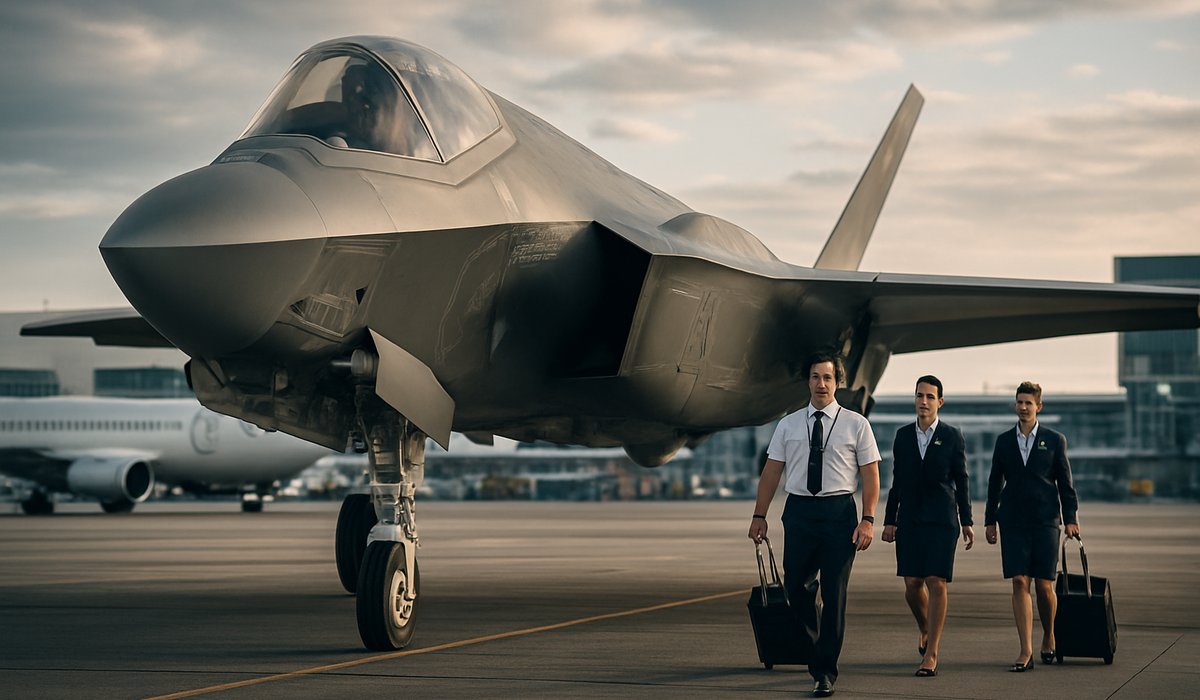
Image generated by AI
F-35's Advanced Thermal Management System Overcomes Critical Engineering Challenge That Sidelined Earlier Fighter Generations
How cutting-edge cooling technology resolves decades-long operational constraints for next-generation stealth aircraft
The Heat Problem That Grounded Previous Fighter Jets
Thermal management has emerged as one of the most formidable engineering obstacles in modern fighter jet development. Beyond conventional performance metrics, the ability to suppress infrared signatures—the heat signature detected by enemy sensors—has become as strategically vital as radar stealth in contemporary military aviation. This thermal challenge has forced significant operational and infrastructure constraints on successive generations of combat aircraft, particularly those capable of vertical takeoff and landing operations.
Why STOVL Aircraft Face Unique Thermal Demands
Short takeoff and vertical landing (STOVL) platforms, including the aging AV-8B Harrier II and its successor, the F-35 Lightning II, operate under extraordinary thermal stress. The concentrated vertical exhaust from hover operations generates extreme heat that can cause catastrophic damage to flight deck surfaces. Naval forces have long struggled with this reality, forced into costly operational workarounds and infrastructure modifications.
The challenge intensified with the F-35C variant. The fighter's powerful engine produces exhaust temperatures that exceeded the heat tolerance of existing carrier deck materials, necessitating extensive retrofit programs across the U.S. Navy's fleet. These retrofits represented substantial capital investments—modifications required to protect billions of dollars in naval vessel infrastructure from thermal degradation.
Engineering Solutions in the F-35 Design
Lockheed Martin's engineering approach to the F-35 incorporated advanced cooling systems specifically designed to mitigate infrared emissions and manage exhaust temperatures more effectively than previous generations. These systems represent a fundamental shift in how stealth aircraft balance operational capability with thermal signature reduction—a dual requirement that had proven difficult to reconcile in earlier platforms.
The thermal management innovation addresses a decades-long constraint that had limited deployment flexibility and increased maintenance requirements for older STOVL aircraft. By reducing peak exhaust temperatures and distributing thermal output more efficiently, the F-35's cooling architecture reduces both the operational burden on naval infrastructure and the aircraft's vulnerability to infrared-guided threats.
Implications for Naval Operations and Future Aircraft Development
This technological breakthrough carries broader implications for military aviation strategy. As adversaries increasingly field advanced infrared detection and targeting systems, the ability to suppress thermal signatures has become operationally decisive. The F-35's solution provides naval commanders with greater deployment flexibility while reducing long-term infrastructure maintenance costs.
The engineering achievement also establishes a template for future fighter development, signaling that next-generation combat aircraft must integrate thermal management as a core stealth requirement rather than a secondary consideration.
FAQ: F-35 Thermal Systems and Fighter Jet Engineering
What is infrared signature reduction in stealth aircraft? Infrared signature reduction involves suppressing the heat emissions from an aircraft's engines and systems to make it harder to detect by infrared-guided missiles and tracking systems—a key component of modern stealth technology alongside radar cross-section reduction.
Why do STOVL aircraft create more thermal challenges than conventional fighters? Vertical takeoff and landing aircraft direct their engine exhaust downward during hover operations, concentrating extreme heat on carrier decks and surrounding surfaces, requiring specialized heat-resistant materials and cooling systems.
What modifications did the Navy make to accommodate the F-35C? The U.S. Navy retrofitted carrier flight decks with enhanced heat-resistant materials and cooling systems to withstand the F-35C's exhaust temperatures, representing significant infrastructure investment across the fleet.
How does the F-35's cooling system differ from the AV-8B Harrier II? The F-35 incorporates advanced thermal management technology designed to reduce peak exhaust temperatures and distribute heat more efficiently, overcoming limitations that constrained Harrier II operations and required extensive deck protection measures.
What are the operational advantages of improved thermal management? Better heat management reduces infrared detectability, decreases thermal stress on naval infrastructure, lowers maintenance requirements, and provides commanders greater deployment flexibility without costly infrastructure modifications.
Related Travel Guides
- Bypassing Travel Chaos: Qatar Airways Deploys $17 Million Qsuite Next Gen Rebuild to Shield Ultra-Premium Travelers from Global Transit Disruptions: Airline News
- Ryanair Passengers Deploy New Smart Travel Bag to Eradicate Airport Disruptions and Bypass London to Dublin Travel Chaos: Latest Airline News and Aviation Updates
- United Airlines' In-Flight Connectivity Advantage Widens as Delta's Starlink Negotiations Collapse Over Branding Dispute
Disclaimer
This article is for informational and educational purposes only. It does not constitute legal, financial, or professional advice. While we strive to provide accurate and up-to-date information, travel policies, regulations, and conditions change rapidly. Always verify information with official sources before making travel decisions. Nomad Lawyer makes no representations about the accuracy, reliability, completeness, or suitability of the information provided. Readers should consult qualified professionals for advice specific to their circumstances. The views expressed in this article are those of the author and do not necessarily reflect the views of Nomad Lawyer.
Kunal K Choudhary
Co-Founder & Contributor
A passionate traveller and tech enthusiast. Kunal contributes to the vision and growth of Nomad Lawyer, bringing fresh perspectives and driving the community forward.
Learn more about our team →