
EVA Air's Three-Decade Legacy: How a Taiwanese Carrier Revolutionized Long-Haul Travel With Premium Economy
Breaking airline news and aviation industry updates for 2026.

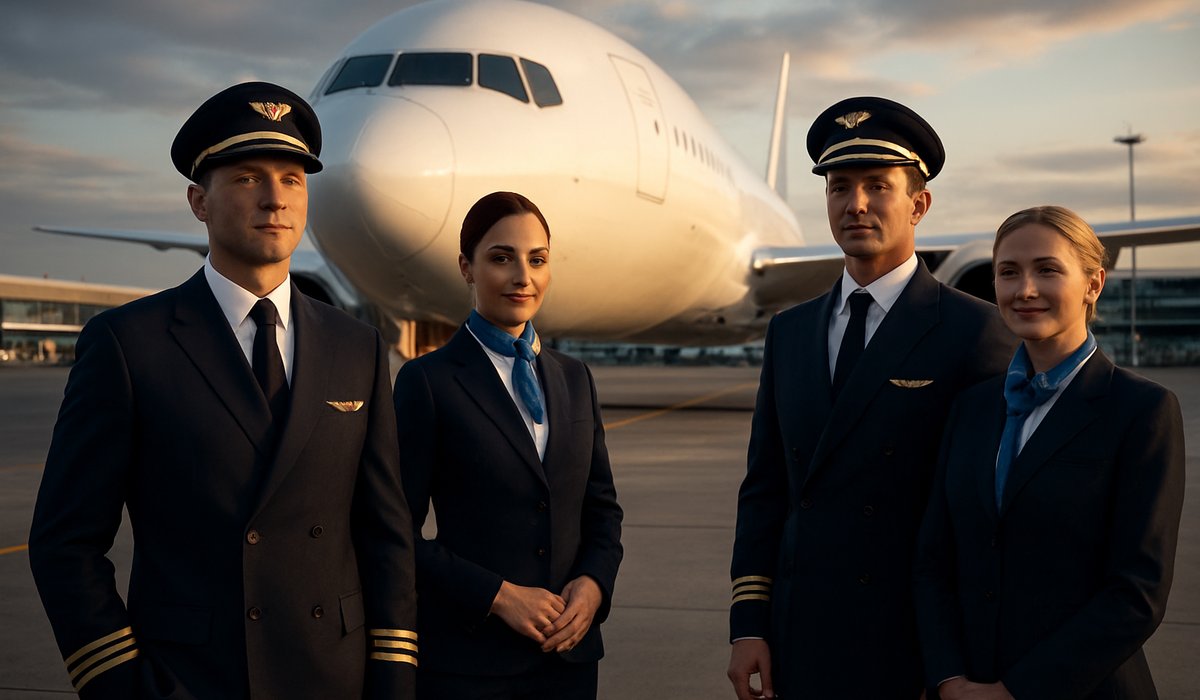
Image generated by AI
EVA Air's Three-Decade Legacy: How a Taiwanese Carrier Revolutionized Long-Haul Travel With Premium Economy
The airline that invented an entire cabin class continues to set standards as competitors scramble to replicate its model
A Category That Changed Aviation Forever
For over 30 years, premium economy has represented one of the aviation industry's most consequential innovations—a carefully calibrated middle ground that captures price-sensitive leisure travelers and corporate passengers unwilling to absorb business-class fares. Today, nearly every major international carrier offers some iteration of this cabin category, yet few travelers recognize that EVA Air, the Taiwanese flag carrier, engineered the entire concept in 1992, fundamentally reshaping how airlines monetize their widebody fleets.
What began as a strategic gamble has evolved into one of commercial aviation's most lucrative segments, generating substantial revenue for carriers while addressing a persistent market gap that traditional economy and business class left unserved.
Setting the Standard in a Crowded Market
The competitive landscape has shifted dramatically since EVA Air's pioneering entry. Major global carriers—including Singapore Airlines, Cathay Pacific, British Airways, and Air France—have since launched premium economy offerings, each claiming innovation and superiority. Yet EVA Air maintains its position as the segment's original architect, continuously refining its product to stay ahead of increasingly sophisticated competitors.
The airline's sustained competitive advantage reflects decades of operational experience in a cabin category it essentially invented. While rivals have borrowed liberally from the premium economy playbook, EVA Air's institutional knowledge and customer loyalty have preserved its market position despite mounting competition.
Innovation Within a Proven Model
Rather than pursuing radical departures from its foundational concept, EVA Air has adopted an evolution-focused strategy—incremental enhancements to seating ergonomics, meal service standards, amenity offerings, and in-flight entertainment that collectively strengthen its value proposition. This measured approach acknowledges both market realities and passenger expectations shaped by three decades of premium economy availability.
The airline's continued investment in cabin product refinement underscores a broader industry recognition: premium economy represents a permanent fixture in long-haul aviation architecture, not a temporary trend. As business travel patterns shift and leisure passengers demand greater comfort during extended flights, the segment's growth trajectory remains robust.
Industry Implications
EVA Air's enduring influence extends beyond its own cabin configurations. The airline's decision to pioneer premium economy fundamentally altered aircraft procurement strategies across the industry, forcing manufacturers like Boeing and Airbus to design widebody cabins with flexible premium economy compatibility—a consideration that barely existed pre-1992.
This structural transformation demonstrates how a single carrier's strategic innovation can reshape entire supply chains and operational paradigms across global aviation.
Frequently Asked Questions
What is premium economy, and how does it differ from business class? Premium economy provides enhanced comfort—wider seats, increased pitch, superior dining, and priority services—at significantly lower costs than lie-flat business-class cabins, typically 40-60% cheaper for long-haul routes.
Why did EVA Air invent premium economy? EVA Air identified a market gap between economy and business classes, recognizing that many international travelers sought improved comfort without paying premium cabin premiums.
Which airlines now offer premium economy cabins? Leading carriers including Singapore Airlines, Cathay Pacific, British Airways, Air France, Lufthansa, and ANA now operate premium economy services, though EVA Air remains the category's original pioneer.
How has premium economy impacted airline revenue? Premium economy has become a high-margin revenue generator, allowing carriers to extract additional yield from long-haul flights without requiring expensive business-class reconfigurations.
Is premium economy worth the extra cost? Industry analysis suggests premium economy offers strong value for long-haul passengers prioritizing comfort over business-class luxury, particularly for flights exceeding 8-10 hours.
Related Travel Guides
Flight Delay Compensation Guide 2026
Understanding Airline Route Changes
Airport Security Process Updated (2026)
External Resources
Disclaimer
This article is for informational and educational purposes only. It does not constitute legal, financial, or professional advice. While we strive to provide accurate and up-to-date information, travel policies, regulations, and conditions change rapidly. Always verify information with official sources before making travel decisions. Nomad Lawyer makes no representations about the accuracy, reliability, completeness, or suitability of the information provided. Readers should consult qualified professionals for advice specific to their circumstances. The views expressed in this article are those of the author and do not necessarily reflect the views of Nomad Lawyer.
Raushan Kumar
Founder & Lead Developer
Full-stack developer with 11+ years of experience and a passionate traveller. Raushan built Nomad Lawyer from the ground up with a vision to create the best travel and law experience on the web.
Learn more about our team →