
Military Jet Fuel Consumption Reveals Staggering Cost of Modern Aerial Defense
Breaking airline news and aviation industry updates for 2026.

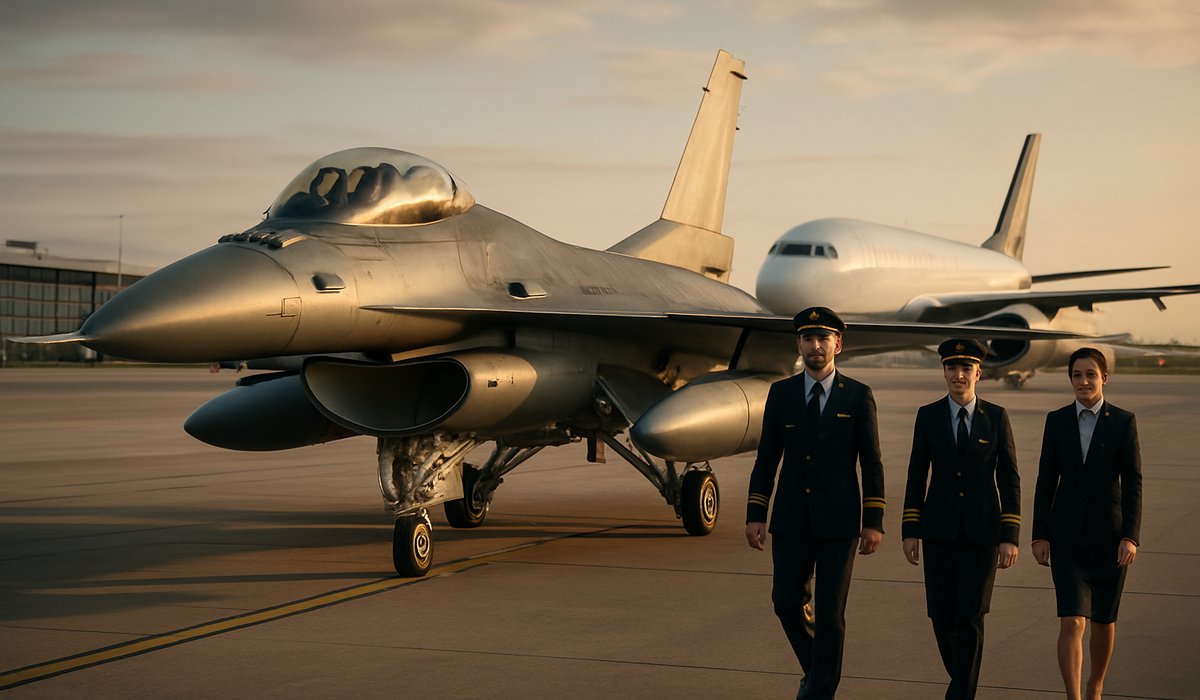
Image generated by AI
Military Jet Fuel Consumption Reveals Staggering Cost of Modern Aerial Defense
The F-16 Fighting Falcon's extreme fuel inefficiency underscores aviation industry challenges and defense spending priorities
Unprecedented Fuel Inefficiency Exposes Defense Budget Reality
The operational reality of modern military aviation has come into sharp focus with newly examined data on the Lockheed Martin F-16 Fighting Falcon, revealing fuel consumption figures that dwarf even the most inefficient civilian aircraft. According to aviation analysts, the jet operates at less than one mile per gallon under standard flight conditions—a metric that provides critical context for understanding defense expenditures and the broader aviation industry's energy challenges.
The disparity becomes even more dramatic during high-intensity combat operations. When pilots engage full afterburner systems to execute combat maneuvers and tactical evasions, fuel efficiency plummets to less than 0.01 miles per gallon, representing a catastrophic drain on fuel reserves and operational budgets.
Understanding the Trade-Offs in Military Aviation
For perspective, this fuel consumption profile stands in stark contrast to commercial airline operations, where modern aircraft typically achieve 50-100 passenger-miles per gallon. The F-16's extreme inefficiency reflects fundamental design priorities: maneuverability, speed, and combat capability take precedence over fuel economy in military specifications.
The Lockheed Martin F-16, officially designated the "Viper" in its latest iterations, prioritizes rapid acceleration, agility, and sustained high-speed flight—capabilities essential for fighter operations but fundamentally incompatible with fuel efficiency. The aircraft's General Electric F110 engine, while powerful, consumes approximately 5,000 gallons per hour during combat operations, making sustained flights dependent on aerial refueling infrastructure.
Implications for Defense Spending and Global Aviation Trends
This operational data carries significant implications for defense budgets worldwide. As nations expand military aviation fleets and combat operations intensify geopolitically, jet fuel costs constitute an increasingly substantial portion of defense expenditures. The aviation industry broadly faces mounting pressure from elevated fuel prices, a challenge that extends from military procurement to commercial airline fee structures.
The contrast between military and commercial aviation efficiency also highlights why commercial carriers have invested heavily in next-generation aircraft and jet fuel alternatives, while maintaining aggressive baggage charges and ancillary fees to offset operational costs.
FAQ: Military Aircraft Fuel Consumption and Aviation Economics
Q: How does F-16 fuel consumption compare to commercial aircraft? A: Commercial jets achieve 50-100 passenger-miles per gallon, while the F-16 operates below one mile per gallon, reflecting entirely different design and operational priorities.
Q: Why is military aviation so fuel-inefficient? A: Combat aircraft prioritize speed, maneuverability, and tactical capability over fuel economy. High-performance engines and afterburner systems consume enormous fuel quantities to achieve required combat specifications.
Q: What does this mean for defense spending? A: Fuel costs represent a major component of military aviation budgets. Escalating jet fuel prices directly impact procurement decisions and operational capability planning.
Q: How do airlines manage fuel costs differently than military operations? A: Commercial carriers invest in fuel-efficient aircraft design, implement route optimization, and charge baggage fees and ancillary charges to offset rising aviation fuel expenses.
Q: Are there alternatives to reduce military aircraft fuel consumption? A: Development of synthetic fuels, improved engine efficiency, and strategic operational planning help mitigate fuel consumption, though performance requirements remain the primary design constraint.
Related Travel Guides
Flight Delay Compensation Guide 2026
Understanding Airline Route Changes
Airport Security Process Updated (2026)
External Resources
Disclaimer
This article is for informational and educational purposes only. It does not constitute legal, financial, or professional advice. While we strive to provide accurate and up-to-date information, travel policies, regulations, and conditions change rapidly. Always verify information with official sources before making travel decisions. Nomad Lawyer makes no representations about the accuracy, reliability, completeness, or suitability of the information provided. Readers should consult qualified professionals for advice specific to their circumstances. The views expressed in this article are those of the author and do not necessarily reflect the views of Nomad Lawyer.
Kunal K Choudhary
Co-Founder & Contributor
A passionate traveller and tech enthusiast. Kunal contributes to the vision and growth of Nomad Lawyer, bringing fresh perspectives and driving the community forward.
Learn more about our team →