
Hong Kong MTR Settles High-Speed Rail Dispute as West Kowloon Gateway Hits 110 Mainland Destinations in 2026
The Hong Kong MTR has resolved long-standing financial disputes over high-speed rail delays, implementing a new risk-sharing model to secure future expansions as cross-border passenger traffic reaches record highs.

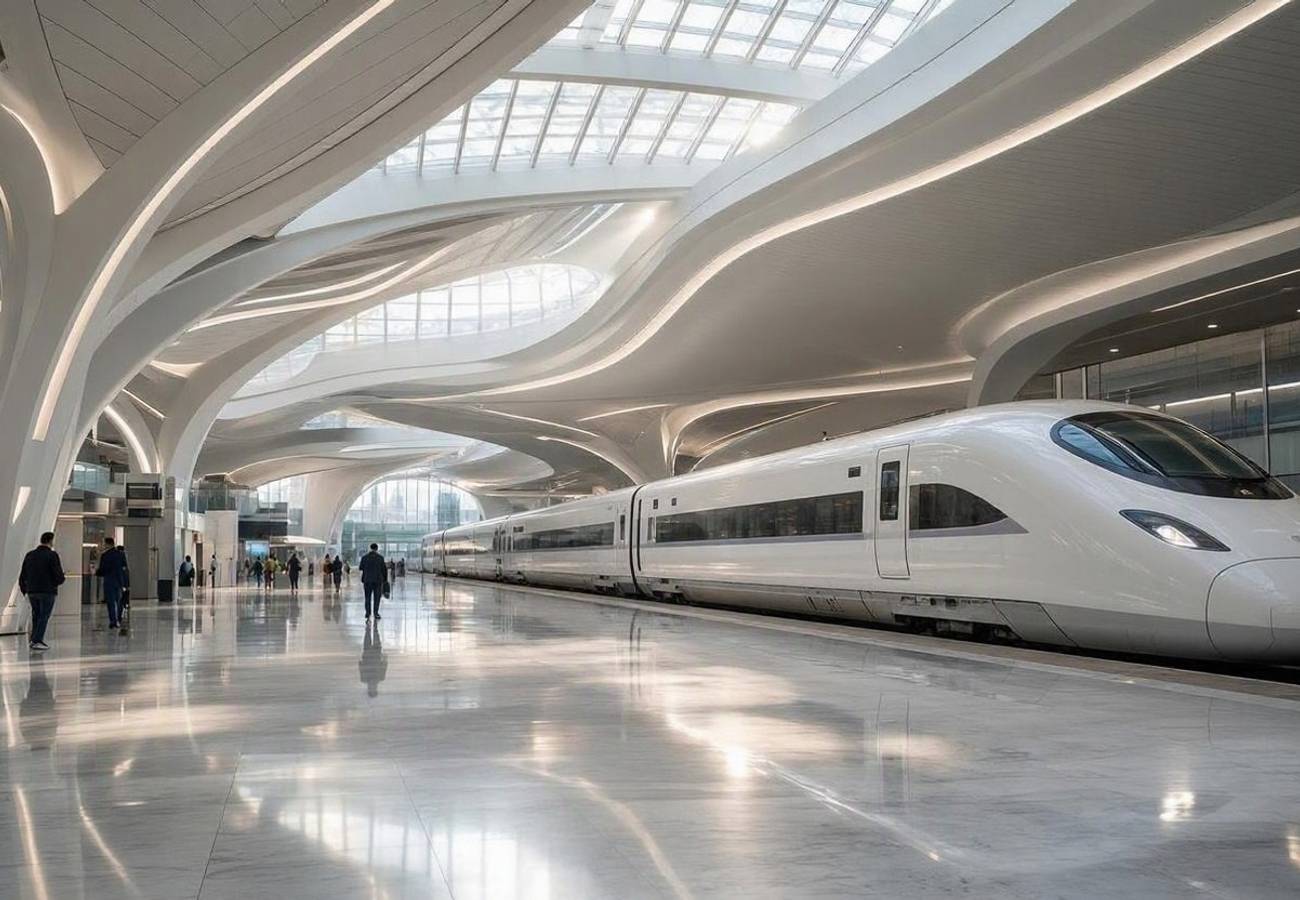
Image generated by AI
[Hong Kong, October 9, 2026] — The MTR Corporation and the Hong Kong Government have reached a formal settlement to resolve protracted financial disputes stemming from massive delays and cost overruns on the city's high-speed rail and urban link projects. This agreement clears the path for an aggressive expansion of the city's rail infrastructure while fundamentally altering how the government and the operator manage construction risks.
The settlement addresses grievances tied to the Express Rail Link (XRL) and the Shatin to Central Link (SCL). Beyond closing the books on these legacy projects, the agreement introduces a stringent new governance model. Under the revised terms, the MTR Corporation must now shoulder significantly more construction and operational risk, including direct liability for future cost overruns, moving away from the taxpayer-funded cushions that characterized previous failures.
The Cost of Delay: Legacy Project Failures
The settlement follows a decade of volatility in Hong Kong's rail development. The Express Rail Link, which began construction in 2010, was originally slated for an August 2015 launch. Instead, it suffered years of delays and a budget explosion, with costs jumping from HK$65 billion to HK$84.42 billion before finally opening in September 2018.
The Shatin to Central Link faced similar turmoil. Construction started in 2012 with expected openings between 2018 and 2020. The Tuen Ma Line did not fully commission until June 2021, and the East Rail Line's cross-harbour extension only began operations in May 2022. Costs for this project climbed from HK$79.82 billion to HK$90.73 billion, with the MTR absorbing an additional HK$2.8 billion in management costs following quality incidents at Hung Hom Station.
Infrastructure Risk Shift: Old vs. New Model
To prevent a recurrence of these budget collapses, the Hong Kong Government has mandated enhanced monitoring and cost-management mechanisms. These new rules are already being applied to several active and upcoming projects.
Project Governance Comparison
| Feature | Legacy Model (XRL & SCL) | 2026 Governance Model |
|---|---|---|
| Risk Allocation | Negotiated post-failure | MTR bears construction/operational risk |
| Cost Control | Substantial budget overruns | Tighter management frameworks |
| Monitoring | Reactive oversight | Enhanced proactive monitoring |
| Financials | Years of unresolved claims | Formal settlement reached Oct 2026 |
| Connectivity | 44 Mainland destinations (2018) | 110 Mainland destinations (2026) |
The following projects are now operating under this high-accountability framework:
- Northern Link
- Tung Chung Line Extension
- Kwu Tung Station
- Tuen Mun South Extension
- Oyster Bay Station
- Hung Shui Kiu Station
What This Means for Travelers
For the average traveler, this corporate settlement is the catalyst for a more reliable and expansive transit network. The shift toward MTR-led risk management is intended to ensure that new stations and lines are delivered on schedule, reducing the "construction limbo" that has plagued Hong Kong's transit growth.
The most immediate impact is the transformation of the West Kowloon Station from a regional terminal into a primary gateway for the entire China Railway national network. Travelers can now bypass traditional border checkpoints and access 110 destinations across Mainland China, a massive increase from the 58 served pre-pandemic.
Passenger Impact Breakdown:
- Expanded Reach: New direct links to major hubs including Xi’an, Chengdu, Nanjing, Hefei, Wuxi, and Zhangjiajie.
- Increased Capacity: To handle surging crowds, the West Kowloon waiting hall was expanded to 1,400 seats by May 2026.
- Transit Shift: Long-haul rail is now a viable competitor to regional flights, with long-distance daily patronage rising to 15,000 journeys in 2025.
Record-Breaking Passenger Surge
The urgency for this settlement is driven by an explosion in ridership. The Hong Kong section of the High-Speed Rail carried over 30 million passengers in 2025, surpassing 100 million cumulative journeys since its inception.
Traffic has accelerated sharply in 2026. During the first four months of the year, average daily patronage exceeded 90,000 journeys, up from 80,000 in 2025. Peak demand has hit unprecedented levels, with record-breaking traffic of 148,700 journeys recorded on April 4, 2026.
The network is currently split almost evenly between local and international traffic. In 2025, visitors accounted for 53% of passenger traffic, while Hong Kong residents made up 47%. This confirms that the high-speed rail is no longer just a commuter tool but a critical pillar of Hong Kong's tourism infrastructure.
FAQ: Hong Kong High-Speed Rail 2026
How many Mainland destinations can I reach from West Kowloon now? As of January 2026, there are 110 direct destinations available, including major cities like Chengdu, Xi'an, and Nanjing.
Will the new MTR agreement affect ticket prices? The settlement focuses on construction risk and corporate accounting between the MTR and the government; it does not explicitly mandate changes to passenger fares.
What is the current capacity at West Kowloon Station? The station has expanded its waiting hall to approximately 1,400 seats to accommodate peak daily traffic, which can exceed 140,000 passengers.
Which new long-haul destinations are most popular? High volumes are currently being recorded for stations including Chengdudong, Zhangjiajiexi, Hangzhouxi, and Hefeinan.
The era of the "budget-blind" rail project in Hong Kong has ended, replaced by a model where the operator finally pays for the delays.
Related Travel Guides
Disclaimer
This article is for informational and educational purposes only. It does not constitute legal, financial, or professional advice. While we strive to provide accurate and up-to-date information, travel policies, regulations, and conditions change rapidly. Always verify information with official sources before making travel decisions. Nomad Lawyer makes no representations about the accuracy, reliability, completeness, or suitability of the information provided. Readers should consult qualified professionals for advice specific to their circumstances. The views expressed in this article are those of the author and do not necessarily reflect the views of Nomad Lawyer.
Raushan Kumar
Founder & Lead Developer
Full-stack developer with 11+ years of experience and a passionate traveller. Raushan built Nomad Lawyer from the ground up with a vision to create the best travel and law experience on the web.
Learn more about our team →