
Holland America Unveils Epic Antarctica Slow Travel Voyages
Holland America Line is revolutionizing cruise tourism with new 'slow travel' voyages reaching Antarctica, Null Island, and remote global coordinates.

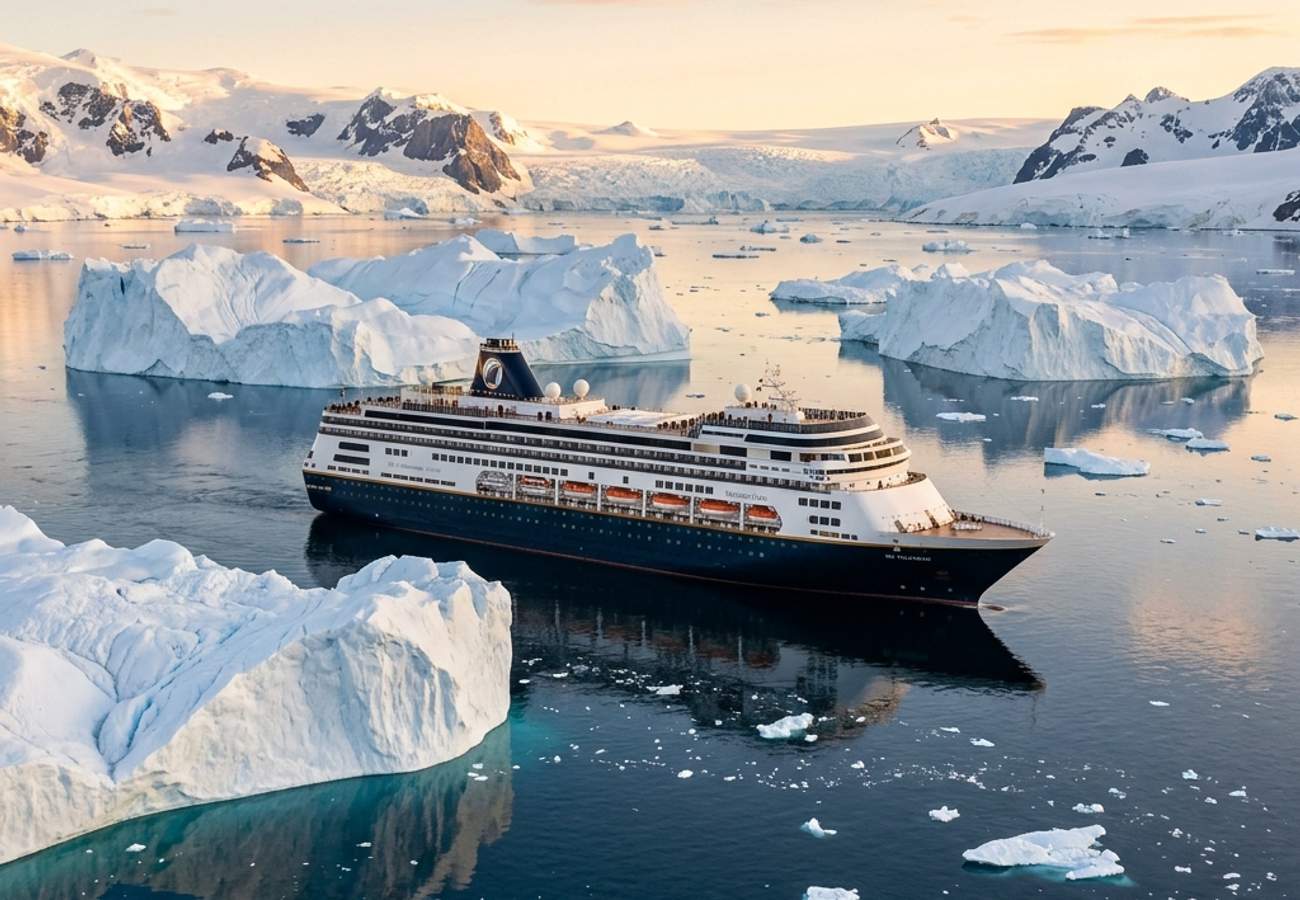
Image generated by AI
Quick Summary
- Slow Travel Pivot: Holland America Line is shifting toward long-duration, immersive voyages that prioritize depth over speed.
- Rare Destinations: New itineraries include the remote Antarctica, the rare Null Island coordinates, and cultural hubs like Easter Island.
- Small Ship Edge: The cruise line is utilizing smaller vessels like the Volendam and Zaandam to access fragile ecosystems and hidden ports.
- Nature-Focused: Extended routes in Australia, New Zealand, and the Chilean fjords cater to the rising "cool climate tourism" trend.
The global cruise industry is undergoing a "Grand Travel Revolution" as travelers increasingly swap rushed port stops for deeper, more meaningful exploration. Holland America Line has officially announced its latest series of epic slow travel voyages, designed to reach some of the most remote and scientifically significant locations on the planet, including Antarctica and the mysterious Null Island.
Exploring Remote Coordinates and Null Island
One of the most unique aspects of the new Holland America Line itineraries is the inclusion of rare navigational milestones. The ship will sail through Null Island in the Gulf of Guinea—the exact intersection of the Equator and the Prime Meridian (0°N, 0°E).
While symbolically significant in maritime history, Null Island is rarely featured on commercial cruise routes. By incorporating these coordinates, Holland America is blending geography and education into the travel experience, aligning with standards set by the International Maritime Organization (IMO) for global navigation and mapping.
Antarctica and South America Scenic Cruising
For nature enthusiasts, the extended journeys through Antarctica represent a pinnacle of scenic tourism. These voyages operate under the strict environmental protocols of the Antarctic Treaty System, ensuring that guests can witness the fragile icy landscapes responsibly.
Beyond the Antarctic Peninsula, the ships will navigate the complex coastal geography of South America, including:
- The Chilean Fjords: Known for their dramatic glaciers and deep-blue waters.
- The Beagle Channel: Offering rare views of pristine mountain ranges and unique marine life.
- Walvis Bay: Providing a gateway to Namibia’s unique desert-meets-ocean environment.
The Small Ship Advantage: Volendam and Zaandam
A strategic pillar of these new voyages is the use of smaller, more nimble vessels like the Volendam and Zaandam. These ships are uniquely capable of entering ports and narrow channels that are inaccessible to the industry’s massive "mega-ships."
Smaller vessels offer a reduced environmental footprint, which is essential for cruising in sensitive regions like the South Pacific and the Antarctic. This approach allows Holland America to deliver exclusive access to Easter Island, Reunion Island, and the remote coastlines of Western Australia.
| Vessel | Focus Area | Key Benefit |
|---|---|---|
| Volendam | Global Circumnavigation | Access to remote cultural heritage sites. |
| Zaandam | Australia & New Zealand | Exploration of hidden fjords and smaller islands. |
The Surge in Cool Climate Tourism
Holland America is also leaning into the rising trend of "cool climate tourism," particularly in Australia and New Zealand. Travelers are increasingly seeking out destinations with milder temperatures and lush, nature-based landscapes as an alternative to traditional tropical heat.
The new itineraries offer extensive coverage of New Zealand’s diverse ports and the rugged, uncrowded beauty of Western Australia’s coastline. For those still seeking a touch of the tropics, extended stays in Bora Bora provide a balanced immersion into French Polynesian culture.
What This Means for Travelers
The shift toward long-duration, experiential tourism means that travelers should prepare for a different pace of life at sea. These voyages are designed for those with more time to spare—often 30 to 80+ days—allowing for a genuine connection with the environments they visit.
For guests, this trend means fewer "days at sea" without purpose and more time spent in port or scenic cruising. Early booking incentives are already being rolled out, as the demand for remote, sustainable, and high-quality cruise experiences continues to outpace supply.
FAQ: Holland America Slow Travel 2026
What is "Null Island" in the cruise itinerary?
Null Island refers to the geographical point at 0°N and 0°E, where the Equator meets the Prime Meridian. It is a navigational milestone that Holland America is including as a unique educational highlight.
Which Holland America ships are visiting Antarctica?
The smaller vessels, such as the Volendam and Zaandam, are primarily used for these remote routes due to their ability to navigate sensitive environmental zones and smaller ports.
How long are these "slow travel" voyages?
These extended journeys typically range from several weeks to over two months, focusing on deep immersion rather than hitting as many ports as possible in a short window.
Related Travel Guides
Disclaimer
This article is for informational and educational purposes only. It does not constitute legal, financial, or professional advice. While we strive to provide accurate and up-to-date information, travel policies, regulations, and conditions change rapidly. Always verify information with official sources before making travel decisions. Nomad Lawyer makes no representations about the accuracy, reliability, completeness, or suitability of the information provided. Readers should consult qualified professionals for advice specific to their circumstances. The views expressed in this article are those of the author and do not necessarily reflect the views of Nomad Lawyer.
Kunal K Choudhary
Co-Founder & Contributor
A passionate traveller and tech enthusiast. Kunal contributes to the vision and growth of Nomad Lawyer, bringing fresh perspectives and driving the community forward.
Learn more about our team →