
Aurora Expeditions Just Smashed Antarctica Cruise Records — Here's What Travelers Need to Know
Aurora Expeditions just completed its largest Antarctic cruise season in 35 years, pushing vessels further south than ever before under strict environmental rules.

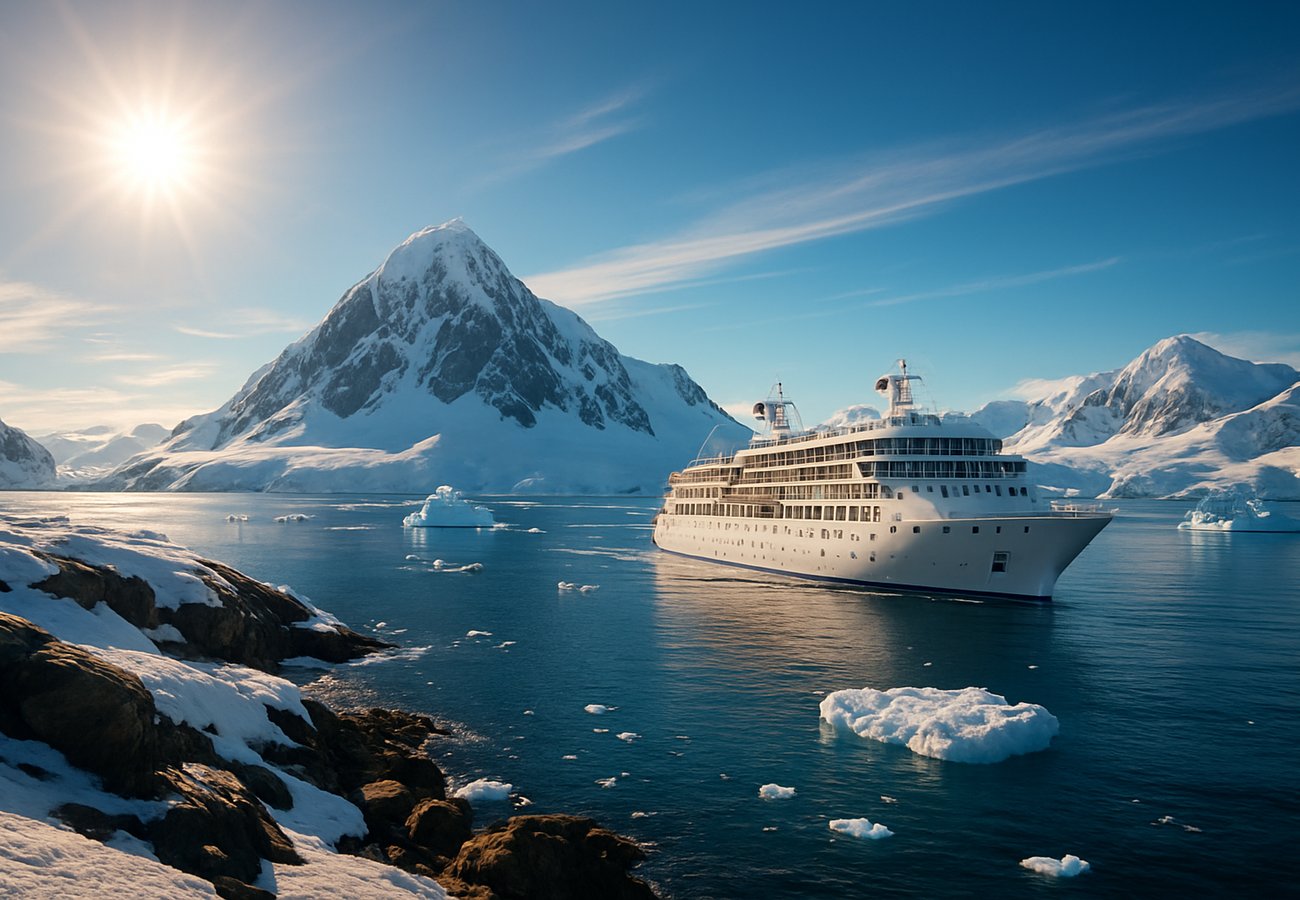
Image generated by AI
Quick Summary
- Australia-founded Aurora Expeditions just concluded its absolute largest Antarctic cruise season in its 35-year history.
- The company heavily deployed a massive three-ship fleet—including the new Douglas Mawson—which successfully pushed further south into the Ross Sea than any passenger ship on record.
- The 2025/26 season featured a highly anticipated, historic return to the incredibly remote, rarely visited East Antarctica.
- All massive operational expansions were executed under strict environmental protections mandated by the Antarctic Treaty System and IAATO.
The 2025/26 Antarctic travel season has officially shattered massive industry records. Australia-founded Aurora Expeditions just concluded its largest, most ambitious polar program in its 35-year history, aggressively pushing three highly specialized small ships deeper into the frozen continent than ever before. From executing the deepest southern push on record to highly structured citizen science initiatives, the company successfully proved that surging demand for Antarctica cruises can be meticulously balanced with massive environmental conservation efforts.
A Record Season Under Strict Antarctic Treaty Rules
Operating commercial tours in Antarctica is incredibly complex. The entire frozen continent is strictly governed by a massive web of international agreements, primarily the Antarctic Treaty System, which mandates that the region be reserved entirely for peace and science.
Despite these massive operational hurdles, Aurora Expeditions successfully delivered well over two dozen highly specialized voyages throughout the 2025/26 season. The company navigated a double-digit percentage increase in guest numbers, bringing eager expeditioners to the Antarctic Peninsula, East Antarctica, the Ross Sea, and critical sub-Antarctic havens like South Georgia and the Falkland Islands. Crucially, every single one of the hundreds of shore landings was executed under the incredibly strict visitor-management rules enforced by the International Association of Antarctica Tour Operators (IAATO).
Key Facts & Highlights
- The Record: The new Douglas Mawson vessel pushed past 78 degrees south into the Ross Sea, an industry record for a commercial passenger ship.
- The Fleet: Three Polar Class small ships—Greg Mortimer, Sylvia Earle, and Douglas Mawson—each carrying approximately 130 passengers.
- The Rules: Strict adherence to IAATO and IMO Polar Code regulations, severely capping landing group sizes and banning non-native species.
- The Trend: A massive year-on-year surge in demand, heavily bolstered by aggressive solo-traveler pricing incentives.
Pushing Further South Than Ever Before
The massive operational success of the 2025/26 season relied heavily on the simultaneous deployment of three purpose-built expedition ships. This marked the absolute first time Aurora Expeditions operated the Greg Mortimer, Sylvia Earle, and the newly launched Douglas Mawson in Antarctic waters at the exact same time.
Built to strict Polar Class standards and featuring massive hull reinforcements and highly advanced ice-navigation systems, these 130-passenger ships achieved unprecedented access. The headline achievement of the entire global cruise season was the Douglas Mawson’s historic push deep into the icy Ross Sea. The vessel officially reached over 78 degrees south—a southern latitude that industry experts are calling an absolute record for a commercial passenger ship.
The Return to East Antarctica
Beyond breaking massive latitudinal records, the 2025/26 program successfully executed a highly anticipated return to East Antarctica. This highly isolated, rarely visited sector is deeply linked to the early 20th-century "heroic age" of exploration.
Voyages sailing directly from Australia and New Zealand navigated the treacherous Southern Ocean to access these highly remote coastal regions. Passengers were actively immersed in the region's massive historical significance, attending expert lectures on early expedition hardships and completing strict, IAATO-regulated shore landings near historic explorer huts.
Citizen Science and Eco-Friendly Adventure
Rather than simply offering passive, scenic cruising, Aurora Expeditions aggressively structured its season around high-octane experiential tourism and active citizen science.
Passengers participated in massive off-ship activities, including sea kayaking near actively calving glaciers, coastal snowshoeing, icy snorkeling, and the highly traditional polar plunge. Furthermore, guests were actively invited to collect vital environmental data on whales, seabirds, sea ice, and changing weather conditions. This massive, coordinated citizen-science effort actively helps global researchers monitor how a rapidly warming climate is affecting incredibly fragile polar ecosystems.
What This Means for Travelers
Travelers looking to book future Antarctica cruises should immediately prepare for highly structured, deeply educational experiences. The era of passive cruising is over; modern polar travel demands active environmental stewardship. Furthermore, solo travelers are incredibly well-positioned to explore the ice, as companies like Aurora Expeditions are actively waiving single supplements to aggressively court the independent travel market.
Conclusion
The historic 2025/26 Antarctic season proves that massive commercial momentum and strict environmental conservation can absolutely coexist. As Aurora Expeditions continues to push the boundaries of extreme southern navigation, future travelers will be guaranteed unprecedented, highly regulated access to the end of the Earth.
Frequently Asked Questions (FAQ)
What record did Aurora Expeditions break in Antarctica? The company's new Douglas Mawson vessel navigated past 78 degrees south into the Ross Sea, securing a massive industry record for the furthest southern latitude reached by a commercial passenger ship.
Are Antarctica cruises highly regulated? Yes. All commercial tourism in Antarctica operates under massive, strict oversight from the Antarctic Treaty System and IAATO to aggressively protect the pristine environment.
How many passengers are on an Aurora Expeditions ship? The company utilizes a fleet of specialized, Polar Class small ships—such as the Greg Mortimer and Sylvia Earle—that typically carry around 130 passengers.
Can solo travelers book Antarctica cruises? Yes. Solo travel to Antarctica is currently experiencing a massive boom, heavily driven by companies offering special pricing initiatives that drastically reduce or completely waive single supplements.
Related Travel Guides
Aurora Expeditions Brought 56 Nations to Antarctica
Disclaimer
This article is for informational and educational purposes only. It does not constitute legal, financial, or professional advice. While we strive to provide accurate and up-to-date information, travel policies, regulations, and conditions change rapidly. Always verify information with official sources before making travel decisions. Nomad Lawyer makes no representations about the accuracy, reliability, completeness, or suitability of the information provided. Readers should consult qualified professionals for advice specific to their circumstances. The views expressed in this article are those of the author and do not necessarily reflect the views of Nomad Lawyer.
Kunal K Choudhary
Co-Founder & Contributor
A passionate traveller and tech enthusiast. Kunal contributes to the vision and growth of Nomad Lawyer, bringing fresh perspectives and driving the community forward.
Learn more about our team →