
Hidden Places to Visit in Bhutan: A Quick Guide to the Less-Explored Side
Discover the hidden side of Bhutan beyond Thimphu and Paro. Explore Phobjikha Valley, Haa Valley, Laya, and Merak-Sakteng for an authentic Himalayan experience.

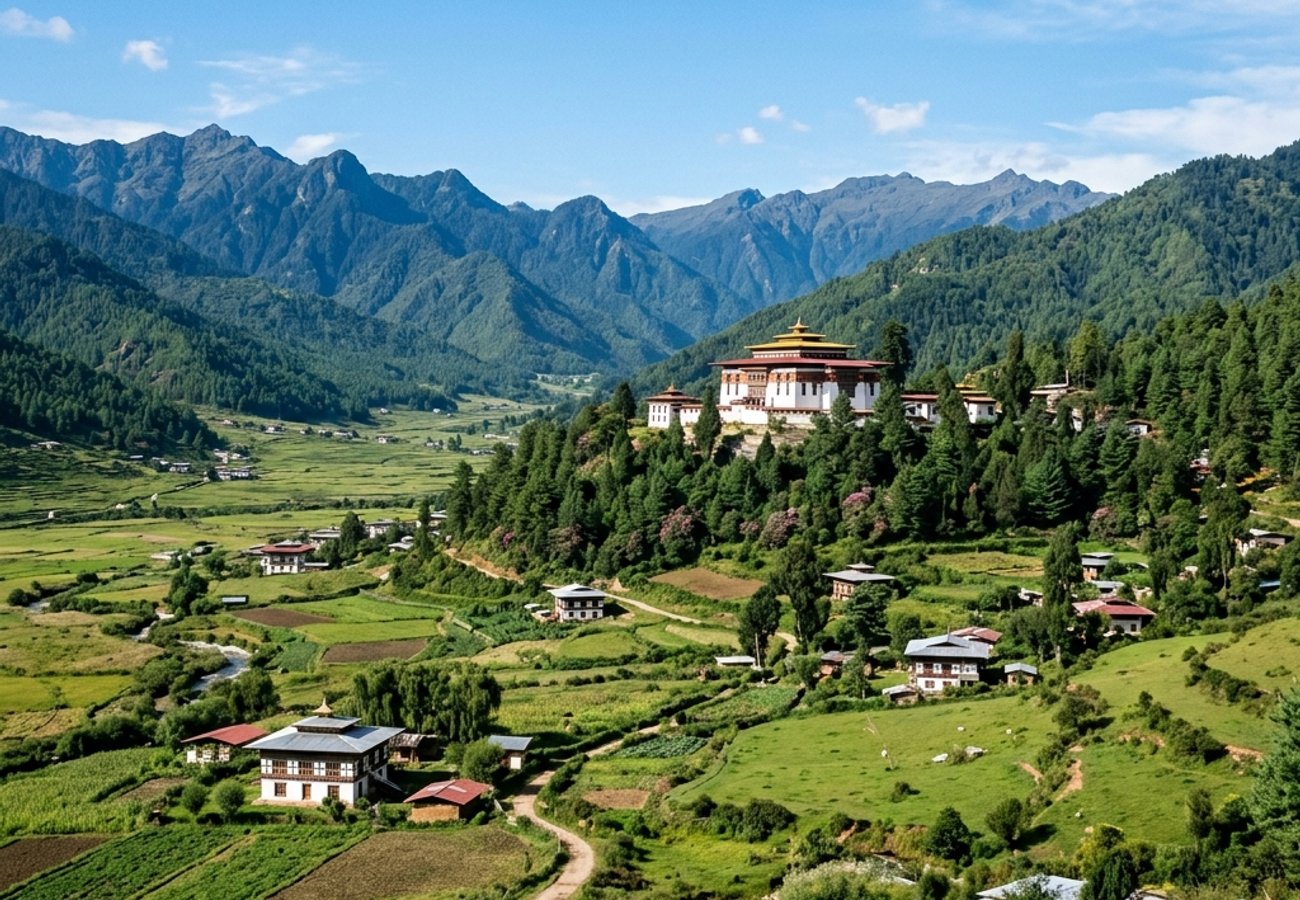
Image generated by AI
Bhutan is one of those rare countries that people visit to understand Buddhist culture and escape crowded urban landscapes. Although it features iconic landmarks that travelers routinely visit, exploring lesser-known hidden gems can make your holiday memorable and worth every minute. Many tour companies from India provide luxury Bhutan tour packages from mumbai and Pune. Before choosing any tour operator for a Bhutan tour, check their itinerary to ensure you visit these hidden places in Bhutan. From Phobjikha and Haa Valley to Merak and Sakteng, you will get a chance to familiarize yourself with the world's only carbon-negative country.
Let’s take a look at these less-explored places which promise an authentic Himalayan experience.
Why Explore Beyond Thimphu, Paro, and Punakha?
If you are preparing an itinerary for Bhutan, you will naturally add major towns like Thimphu, Paro, and Punakha to it. However, those hubs are always busy with tourists exploring standard Himalayan and historical landscapes.
If you look a little deeper, you will see that the country is not just about popular Buddhist monuments and well-trodden pilgrimage paths. Taking the roads less traveled takes you away from the crowd and offers a chance to experience Bhutan’s genuine local authenticity.
Each offbeat activity contributes to a lifetime of memories. Whether it is enjoying locally sourced buckwheat pancakes, joining traditional village celebrations, or savoring a warm plate of momos with butter tea, these hidden destinations offer an immersive journey.
!Colorful Buddhist prayer flags fluttering against misty Himalayan mountains in Bhutan
Phobjikha Valley: Quiet Mountain Views and Rural Traditions
Experience peaceful Himalayan views from the Gangtey Monastery, a 17th-century Buddhist place of worship overlooking the glacial Phobjikha Valley.
What makes this valley uniquely famous is the annual migration of black-necked cranes. They fly to Phobjikha Valley every winter from Tibet to find food and escape harsh high-altitude weather. To celebrate their arrival, local residents organize a dedicated crane festival in November, where school children dress in traditional costumes for mask dances and drama performances.
You can experience authentic rural life in Bhutan by booking a village homestay. Local hosts serve fresh buckwheat pancakes and homemade rice wine. Staple dish options like ema datshi (chilli cheese stew) and puta (buckwheat noodles) are local favorites for dinner.
Haa Valley: Peaceful Bhutanese Landscapes Away From Crowds
Haa Valley is a hidden beauty located close to the Bhutan-Tibet border, easily accessible via the Chele La Pass—the highest motorable road pass in Bhutan. Due to a lack of commercialized mega-attractions, relatively few tourists visit, making it ideal for travelers who prefer quiet mountain solitude.
According to local folklore, an ancient king released two pigeons and built a black and a white temple where they landed. When visiting Haa Valley, make sure to stop by Lhakhang Karpo (White Temple) and Lhakhang Nagpo (Black Temple).
Additionally, explore the nearby traditional villages of Dumcho, Paeso, and Bhagena. These hamlets feature authentic homestays offering traditional hot stone baths and home-cooked meals you won't forget.
!Rainbow appearing over traditional carved wooden Bhutanese house and green mountain valley
Laya Village: A Remote High-Altitude Himalayan Settlement
In Laya Village, you will see villagers wearing garments woven from yak hair and distinctive conical bamboo hats found nowhere else in Bhutan. Situated in the Gasa District near the Tibetan border, Laya can only be reached by trekking along the high-altitude Snowman Trek route, as there is no direct motorable road connectivity.
The Layaps are indigenous semi-nomadic people living high in the mountains on their own terms. If you stop at Laya Village during your trek, you will enjoy breathtaking views of Mount Masang Gang. Note that visitors require a special government permit before entering Laya Village, so secure official permission beforehand.
Merak and Sakteng: Bhutan’s Far-Eastern Brokpa Culture
Travel to the far-eastern Trashigang District to explore the remote villages of Merak and Sakteng near the Bhutan-Arunachal Pradesh border. Here, you will encounter the Brokpa people—a semi-nomadic tribe identified by their distinctive red wool hats.
Brokpa customs have remained unchanged for centuries, centered around herding yaks across high alpine pastures. Merak and Sakteng lie within the Sakteng Wildlife Sanctuary, the easternmost protected sanctuary in Bhutan. Visiting requires committing to a long overland journey, which keeps tourist numbers low and cultural preservation high.
Trongsa: Historic Dzongs and Dramatic Valley Vistas
Trongsa, situated in central Bhutan, is historically significant as the ancestral seat where every Bhutanese crown prince serves as governor before ascending the throne. Consequently, it is home to impressive dzongs (fortified monasteries), including Trongsa Dzong—the largest dzong fortress in Bhutan, dramatically perched over a steep mountain ridge overlooking a deep river canyon.
The journey to Trongsa offers dramatic mountain landscapes, including Chendebji Chorten—a white Nepalese-style stupa situated near a mountain stream. When it comes to local food, Trongsa is an ideal stopover to sample momos, thukpa noodle soup, butter tea, and fresh ema datshi.
Quiet Monasteries, Village Markets, and Traditional Weaving
As you travel across less-explored regions of Bhutan, you will encounter quiet monasteries, vibrant local markets, and traditional weaving hamlets:
- Wang Chuu River Weekend Market: A lively market to purchase local handicrafts and sample regional specialties like dried yak cheese and local chillies.
- Radhi and Khaling Weaving Villages: Located in Trashigang, these villages are renowned for their traditional raw silk and cotton weaving techniques.
- Khoma Village: A small village of 100 residents where cars are prohibited, famous for producing Kishuthara—an intricate handmade silk textile.
- Kurjey Lhakhang: Situated in Bumthang, this sacred monastery complex is believed to house the body imprint of Guru Rinpoche inside a cave.
!Buddhist monks in red robes conversing in a traditional decorated Bhutanese monastery courtyard
Hidden Lakes and Forest Trails for a Slower Bhutan Experience
Bhutan's rural valleys are filled with natural attractions and heritage sites:
- Mebar Tsho (Burning Lake): A sacred river pool in Bumthang where holy butter lamps are believed to stay illuminated underwater.
- Ogyen Choling Manor: A preserved ancestral heritage estate providing deep insight into historical Bhutanese feudal life.
- Ura Village: A cluster of fifty traditional stone houses whose close-knit community speaks Ura-kha, a dialect distinct from standard Dzongkha.
Exploring these wondrous offbeat destinations reveals the authentic stories, living heritage, and natural beauty of Bhutan.
Frequently Asked Questions
What are the best offbeat places to visit in Bhutan?
Top hidden places include Phobjikha Valley for black-necked cranes, Haa Valley for quiet homestays, Laya Village for high-altitude nomadic culture, and Merak-Sakteng in eastern Bhutan.
Do I need special permits to visit remote villages in Bhutan?
Yes. While standard entry covers major towns like Paro and Thimphu, remote border regions like Laya Village and Sakteng Wildlife Sanctuary require special restricted-area permits issued by Bhutan's Department of Immigration.
What is the best time of year to visit Phobjikha Valley?
November is the ideal month to visit Phobjikha Valley, as it coincides with the arrival of migratory black-necked cranes from Tibet and the annual Black-Necked Crane Festival at Gangtey Monastery.
Related Travel Guides
Disclaimer
This article is for informational and educational purposes only. It does not constitute legal, financial, or professional advice. While we strive to provide accurate and up-to-date information, travel policies, regulations, and conditions change rapidly. Always verify information with official sources before making travel decisions. Nomad Lawyer makes no representations about the accuracy, reliability, completeness, or suitability of the information provided. Readers should consult qualified professionals for advice specific to their circumstances. The views expressed in this article are those of the author and do not necessarily reflect the views of Nomad Lawyer.
Kunal K Choudhary
Co-Founder & Contributor
A passionate traveller and tech enthusiast. Kunal contributes to the vision and growth of Nomad Lawyer, bringing fresh perspectives and driving the community forward.
Learn more about our team →