
Beyond Sagrada Família: 7 Hidden Gaudí Masterpieces in Barcelona You Must Visit in 2026
The iconic basilica is just the beginning. Discover seven lesser-known Antoni Gaudí architectural treasures across Barcelona that reveal the genius architect's evolution and visionary genius.

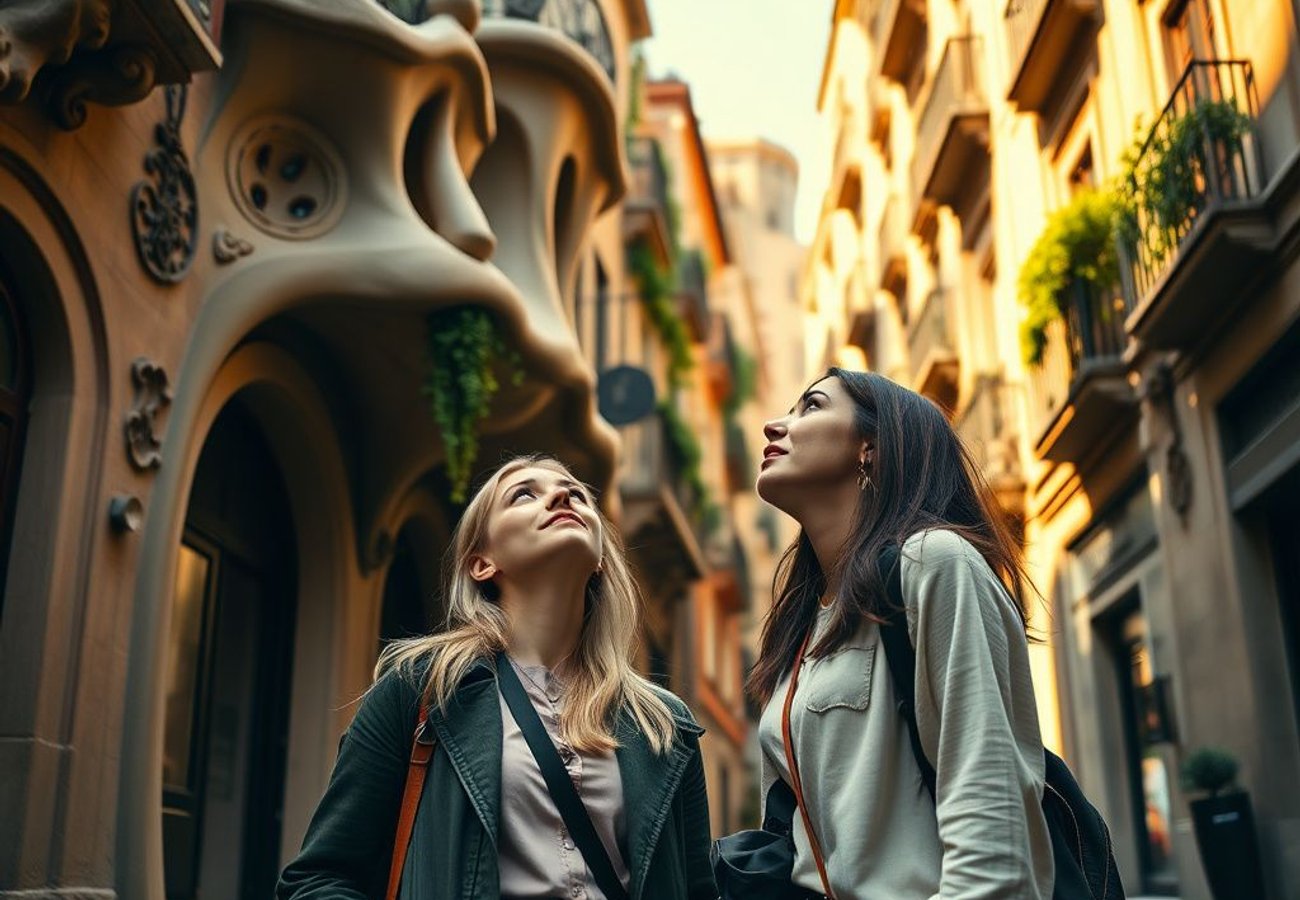
Image generated by AI
The Year Gaudí's Legacy Reached New Heights
In February 2026, Barcelona witnessed a historic moment when a lofty stainless-steel cross coated in white enameled ceramic crowned the central Tower of Jesus Christ at La Sagrada Família, completing the 566-foot-high structure and making it officially the world's tallest church. The installation marked a critical milestone in the basilica's century-spanning construction—and coincided with a somber anniversary: 100 years since Antoni Gaudí's untimely death in 1926.
But here's what most tourists don't realize: Gaudí's Barcelona extends far beyond this iconic basilica.
Reddit: "Sagrada Família is amazing, but I wish I'd known about Casa Vicens earlier. Way fewer crowds and equally mind-bending architecture." — r/travel
The legendary Catalan Modernista architect left his fantastical fingerprint across the city—from dragon-inspired residences to mansions built atop medieval ruins. These hidden gems reveal a designer whose genius evolved dramatically over decades, yet remained rooted in a revolutionary principle: bringing nature indoors.
Casa Batlló: The Dragon Saint's Shimmering Vision
It's impossible to miss the undulating façade of Casa Batlló along Passeig de Gràcia in the elegant Eixample district, yet most visitors snap a quick photo and move on. This UNESCO World Heritage Site is deceptively complex—a residential building that appears to be moving, breathing, even alive.
The shimmering exterior features trencadís tilework (Gaudí's signature technique using broken leftover mosaics) in blues and purples. The balconies? Shaped like masks, or featuring bone-like stone pillars. Architecture experts widely interpret the undulating curves, especially the dragon-scaled rooftop, as references to Sant Jordi, Catalonia's patron saint famed for vanquishing a fearsome dragon terrorizing a village.
Here's the kicker: the building unites function, beauty, and technical innovation in a way that defied convention when it was completed. Step inside and you'll understand why.
Casa Milá (La Pedrera): The Quarry That Changed Barcelona
When local Barcelona residents first encountered Casa Milá in 1910, they laughed. They called it La Pedrera—"The Quarry"—mocking its rock-like stone façade and surreal details like chimney stacks resembling medieval knights (some decorated with fragments of broken cava bottles).
But here's what author Rainer Zerbst observed: "Gaudí created a paradox: an artificial but natural building which was simultaneously a summary of all the forms that he has since become famous for."
The wavy balconies, forged from wrought iron resembling surging seaweed, proved Gaudí was at his peak. Commissioned by businessman Pere Milà and his wife Rosario Segimon, this was also the first building in Barcelona to feature an underground parking space—a technological marvel at the time. After La Pedrera, Gaudí turned his focus entirely to La Sagrada Família.
Casa Vicens: Where Gaudí's Genius Began
Travel deeper into the village-like Gràcia neighborhood, known for buzzing squares and vermouth bars, and you'll discover Casa Vicens—Gaudí's first independent commission from the 1880s. This former summer home reveals something crucial: the architectural DNA of his entire career.
Built for a local businessman, this UNESCO-recognized mansion draws inspiration from Spain's Islamic heritage and Asian design traditions. The result? Flowing shapes, bold colors, and distinctive green-and-yellow marigold tiles depicting the flower fields that once surrounded the property.
According to Suzanne Wales, co-founder of Barcelona Design Tours and author of Made in Spain: "Gaudí's goal was to bring the outdoors indoors. In Casa Vicens, he did this more with decorative elements rather than the organic forms we see in his later work. The home's signature marigold tiles were inspired by the fields of flowers that once surrounded it. Another standout are the sun screens on the front terrace, influenced by Japanese design and still look incredibly modern."
This building is far less visited than Casa Batlló or Park Güell, giving you rare breathing room to absorb Gaudí's revolutionary vision.
Park Güell: His Green Space Sanctuary
Just north of Gràcia, Park Güell ranks among Barcelona's most popular attractions, yet few visitors understand its true significance. Conceived in 1900 as an exclusive garden city, the project was abandoned after 14 years with only two main structures completed.
Today it's a sprawling green space anchored by a plaza overlooking Barcelona's skyline, surrounded by a rippling trencadís bench, galleries of leaning stone pillars, and Mediterranean gardens. Gaudí himself lived here while working on La Sagrada Família. His former home, now the Casa Museu Gaudí, sits within the complex as a monument to his life and work.
Reddit: "Park Güell at sunrise before the crowds arrive is pure magic. Bring a book and sit on that mosaic bench for an hour." — r/Barcelona
Palau Güell: The Forgotten Gem in El Raval
It's rare to find Gaudí's architectural signature in Barcelona's medieval Ciutat Vella (Old City), yet Palau Güell sits quietly just off the tourism-saturated La Rambla in the El Raval district. Completed in 1888, this was Gaudí's inaugural commission for industrialist Eusebi Güell, who became his most important patron.
The Palau's elaborate features—a mosaic-studded rooftop, brick basement stables, and a ceiling organ recreated from Gaudí's original designs—showcase early mastery. Nearby, Bar Marsella, a legendary absinthe-fueled haunt, was allegedly a favorite of Gaudí and other creative luminaries. Just across La Rambla, don't miss the six-armed cast-iron streetlamps at Plaça Reial, also designed by Gaudí.
Casa Calvet: The Conservative Masterpiece
A few blocks from Casa Batlló in Eixample Dreta, the Baroque-inspired Casa Calvet (1899) represents Gaudí at his most restrained. Built for textile manufacturer Pere Màrtir Calvet, it features wrought-iron balconies jutting from a Montjuïc-stone façade—a comparatively conservative design allowing businesses at street level and the family home above.
Here's the remarkable part: it's the only one of Gaudí's residential buildings still used for its original purpose today. It's also the sole residential building to win an award during his lifetime. The ground floor now houses D•Origen, a prize-winning Spanish coffee roaster serving their signature Calvet blend flat whites.
Torre Bellesguard: Neo-Gothic Fantasy
In the affluent, less-touristed Sarrià district near the Collserola hills, Torre Bellesguard pairs Modernisme flourishes with Neo-Gothic austerity. Built between 1900-1909 atop the ruins of a 15th-century castle, this mansion stands apart for its straight lines and fortress-like stone tower—a departure from his curves.
Yet the Gaudían fantasy emerges in details: a four-armed mosaic cross, intricate ironwork, and a pair of dragon eyes hidden in plain sight. Some original medieval castle remnants were creatively repurposed into the structure, merging past and future.
Understanding Gaudí's Evolution
According to Miguel Angel Borrás, Barcelona-based architect and partner at Miel Arquitectos: "Nature is integrated into his earliest buildings as imitation or symbolism, and in his more mature works, also ends up helping to create spaces and structures. Gaudí's constant search for the essence of architecture through lessons from living organisms and natural minerals enabled him to become timeless and futuristic at once."
This evolution—from Casa Vicens's decorative naturalism to Park Güell's organic topography to the soaring forest of La Sagrada Família—represents one of architecture's great journeys. You can trace it yourself by visiting these seven sites.
The 100-year mark of Gaudí's death serves as a reminder: his vision wasn't confined to a single basilica. It sprawls across Barcelona, waiting for curious travelers willing to venture beyond the obvious.
Skip the crowds at Sagrada Família's entrance and discover where Gaudí really lived.
Related Travel Guides
Disclaimer
This article is for informational and educational purposes only. It does not constitute legal, financial, or professional advice. While we strive to provide accurate and up-to-date information, travel policies, regulations, and conditions change rapidly. Always verify information with official sources before making travel decisions. Nomad Lawyer makes no representations about the accuracy, reliability, completeness, or suitability of the information provided. Readers should consult qualified professionals for advice specific to their circumstances. The views expressed in this article are those of the author and do not necessarily reflect the views of Nomad Lawyer.
Kunal K Choudhary
Co-Founder & Contributor
A passionate traveller and tech enthusiast. Kunal contributes to the vision and growth of Nomad Lawyer, bringing fresh perspectives and driving the community forward.
Learn more about our team →