
Global Heritage Tourism Surge 2026: How Colombia, Portugal, Morocco, and Japan Manage Record Visitor Flows
Analysis of the 2026 global shift toward heritage tourism, detailing record arrival statistics in Colombia, Portugal, and Morocco, and Kyoto's strategic pivot to quality-oriented travel.

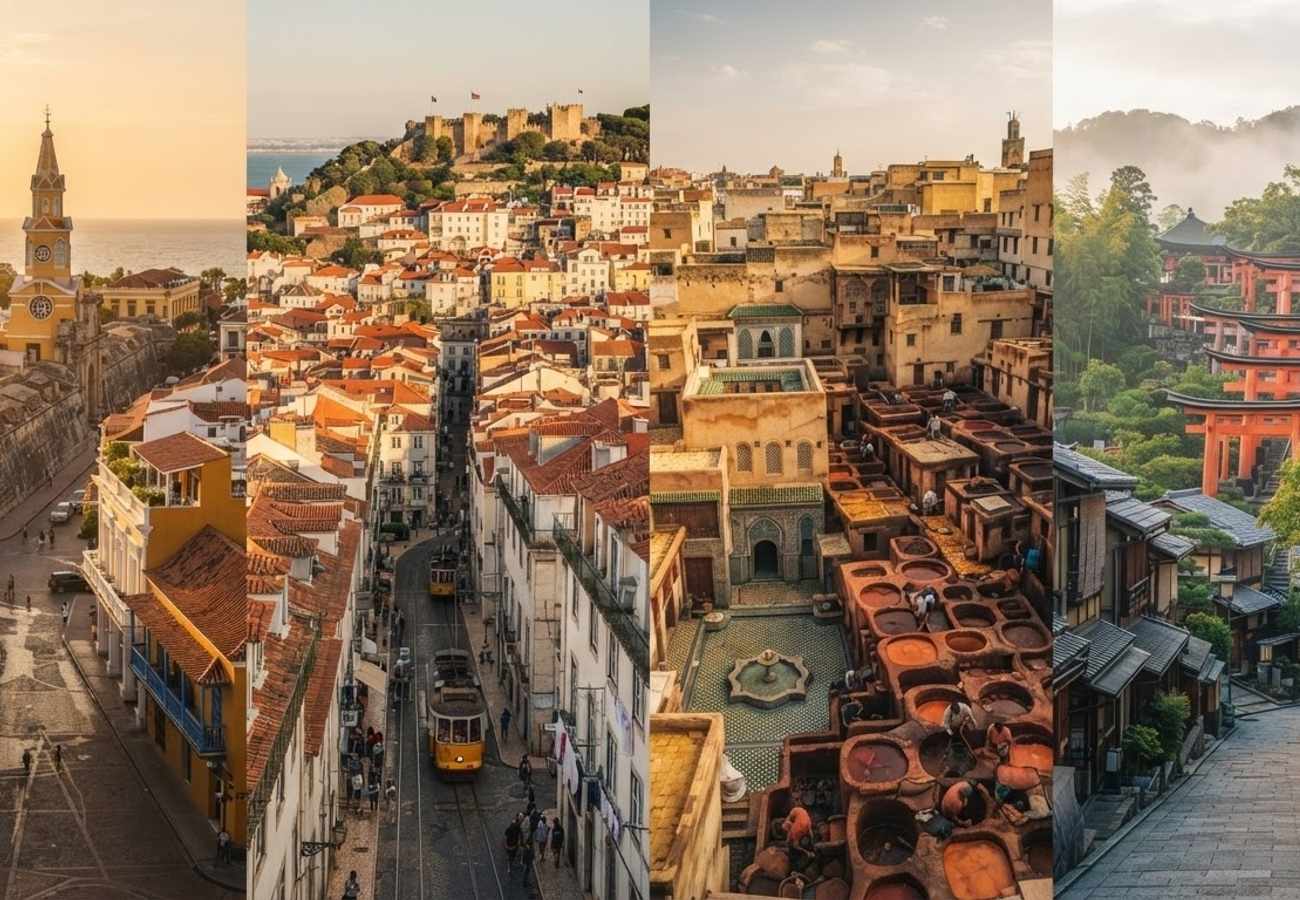
Image generated by AI
Global tourism is undergoing a structural shift as travelers abandon generic leisure packages in favor of "heritage-rich" urban centers. Our analysis indicates that historic quarters are now the primary drivers of city-break demand, forcing governments to balance record revenue with the risk of cultural erosion.
The Global Pivot to Heritage Tourism
Travel patterns in 2026 show a decisive move toward destinations where history is embedded in the urban fabric. From the Caribbean ramparts of Colombia to the medieval medinas of Morocco, "story-driven" travel is replacing traditional sun-and-sand tourism. This shift is characterized by a preference for immersive stays in restored historic properties and a demand for authentic cultural narratives over curated tourist traps.
Regional Impact and Visitor Statistics
The scale of this trend is evident in the latest figures from national tourism authorities and municipal surveys.
Latin America: The Colombian Surge
Colombia has successfully pivoted its national brand toward cultural landscapes and colonial history.
- Visitor Volume: National authorities report nearly 6.7 million non-resident visitors in 2024, a record high.
- Primary Hub: Cartagena de Indias remains the flagship destination due to its UNESCO-listed walled city and 16th-century grid layout.
- Emerging Routes: Expansion into Bogotá’s La Candelaria district and Andean coffee-region colonial towns.
Europe: Portugal’s Infrastructure Strain
Portugal is experiencing a critical tension between economic gain and the preservation of its residential cores.
- Total Arrivals: Approximately 29 million international visitors in 2024.
- Museum Traffic: Publicly managed monuments saw over 5 million visitors in 2024, while total museum attendance reached 19 million.
- Key Pressure Points: Lisbon (Alfama and Mouraria districts) and Porto’s medieval core are reporting significant losses of permanent residents due to short-term rental conversions.
North Africa: Morocco’s Economic Engine
Morocco has integrated its ancient medinas into a high-value economic strategy.
- Growth Rate: The tourism ministry reported a record 17.4 million visitors in 2024, representing a year-on-year increase of approximately 20 percent.
- Strategic Shift: A move toward "experiential luxury," utilizing restored riads and caravanserais in Marrakech and Fez.
- Urban Regeneration: Fez el Bali is cited as a primary example of heritage-led regeneration that preserves original architecture while reviving local commerce.
Asia: Kyoto’s Quality-Over-Quantity Model
Japan’s cultural capital is currently the global benchmark for managing "overtourism."
- Current Status: 2024 municipal surveys show a sharp rebound in overnight stays and day trips.
- Policy Pivot: Kyoto is transitioning to "quality-oriented" tourism, implementing digital reservation systems and redirecting foot traffic away from saturated districts.
- Intangible Heritage: Increased funding for traditional crafts and performance arts to prevent commercial dilution.
Passenger Rights & Advisory: Navigating Heritage Hubs
For the traveler visiting these high-density heritage zones, the experience is increasingly regulated. Our analysis of current local policies suggests the following practical implications:
1. Access and Reservations Many heritage sites in Kyoto and Lisbon now require pre-booked time slots. For the affected passenger, this means that "walk-in" tourism is becoming obsolete at major monuments. Failure to secure digital reservations may result in total denial of entry.
2. Accommodation Regulations In Porto and Lisbon, strict caps on short-term rentals are being implemented. Travelers should verify that their rental is legally registered to avoid last-minute cancellations by municipal authorities.
3. Etiquette and Local Law Kyoto and Morocco are increasing enforcement of "etiquette codes" at religious and residential sites. Our analysis suggests that non-compliance with local conduct rules in these zones can now lead to fines or removal from historic districts.
Industry Analyst View
The current trajectory of heritage tourism reveals a fundamental paradox: the "authenticity" that attracts millions is precisely what is threatened by their arrival. While the 20 percent growth in Morocco and record arrivals in Colombia provide essential capital for conservation, the "museumification" of cities like Porto threatens the living culture of these spaces.
The industry is moving toward a "decentralization" model. The goal is no longer to attract the maximum number of visitors to a single square, but to disperse them across secondary cities and rural outskirts. Success in the next decade will be measured not by arrival numbers, but by the stability of the local resident population and the vitality of intangible cultural assets.
The battle for the soul of the world's oldest cities is now a matter of urban policy and digital management.
Related Travel Guides
Disclaimer
This article is for informational and educational purposes only. It does not constitute legal, financial, or professional advice. While we strive to provide accurate and up-to-date information, travel policies, regulations, and conditions change rapidly. Always verify information with official sources before making travel decisions. Nomad Lawyer makes no representations about the accuracy, reliability, completeness, or suitability of the information provided. Readers should consult qualified professionals for advice specific to their circumstances. The views expressed in this article are those of the author and do not necessarily reflect the views of Nomad Lawyer.
Preeti Gunjan
Contributor & Community Manager
A passionate traveller and community builder. Preeti helps grow the Nomad Lawyer community, fostering engagement and bringing the reader experience to life.
Learn more about our team →