
US Marine Corps Retires Iconic AV-8B Harrier as F-35B Transition Marks End of an Era
Breaking airline news and aviation industry updates for 2026.

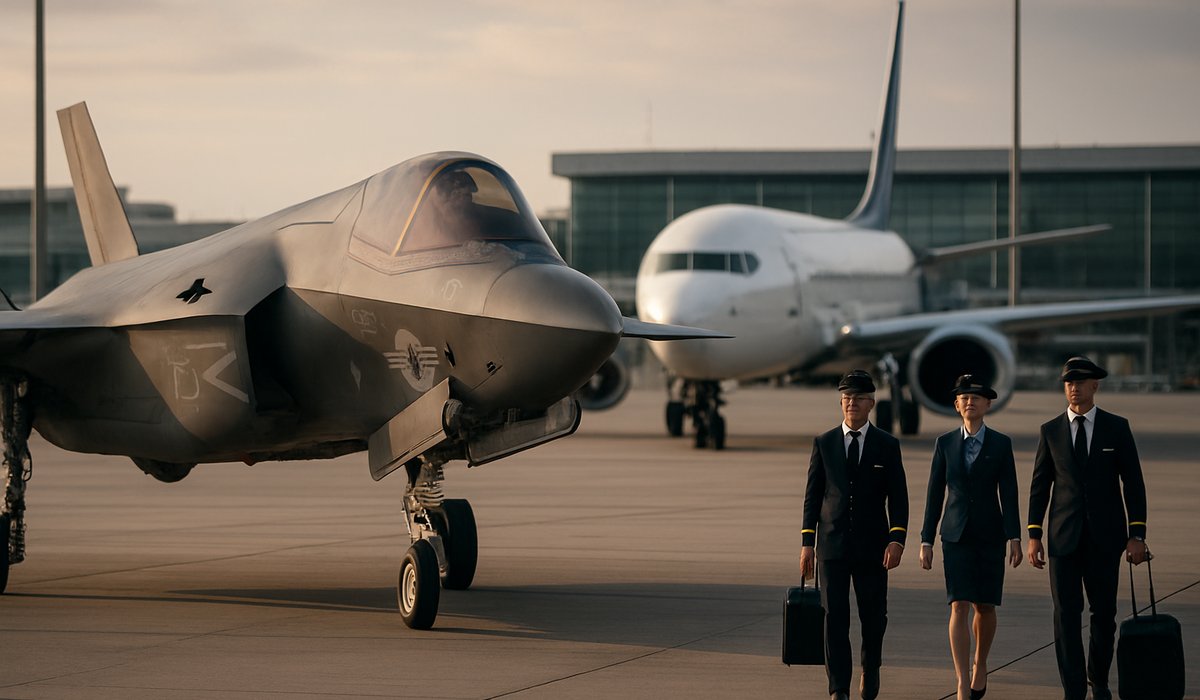
Image generated by AI
US Marine Corps Retires Iconic AV-8B Harrier as F-35B Transition Marks End of an Era
The final operational flight of the legendary jump jet signals a fundamental shift in naval aviation capabilities, but experts warn of critical operational trade-offs
Harrier Era Ends After Decades of Service
The United States Marine Corps has officially retired its last operational AV-8B Harrier II, with VMA-223 "The Bulldogs" conducting the final flight on June 3 at Marine Corps Air Station Cherry Point in North Carolina. The symbolic conclusion marks the end of a four-decade operational legacy for the vertical takeoff and landing (VTOL) platform that revolutionized close air support and expeditionary warfare.
The squadron will now transition to Lockheed Martin's F-35B Lightning II, a fifth-generation stealth fighter designed specifically for short-takeoff and vertical-landing operations aboard amphibious assault ships and forward-deployed environments. This transition aligns with the Pentagon's broader modernization strategy centered on the "Lightning Carrier" concept—enabling smaller naval vessels to operate advanced fighter aircraft without requiring full-sized conventional aircraft carriers.
The Capability Gap: What's Being Left Behind
While the F-35B represents technological advancement in stealth, sensor fusion, and network-centric warfare, military analysts note significant operational capabilities the Marine Corps will forfeit. The Harrier, despite its age, possessed unmatched agility in close-quarters combat scenarios and demonstrated exceptional performance in low-altitude, high-threat environments typical of counterinsurgency operations.
The AV-8B's robust design enabled sustained operations from austere, damaged, or minimal airfield infrastructure—a critical advantage in rapid-response contingencies where forward bases lack sophisticated facilities. The aircraft's proven reliability in challenging environments, combined with its weapons load capacity, made it indispensable for direct fire support missions where pilot situational awareness and platform responsiveness proved decisive.
Strategic Implications for Marine Expeditionary Forces
The F-35B's sophisticated avionics and stealth characteristics optimize performance in peer-competitor scenarios against near-peer adversaries with advanced air defense systems. However, the transition reflects a strategic pivot toward higher-intensity conflict preparation, potentially creating operational vulnerabilities in lower-end conflict scenarios where the Harrier excelled.
Marine leadership maintains that the F-35B's integrated sensor networks, extended combat range, and advanced targeting capabilities provide superior overall warfighting effectiveness. The stealth platform's ability to operate across joint and coalition environments offers unparalleled interoperability with allied air forces—a capability the older Harrier platform cannot match.
The retirement underscores broader defense modernization priorities, though it raises enduring questions about operational flexibility and the specialized niches legacy platforms fill in diverse military scenarios.
Frequently Asked Questions
What was the primary mission of the AV-8B Harrier in Marine operations? The Harrier provided close air support, reconnaissance, and strike capabilities with the unique advantage of operating from unprepared surfaces and expeditionary airfields without requiring conventional runway infrastructure.
How does the F-35B's operational range compare to the Harrier? The F-35B offers extended combat radius and fuel efficiency improvements, though specific performance metrics remain classified for security reasons.
Will the Marine Corps maintain any VTOL aircraft capabilities beyond the F-35B? The F-35B remains the primary vertical-launch platform for Marine expeditionary forces going forward, with no legacy alternatives planned for operational deployment.
What happens to retired Harrier aircraft? Aircraft typically enter storage, museum collections, or are eventually scrapped according to Department of Defense disposition protocols.
Does this transition affect amphibious assault ship capabilities? Yes—the F-35B enables smaller amphibious vessels to operate fifth-generation fighters, expanding naval expeditionary aviation reach compared to legacy Harrier limitations.
Related Travel Guides
External Resources
Disclaimer
This article is for informational and educational purposes only. It does not constitute legal, financial, or professional advice. While we strive to provide accurate and up-to-date information, travel policies, regulations, and conditions change rapidly. Always verify information with official sources before making travel decisions. Nomad Lawyer makes no representations about the accuracy, reliability, completeness, or suitability of the information provided. Readers should consult qualified professionals for advice specific to their circumstances. The views expressed in this article are those of the author and do not necessarily reflect the views of Nomad Lawyer.
Preeti Gunjan
Contributor & Community Manager
A passionate traveller and community builder. Preeti helps grow the Nomad Lawyer community, fostering engagement and bringing the reader experience to life.
Learn more about our team →