
Emirates' Premium Economy Advantage: How A380 Capacity Outpaces Singapore Airlines' Structural Constraints
Breaking airline news and aviation industry updates for 2026.

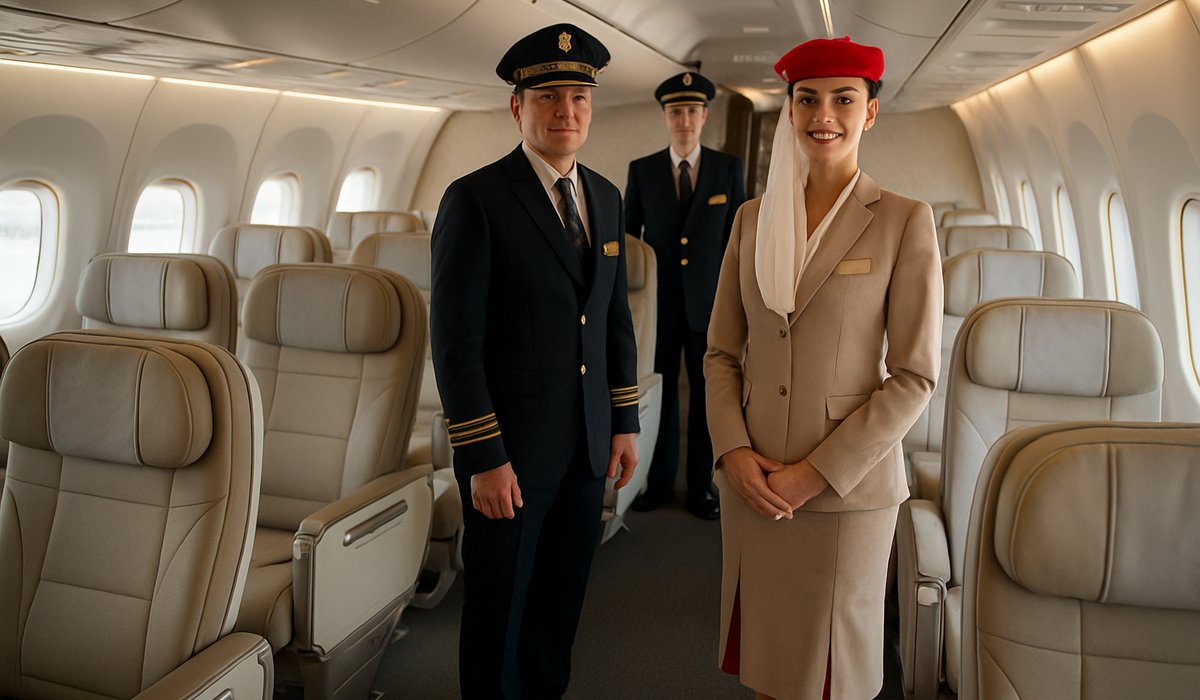
Image generated by AI
Emirates' Premium Economy Advantage: How A380 Capacity Outpaces Singapore Airlines' Structural Constraints
The Dubai carrier's expanded cabin configuration creates a competitive edge in the mid-tier travel segment as airlines compete for high-yield passengers
Emirates Secures Premium Economy Leadership Through Scale
Emirates has cemented its position as a global leader in premium economy offerings, leveraging the Airbus A380's massive fuselage to deliver a competitive advantage that rivals cannot easily replicate. The carrier's premium economy cabin aboard its A380 fleet features 56 seats—a configuration that significantly outpaces competitors including Singapore Airlines, which ranked fourth in the latest Skytrax World Airline Awards for premium economy service.
The distinction reflects a fundamental difference in aircraft design philosophy. While Emirates maximizes capacity by distributing premium economy across the double-deck A380's extensive space, structural limitations constrain other carriers' flexibility. Singapore Airlines, operating a diverse fleet including the Boeing 777 and Airbus A350, faces architectural constraints that prevent comparable cabin expansions in the premium economy segment.
Market Recognition and Strategic Positioning
Emirates' achievement in securing third place in Skytrax's 2025 premium economy rankings underscores the effectiveness of its approach. The award recognition reflects not only seat comfort and spacing but also the airline's ability to offer premium economy passengers a genuinely differentiated experience at price points below full business class.
This positioning matters considerably in today's fragmented travel market. Post-pandemic recovery has shifted passenger preferences toward premium economy—a segment offering enhanced comfort and service without business-class pricing. Airlines offering superior premium economy products capture market share from both economy and business-class segments, improving revenue optimization across cabin classes.
The A380 Advantage in Aircraft Economics
The A380's double-deck configuration inherently supports larger premium economy deployments. With 56 dedicated seats, Emirates creates a substantial revenue-generating cabin that justifies premium economy-specific amenities: enhanced catering, priority boarding, dedicated lavatories, and expanded seatpitch.
Singapore Airlines' fleet composition—predominantly narrowbody and twin-aisle widebodies without A380s—simply cannot accommodate comparable cabin volumes. Structural fuselage dimensions on the B777 and A350, while spacious, don't permit the same cabin expansion possibilities that the A380's upper and lower decks provide.
Competitive Implications for the Industry
This structural advantage extends beyond immediate passenger appeal. Emirates' larger premium economy cabin generates greater ancillary revenue per flight, improves load factors in a high-margin segment, and strengthens brand positioning in competitive long-haul markets.
As other carriers evaluate premium economy expansion strategies, the Emirates-Singapore Airlines comparison illustrates how aircraft selection decisions made years earlier continue shaping competitive positioning. Airlines without A380s or similarly designed aircraft must optimize existing fuselage space more creatively—through reconfiguration, dynamic pricing, or enhanced service offerings—to compete effectively.
Frequently Asked Questions
What makes Emirates' premium economy cabin different from competitors? Emirates operates 56 premium economy seats aboard its A380 aircraft, significantly exceeding competitor configurations. This scale allows dedicated amenities, enhanced service, and superior passenger experience that Skytrax recognized with third-place ranking in 2025.
Why can't Singapore Airlines match Emirates' premium economy capacity? Singapore Airlines' primary long-haul fleet consists of Boeing 777 and Airbus A350 aircraft, which feature different fuselage dimensions than the A380's double-deck design, structurally limiting premium economy expansion possibilities.
How does premium economy fit into airline revenue strategies? Premium economy represents high-margin capacity that captures passengers unwilling to pay business-class fares but seeking enhanced comfort. Larger premium economy cabins improve per-flight revenue and load factor performance.
Which airlines are expanding premium economy offerings? Major carriers including Air France, British Airways, and Qantas have expanded or introduced premium economy, recognizing growing demand for mid-tier cabin products in post-pandemic travel markets.
Does aircraft choice determine premium economy competitiveness? Substantially yes—aircraft selection significantly influences cabin configuration flexibility, amenity offerings, and revenue optimization potential in premium economy segments for decades.
Related Travel Guides
External Resources
Disclaimer
This article is for informational and educational purposes only. It does not constitute legal, financial, or professional advice. While we strive to provide accurate and up-to-date information, travel policies, regulations, and conditions change rapidly. Always verify information with official sources before making travel decisions. Nomad Lawyer makes no representations about the accuracy, reliability, completeness, or suitability of the information provided. Readers should consult qualified professionals for advice specific to their circumstances. The views expressed in this article are those of the author and do not necessarily reflect the views of Nomad Lawyer.
Raushan Kumar
Founder & Lead Developer
Full-stack developer with 11+ years of experience and a passionate traveller. Raushan built Nomad Lawyer from the ground up with a vision to create the best travel and law experience on the web.
Learn more about our team →