
Air New Zealand's Skycouch Economy Upgrade: Can a $249-$1,200 Surcharge Justify Its Value Against Premium Economy?
Breaking airline news and aviation industry updates for 2026.

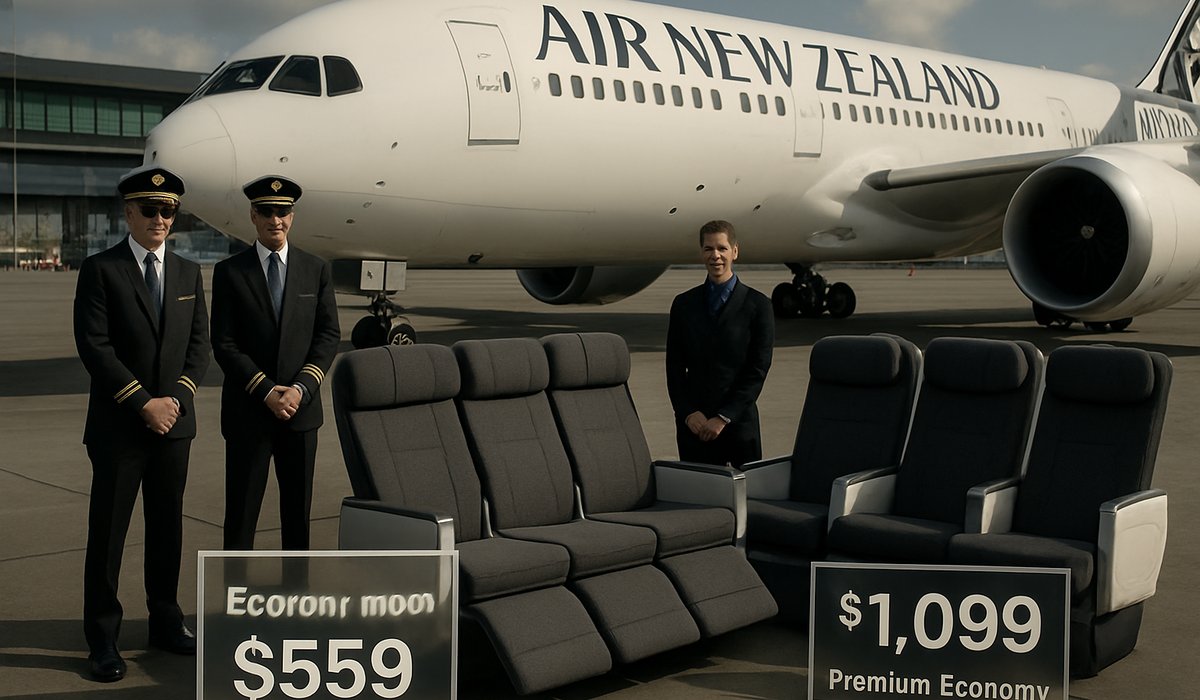
Image generated by AI
Air New Zealand's Skycouch Economy Upgrade: Can a $249-$1,200 Surcharge Justify Its Value Against Premium Economy?
As jet fuel costs surge and long-haul pricing reaches record highs, travelers face a critical choice between airline innovations and traditional cabin upgrades
Award-Winning Innovation Meets Pricing Reality
Air New Zealand's Skycouch has captured international acclaim, earning the carrier recognition as World's Best Economy Class for 2026. However, beneath the accolades lies a pressing consumer question: does this innovative lie-flat economy feature—priced between $249 and $1,200 as an add-on—genuinely outperform a straightforward premium economy ticket for long-haul travelers?
The distinction matters profoundly as aviation industry costs remain elevated. Volatile jet fuel prices continue reshaping airline economics, forcing carriers to recalibrate their pricing strategies across cabin tiers. For passengers crossing the Pacific or routing through East Asia, this decision directly impacts both comfort and travel budgets.
The Skycouch Proposition
The Skycouch transforms three consecutive economy seats into a 5'1" (1.55-meter) flat sleeping surface—a mechanical innovation that blurs the line between economy and premium offerings. Air New Zealand's engineering delivers genuine value for those prioritizing horizontal rest on ultra-long-haul flights, yet the pricing structure introduces complexity.
Passengers can reserve the Skycouch add-on during booking or upgrade after purchase, with costs fluctuating based on route demand and booking proximity to departure. This variable pricing model reflects the industry-wide trend toward dynamic revenue management—a strategy airlines employ to maximize per-seat profitability amid fuel cost pressures and fluctuating demand.
Comparing Total Journey Costs
The financial calculus shifts considerably when comparing combined expenses. A base economy ticket plus Skycouch surcharge ($249-$1,200) may ultimately approach or exceed traditional premium economy fares, depending on the route and booking timing. Premium economy cabins typically offer wider seating (20+ inches), enhanced meal service, priority boarding, and dedicated amenities—benefits that extend throughout the journey rather than exclusively during sleep periods.
For 12-16 hour transpacific routes, the choice hinges on individual priorities. Rest-focused travelers with moderate budgets may find Skycouch optimal. Those valuing comprehensive service enhancements throughout the flight might justify premium economy's broader feature set.
Broader Industry Implications
This pricing dilemma reflects aviation's evolving landscape. As fuel surcharges and operational costs remain stubbornly high, carriers like Air New Zealand innovate within economic constraints, creating modular premium experiences rather than expanding traditional cabin inventory. The strategy allows flexibility—passengers can choose features à la carte rather than purchasing full premium cabin access.
For the industry, such innovations signal a shift toward personalized pricing models, where amenities become stackable options rather than bundled packages.
FAQ
Q: What exactly is Air New Zealand's Skycouch? A: The Skycouch converts three adjoining economy seats into a flat sleeping surface measuring 5'1" (1.55 meters), priced as an add-on upgrade between $249-$1,200 depending on route and timing.
Q: Is Skycouch cheaper than premium economy? A: Not necessarily. When combining base economy fares with Skycouch surcharges, total costs often approach or match premium economy ticket prices, making direct comparison essential per route.
Q: How does jet fuel pricing affect these cabin upgrade costs? A: Rising fuel costs push airlines to maximize revenue per seat through dynamic pricing on premium features, including Skycouch add-ons, which fluctuate with demand and operational expenses.
Q: Which cabin upgrade works better for Pacific crossings? A: Skycouch suits rest-prioritized travelers on 12+ hour routes, while premium economy serves those wanting comprehensive service, wider seats, and amenities throughout the entire flight.
Q: Why are airlines like Air New Zealand creating modular upgrades instead of expanding premium cabins? A: Modular pricing allows carriers to optimize revenue during volatile fuel cost periods while offering flexibility—passengers choose only the features they value rather than purchasing full premium cabin access.
Related Travel Guides
Flight Delay Compensation Guide 2026
Understanding Airline Route Changes
Airport Security Process Updated (2026)
External Resources
Disclaimer
This article is for informational and educational purposes only. It does not constitute legal, financial, or professional advice. While we strive to provide accurate and up-to-date information, travel policies, regulations, and conditions change rapidly. Always verify information with official sources before making travel decisions. Nomad Lawyer makes no representations about the accuracy, reliability, completeness, or suitability of the information provided. Readers should consult qualified professionals for advice specific to their circumstances. The views expressed in this article are those of the author and do not necessarily reflect the views of Nomad Lawyer.
Preeti Gunjan
Contributor & Community Manager
A passionate traveller and community builder. Preeti helps grow the Nomad Lawyer community, fostering engagement and bringing the reader experience to life.
Learn more about our team →