
Boeing 787 Dreamliner Transforms Long-Haul Aviation: How One Aircraft Rewrote Industry Economics
Breaking airline news and aviation industry updates for 2026.

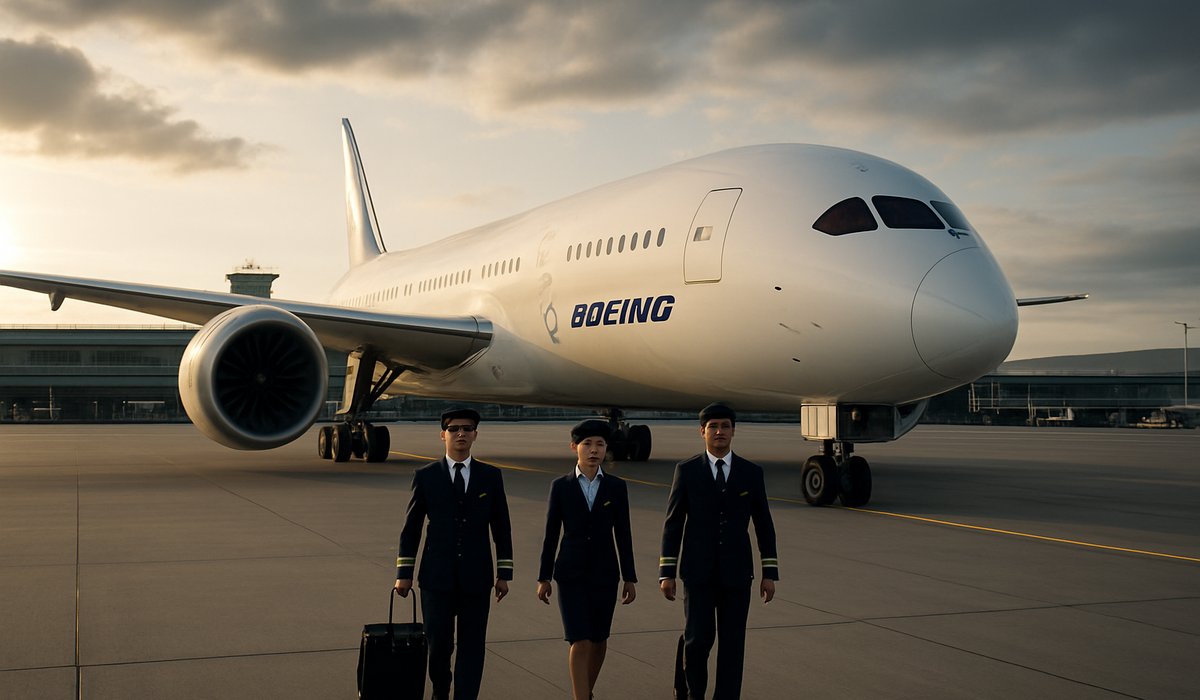
Image generated by AI
Boeing 787 Dreamliner Transforms Long-Haul Aviation: How One Aircraft Rewrote Industry Economics
The revolutionary twin-jet has fundamentally shifted how airlines operate intercontinental routes, displacing the era of massive four-engine aircraft and reshaping passenger fares globally
A Seismic Shift in Long-Haul Operations
The aviation industry has undergone a fundamental transformation since the Boeing 787 Dreamliner entered commercial service, with over one billion passengers now having experienced the aircraft across its three variants. More than 1,200 of the fuel-efficient twin-jets have been delivered to carriers worldwide, marking a watershed moment that has permanently altered how airlines approach intercontinental travel economics.
The 787's emergence has definitively ended the superjumbo era that dominated late-20th and early-21st-century aviation. Where four-engine behemoths like the Airbus A380 once symbolized long-haul prestige, nimble, highly efficient twin-engine aircraft have become the industry standard—flying farther, faster, and at substantially lower operating costs.
The Economics Revolution
The 787's game-changing impact stems from its advanced aerodynamics, composite fuselage construction, and state-of-the-art engines that deliver unmatched fuel efficiency. Airlines operating the aircraft report consuming approximately 20-25% less jet fuel per available seat mile compared to legacy wide-body aircraft, translating into dramatic reductions in operating expenses across long-haul networks.
This efficiency cascade has rippled through airline cost structures. Lower fuel expenditure—particularly critical given volatile jet fuel prices linked to geopolitical tensions and global energy markets—enables carriers to reduce baggage charges, seat fees, and other ancillary levies that passengers have grown accustomed to absorbing. Simultaneously, improved profitability on thin-margin intercontinental routes has incentivized airlines to launch previously unviable point-to-point services, bypassing traditional hub-and-spoke models.
Reshaping Route Networks and Accessibility
The 787's extended range capabilities have democratized long-haul travel. Airlines can now operate ultra-long-haul routes with smaller aircraft carrying 242-330 passengers, replacing the economic model requiring 400+ seat configurations on four-engine jets. This shift has enabled carriers to deploy capacity strategically while maintaining healthier load factors and yield management.
The aircraft's cabin pressurization systems and larger windows have also elevated passenger comfort standards, becoming competitive differentiators as carriers vie for premium leisure and business travelers increasingly conscious of in-flight wellness factors.
Industry-Wide Transformation Underway
The 787's ascendancy signals the permanent retirement of inefficient wide-body platforms. Airbus's competing A350 has similarly reshaped the competitive landscape, forcing legacy aircraft retirements and accelerating the industry's transition toward next-generation efficiency standards.
For passengers, this transformation carries mixed implications: while fuel surcharges have theoretically moderated due to operational efficiencies, competitive pressures and dynamic pricing strategies have sustained overall airfare levels despite reduced airline costs.
FAQ: Boeing 787 and Modern Aviation Economics
How has the Boeing 787 reduced airline operating costs? The 787's composite materials, advanced engines, and aerodynamic design reduce fuel consumption by 20-25% compared to legacy wide-body aircraft, directly lowering per-seat operating expenses on long-haul routes.
Why are airlines abandoning four-engine aircraft like the A380? Twin-engine jets like the 787 offer superior fuel efficiency, lower maintenance costs, and greater operational flexibility for point-to-point routes, making four-engine configurations economically uncompetitive for most carriers.
Has the 787 reduced passenger airfares? While operational efficiencies have moderated airline costs, competitive pricing and dynamic revenue management have largely sustained airfare levels despite lower underlying operating expenses.
What routes has the 787 made viable? The aircraft's extended range enables ultra-long-haul point-to-point services previously requiring hub connections, such as direct flights between secondary cities and distant international destinations.
How many 787s are currently in service? Over 1,200 Boeing 787 Dreamliners across three variants have been delivered to global carriers, with more than one billion passengers having flown the aircraft since its introduction.
Related Travel Guides
External Resources
Disclaimer
This article is for informational and educational purposes only. It does not constitute legal, financial, or professional advice. While we strive to provide accurate and up-to-date information, travel policies, regulations, and conditions change rapidly. Always verify information with official sources before making travel decisions. Nomad Lawyer makes no representations about the accuracy, reliability, completeness, or suitability of the information provided. Readers should consult qualified professionals for advice specific to their circumstances. The views expressed in this article are those of the author and do not necessarily reflect the views of Nomad Lawyer.
Kunal K Choudhary
Co-Founder & Contributor
A passionate traveller and tech enthusiast. Kunal contributes to the vision and growth of Nomad Lawyer, bringing fresh perspectives and driving the community forward.
Learn more about our team →