
Boeing 777X Introduces Hidden Crew Rest Compartments to Combat Fatigue on Ultra-Long-Haul Routes
Breaking airline news and aviation industry updates for 2026.

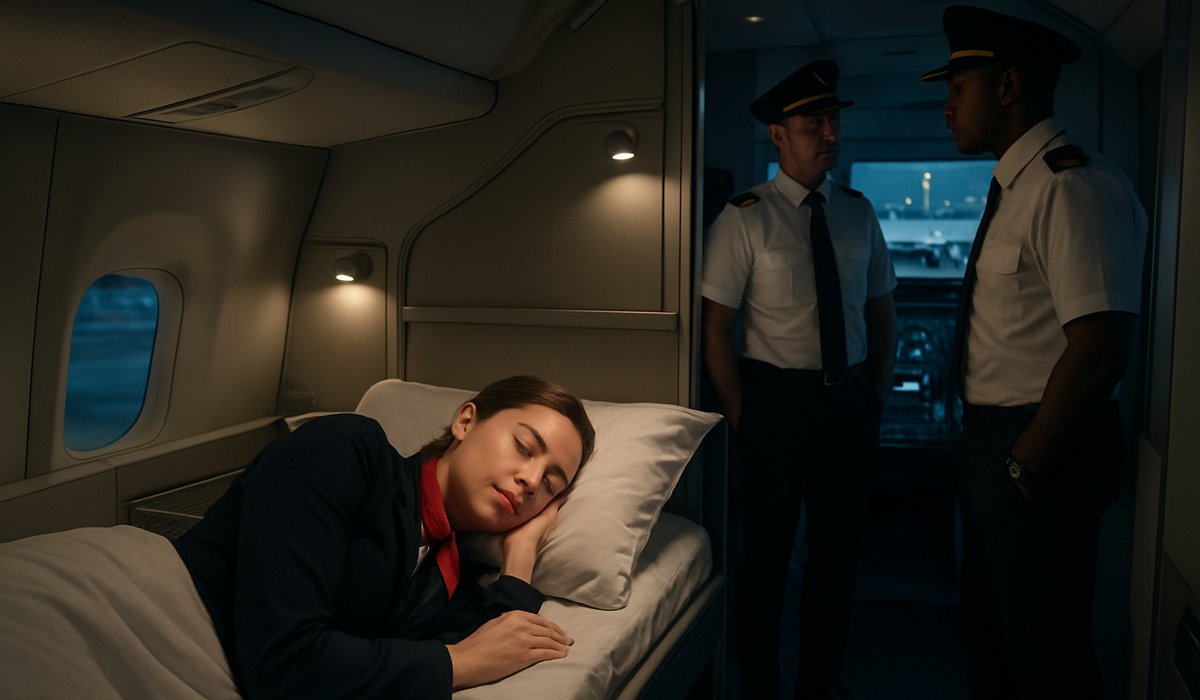
Image generated by AI
Boeing 777X Introduces Hidden Crew Rest Compartments to Combat Fatigue on Ultra-Long-Haul Routes
Airlines deploy specialized sleeping quarters as aviation industry prioritizes pilot and cabin crew wellness on extended flights
Revolutionary Design Addresses Crew Fatigue Crisis on Long-Distance Routes
The Boeing 777X is equipped with dedicated crew rest facilities—concealed compartments designed to provide pilots and flight attendants with essential sleep opportunities during marathon intercontinental flights. These purpose-built spaces, strategically positioned away from passenger sight lines, represent a critical safety infrastructure as airlines operate increasingly demanding flight schedules across the globe.
Accessed through discrete doorways and steep staircases, the rest areas are typically located in two primary locations: above the main cabin within the aircraft's upper structure and below in the cargo hold section. The compartments allow crew members to rotate off active duty in scheduled intervals, directly mitigating the accumulation of fatigue that poses significant risks on ultra-long-haul operations.
Industry Response to Demanding Flight Operations
The integration of crew rest compartments on the 777X reflects growing industry recognition that human fatigue represents a critical safety variable in modern aviation. As airlines expand route networks into previously underserved markets and push aircraft operating capabilities to their limits, fatigue management has become a central concern for regulatory bodies and operators alike.
The widebody aircraft's design acknowledges that pilots and cabin crew operating flights exceeding 15-17 hours require structured rest periods to maintain cognitive performance and situational awareness. Without these facilities, crew members would be forced to remain alert throughout entire flights, creating hazardous conditions and violating strict duty-time regulations established by aviation authorities worldwide.
Operational Implementation and Safety Standards
Airlines deploying the 777X benefit from standardized crew rest protocols that comply with international flight and duty time limitations. The Federal Aviation Administration (FAA) and European Union Aviation Safety Agency (EASA) mandate that long-haul operators provide adequate rest facilities, making these compartments essential rather than optional amenities.
The hidden nature of these rest areas preserves passenger comfort and aircraft aesthetics while ensuring crew members can access sleep facilities discreetly. Modern 777X configurations include bunks, climate control systems, and lighting that facilitates natural sleep cycles during extended flights.
Broader Aviation Implications
As the aviation industry confronts pilot shortages, recruitment challenges, and demanding market pressures, crew wellness initiatives like the 777X rest compartments become increasingly valuable for retention and safety culture. Airlines recognize that investing in crew comfort and fatigue mitigation directly impacts operational reliability, safety records, and employee satisfaction—critical factors in an industry facing mounting workforce constraints.
The 777X crew rest design sets a standard for next-generation widebody aircraft, signaling that passenger safety and crew welfare are economically inseparable considerations in modern aviation planning.
FAQ: Crew Rest Areas on Long-Haul Aircraft
Q: Where are crew rest compartments located on the Boeing 777X? A: Rest areas are positioned in two primary locations: above the main passenger cabin within the aircraft's upper structure and below in the cargo hold, accessed via hidden staircases.
Q: Why are crew rest areas necessary on long-haul flights? A: These compartments allow pilots and cabin crew to sleep during extended flights, reducing fatigue and maintaining alertness—critical safety factors on routes exceeding 15+ hours.
Q: Are crew rest areas required by aviation regulations? A: Yes, the FAA and EASA mandate that long-haul operators provide adequate rest facilities to comply with flight and duty time limitations.
Q: How does crew fatigue affect aviation safety? A: Fatigue impairs cognitive performance and situational awareness, increasing accident risk. Structured rest periods mitigate these hazards significantly.
Q: What other modern aircraft feature crew rest compartments? A: Most widebody jets including the Boeing 787, Airbus A350, and A380 incorporate similar rest facilities designed to international safety standards.
Related Travel Guides
-
Denver Airport's $700 Million Walking Solution: A Major Shift Away From the Notorious Train System
-
Aegean Airlines Growth: 5% Revenue Surge and 6% Passenger Increase in 2025
External Resources
Disclaimer
This article is for informational and educational purposes only. It does not constitute legal, financial, or professional advice. While we strive to provide accurate and up-to-date information, travel policies, regulations, and conditions change rapidly. Always verify information with official sources before making travel decisions. Nomad Lawyer makes no representations about the accuracy, reliability, completeness, or suitability of the information provided. Readers should consult qualified professionals for advice specific to their circumstances. The views expressed in this article are those of the author and do not necessarily reflect the views of Nomad Lawyer.
Preeti Gunjan
Contributor & Community Manager
A passionate traveller and community builder. Preeti helps grow the Nomad Lawyer community, fostering engagement and bringing the reader experience to life.
Learn more about our team →