
Boeing 777-300ER vs. 787 Dreamliner: Why These Widebody Giants Aren't Interchangeable
Breaking airline news and aviation industry updates for 2026.

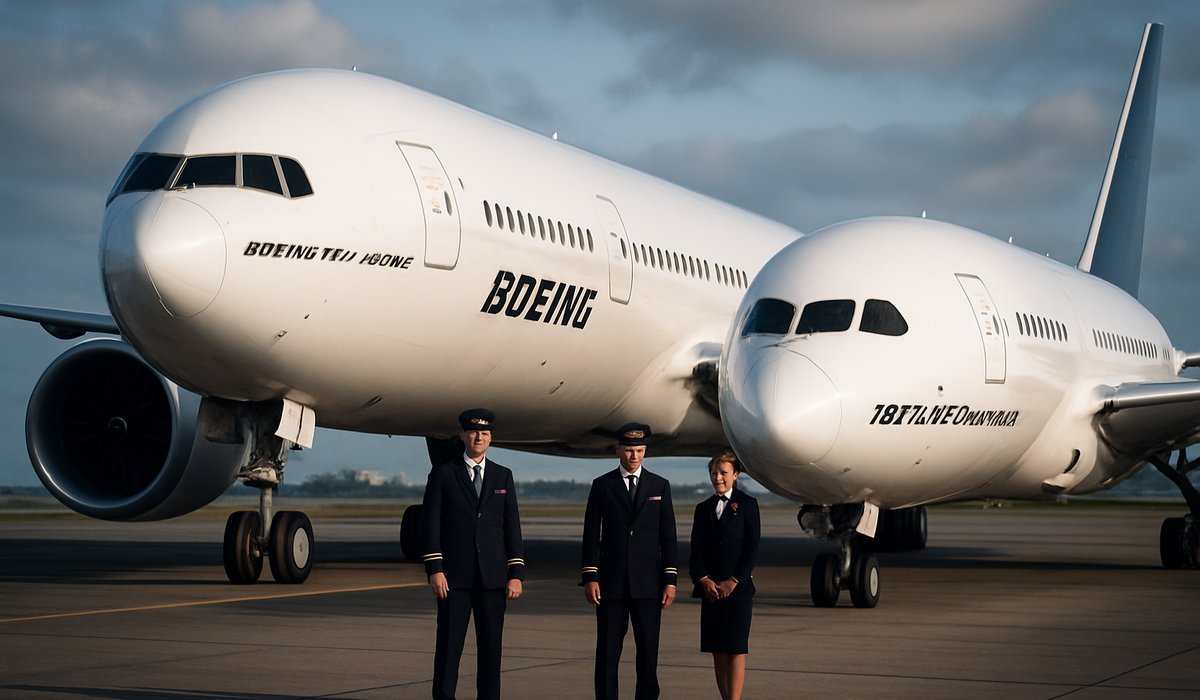
Image generated by AI
Boeing 777-300ER vs. 787 Dreamliner: Why These Widebody Giants Aren't Interchangeable
Despite surface similarities, Boeing's flagship long-range aircraft reveal stark differences in capacity, efficiency, and operational design
The Widebody Misconception
While both the Boeing 777-300ER and 787 Dreamliner represent the pinnacle of twin-engine widebody aircraft design and serve major international carriers on transcontinental routes, the two jets occupy distinctly different niches in modern aviation. A closer examination of their specifications reveals these aircraft were engineered with fundamentally different operational philosophies, passenger capacities, and fuel efficiency profiles—distinctions that fundamentally reshape airline economics and travel costs.
Capacity and Passenger Configuration
The 777-300ER significantly outpaces the 787 Dreamliner in raw seating capability. Boeing's 777-300ER can accommodate between 300 and 396 passengers depending on configuration, while the 787 Dreamliner's capacity ranges from 242 to 330 seats across its various models. This substantial difference in passenger volume directly impacts airline revenue models and influences baggage fee structures, as carriers operating larger 777 fleets can distribute operational costs across more passengers, potentially affecting ticket pricing and ancillary charges.
Fuel Efficiency and Operating Costs
The 787 Dreamliner was specifically designed to revolutionize fuel consumption on long-haul routes, featuring advanced composite materials, improved aerodynamics, and next-generation engines. The aircraft consumes approximately 20-25% less fuel than comparable widebody predecessors, a critical advantage given volatile jet fuel prices that directly correlate with airline surcharges and ticket costs. Conversely, the 777-300ER, while fuel-efficient for its generation, operates on conventional aluminum construction and requires greater fuel consumption per flight hour.
Strategic Deployment and Route Economics
Airlines deploying the 777-300ER prioritize maximum capacity on high-demand intercontinental routes where load factors justify the larger aircraft's operating expenses. The 787 Dreamliner targets thinner, underserved long-range markets where fuel efficiency trumps absolute seat count—enabling carriers to profitably serve secondary international destinations previously unviable with larger jets.
Industry Implications
For consumers, this distinction matters considerably. Airlines operating mixed fleets use the 777-300ER for premium-density routes while deploying 787s on fuel-constrained operations, directly influencing route availability, ticket pricing, and baggage fee policies. Understanding these operational differences illuminates why the aviation industry continues investing in specialized aircraft rather than standardized fleets.
FAQ: Boeing 777-300ER vs. 787 Dreamliner
Q: Which aircraft carries more passengers, the 777-300ER or 787 Dreamliner? A: The 777-300ER accommodates up to 396 passengers, while the 787 Dreamliner maxes out around 330, making the 777 significantly larger in passenger capacity.
Q: Is the 787 Dreamliner more fuel-efficient than the 777-300ER? A: Yes, the 787 consumes 20-25% less fuel than comparable widebody aircraft, including the 777-300ER, reducing per-seat operating costs on fuel-dependent routes.
Q: Why don't airlines simply use one aircraft type for all long-haul routes? A: Different routes demand different economics—high-capacity 777s work best on densely-traveled lanes, while efficient 787s serve thinner markets that wouldn't support larger aircraft profitably.
Q: How do these aircraft differences affect passenger ticket prices and baggage fees? A: Larger aircraft like the 777-300ER distribute costs across more passengers, potentially lowering base fares, while the 787's efficiency enables profitable service on routes that support premium pricing.
Q: Which Boeing widebody is newer: the 777-300ER or 787 Dreamliner? A: The 787 Dreamliner entered service in 2011, while the 777-300ER debuted in 2004, making the 787 seven years newer with substantially more advanced technology.
Related Travel Guides
External Resources
Disclaimer
This article is for informational and educational purposes only. It does not constitute legal, financial, or professional advice. While we strive to provide accurate and up-to-date information, travel policies, regulations, and conditions change rapidly. Always verify information with official sources before making travel decisions. Nomad Lawyer makes no representations about the accuracy, reliability, completeness, or suitability of the information provided. Readers should consult qualified professionals for advice specific to their circumstances. The views expressed in this article are those of the author and do not necessarily reflect the views of Nomad Lawyer.
Preeti Gunjan
Contributor & Community Manager
A passionate traveller and community builder. Preeti helps grow the Nomad Lawyer community, fostering engagement and bringing the reader experience to life.
Learn more about our team →