
Air New Zealand Charts Ambitious Ultra-Long-Haul Expansion: 10 Nonstop Routes to Launch by 2026
Breaking airline news and aviation industry updates for 2026.

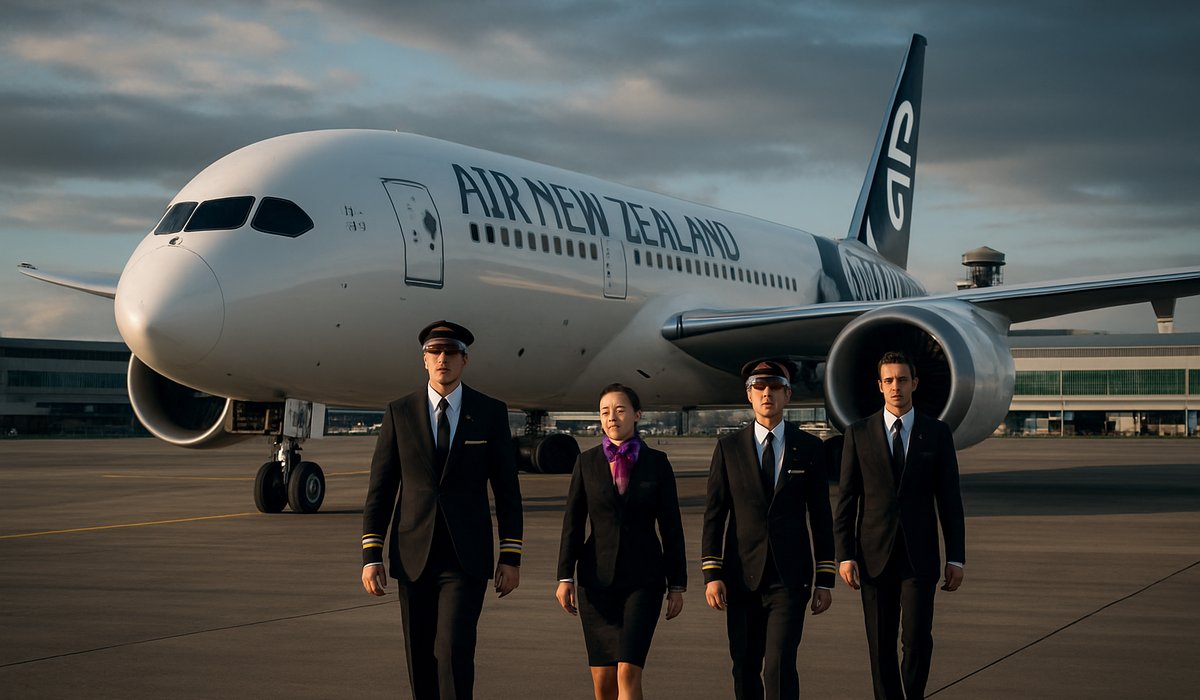
Image generated by AI
Air New Zealand Charts Ambitious Ultra-Long-Haul Expansion: 10 Nonstop Routes to Launch by 2026
The South Pacific carrier doubles down on extended-range operations, reshaping global connectivity from its remote hub
Air New Zealand is preparing a transformative network expansion that will cement its position as a leader in ultra-long-haul aviation. The carrier plans to introduce 10 new nonstop routes by 2026, extending its already impressive portfolio of extended-range services that cater to its geographic isolation in the South Pacific.
Strategic Geographic Advantage Drives Long-Haul Focus
New Zealand's isolated location has historically necessitated longer flight times to connect with major global markets. The airline currently operates some of the world's most demanding routes, including its flagship Auckland-to-New York service spanning 7,671 nautical miles (14,207 kilometers)—a journey that ranks among the top ten longest scheduled commercial flights globally.
Rather than viewing geography as a constraint, Air New Zealand has transformed isolation into competitive advantage. The carrier's investment in modern aircraft capable of extended-range operations positions it uniquely to capture direct-travel demand from passengers seeking to minimize layovers on transcontinental journeys.
Expansion Plans and Fleet Requirements
The addition of 10 ultra-long-haul routes represents a significant operational undertaking. These extended services—many exceeding 18 hours of continuous flight time—demand aircraft with exceptional fuel efficiency, advanced avionics, and cabin configurations optimized for passenger comfort during marathon journeys.
Air New Zealand's strategic shift aligns with broader industry trends toward point-to-point connectivity, reducing passenger friction caused by hub transfers. This approach has proven particularly attractive in premium segments, where business and premium leisure travelers increasingly prioritize direct routing despite higher ticket prices.
Industry Context: Aviation's Ultra-Long-Haul Evolution
The expansion reflects widening capabilities in commercial aviation. Aircraft manufacturers, including Boeing and Airbus, have developed next-generation widebody jets enabling routes previously considered economically unviable. Lower operating costs per available seat kilometer and reduced jet fuel consumption have altered the commercial calculus for extended-range services.
However, ultra-long-haul operations remain capital-intensive endeavors. Sustained elevated aviation fuel prices and post-pandemic crew fatigue regulations continue shaping route profitability. Airlines pursuing such expansion typically offset elevated operating costs through premium pricing strategies and yield management.
Strategic Implications for Pacific Aviation
Air New Zealand's initiative signals confidence in sustained demand recovery within premium travel segments. The carrier's network strategy directly competes with traditional hub-and-spoke models operated by Middle Eastern carriers, particularly on Europe-Australasia-Pacific routes.
The expansion also carries implications for regional connectivity. Enhanced direct services from Auckland may redistribute passenger flows within Oceania, potentially affecting smaller regional airlines and traditional stopovers across Pacific island nations.
Looking Ahead
As Air New Zealand finalizes route planning and aircraft deployment schedules for its 2026 launch timeline, the aviation industry will closely monitor implementation results. Success could trigger similar aggressive ultra-long-haul strategies among competitors, fundamentally reshaping global aviation connectivity patterns.
FAQ
What are ultra-long-haul flights and why are they significant? Ultra-long-haul flights exceed 16-18 hours of continuous flight time, connecting distant regions without intermediate stops. They represent the aviation industry's cutting edge in range capability and passenger demand for convenience.
How does geographic isolation benefit Air New Zealand's strategy? New Zealand's remote South Pacific location necessitates extended-range flying, giving the carrier inherent expertise and competitive advantages in operating routes competitors may avoid or struggle to execute profitably.
What aircraft are capable of 18-hour nonstop flights? Modern widebody jets, including the Boeing 787 Dreamliner and Airbus A350, feature extended-range variants enabling flights exceeding 18 hours through advanced fuel efficiency and optimized aerodynamics.
How do airlines make ultra-long-haul routes economically viable? Premium cabin pricing, yield management, optimized crew scheduling, and fuel-efficient aircraft offset higher operating costs. Airlines typically target business and premium leisure segments willing to pay significantly for direct routing.
When will these 10 new routes launch? Air New Zealand targets full implementation by 2026, with gradual rollout dependent on aircraft delivery schedules and regulatory approvals.
Related Travel Guides
External Resources
Disclaimer
This article is for informational and educational purposes only. It does not constitute legal, financial, or professional advice. While we strive to provide accurate and up-to-date information, travel policies, regulations, and conditions change rapidly. Always verify information with official sources before making travel decisions. Nomad Lawyer makes no representations about the accuracy, reliability, completeness, or suitability of the information provided. Readers should consult qualified professionals for advice specific to their circumstances. The views expressed in this article are those of the author and do not necessarily reflect the views of Nomad Lawyer.
Kunal K Choudhary
Co-Founder & Contributor
A passionate traveller and tech enthusiast. Kunal contributes to the vision and growth of Nomad Lawyer, bringing fresh perspectives and driving the community forward.
Learn more about our team →