
Hawaiian and Alaska Airlines Restore Hawaii Flight Schedules After Hurricane Lala Disruptions 2026
Hawaiian and Alaska Airlines are resuming transpacific and interisland operations following the passage of Hurricane Lala, though residual delays persist for stranded passengers.

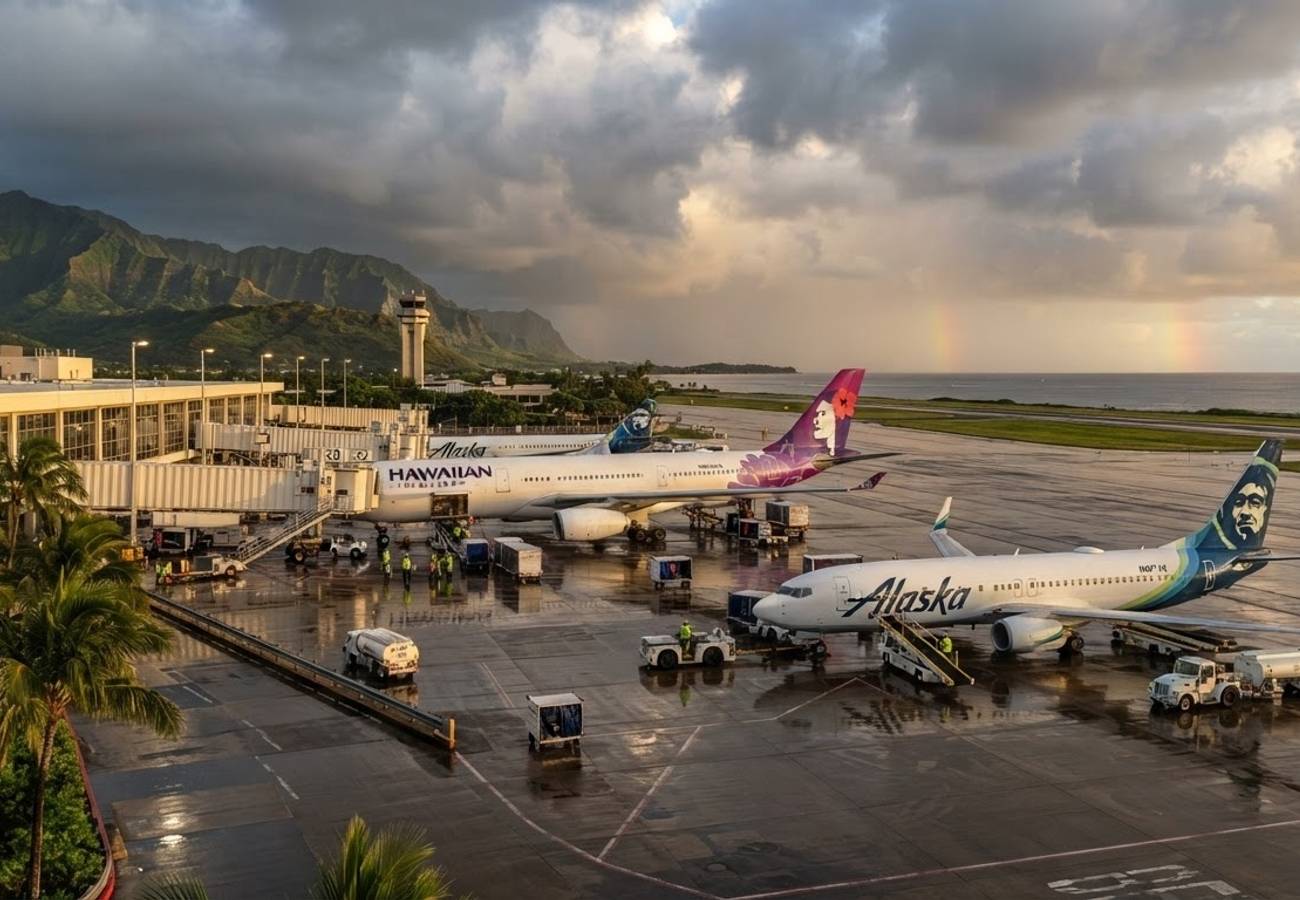
Image generated by AI
Flight operations are returning to normalcy across the Hawaiian archipelago as Hurricane Lala moves south, though a backlog of stranded passengers continues to strain capacity.
The passage of Hurricane Lala triggered widespread aviation chaos, forcing Hawaiian and Alaska Airlines to slash schedules to protect aircraft and passengers from hazardous crosswinds and intense rainfall. While the storm center avoided a direct landfall, its outer bands created dangerous conditions across the state's primary aviation hubs.
Recovery of Transpacific and Interisland Networks
Flight tracking data confirms a steady restoration of services. Both carriers significantly scaled back operations during the peak of the storm to avoid risks associated with high winds and lightning. The disruptions primarily impacted the following key airports:
- Honolulu (HNL)
- Kahului (OGG)
- Lihue (LIH)
- Kona (KOA)
- Hilo (ITO)
As of Monday, the majority of mainland-to-Hawaii routes have resumed. However, the recovery is not yet absolute. Airlines are currently repositioning crews and aircraft that were displaced during the weather event, leading to some consolidated flights and retimed departures. Aviation analysts expect residual delays to persist for at least one more operational cycle, particularly for routes requiring complex crew rotations.
Safety Protocols and Infrastructure Assessments
Before resuming flights, Hawaiian and Alaska Airlines implemented strict operational checks. This cautious ramp-up is standard for Pacific cyclone events and included:
- Comprehensive runway inspections to ensure debris clearance.
- Assessments of navigation aids and ground support equipment.
- Evaluation of wind speeds against operational safety thresholds.
Early returning flights operated with conservative routing and increased fuel reserves to navigate lingering convective weather cells. While state transportation agencies reported that core airport infrastructure remained structurally sound, some terminals dealt with localized power interruptions and water intrusion. Backup systems ensured that air traffic control and security screening remained functional throughout the crisis.
Passenger Impact and Rebooking Logistics
The storm created a significant bottleneck for travelers. Social media and travel forums indicate that many passengers faced overnight hotel stays and multi-day delays. The challenge is compounded by high load factors typical of the summer and shoulder seasons, making it difficult for airlines to find open seats for displaced flyers.
To mitigate the impact, both airlines activated flexible travel policies, including:
- Waivers for date and time change fees.
- Rebooking into near-term flights without fare differences for specific booking classes.
- Travel credits for those opting to postpone their trips entirely.
Beyond scheduling, airlines are now managing the logistical hurdle of reunited checked luggage that was separated during diversions and cancellations.
Economic Implications for Hawaii Tourism
While Hurricane Lala spared the islands from catastrophic structural damage, the temporary cessation of air travel hit the local economy. Hotel occupancies and tour operator schedules saw a brief dip, with a spike in cancellations during the storm's peak.
Tourism operators have used the lull to conduct equipment inspections and insurance reviews. Economists suggest that while a fast-moving system typically has a limited long-term impact, repeated weather interruptions during a single season could alter traveler perceptions regarding the timing of visits to the islands.
Climate Risks and Aviation Planning
Meteorological data shows that Lala intensified rapidly due to unusually warm ocean temperatures. This trend toward warmer sea surfaces in the Pacific is increasing the risk of powerful cyclones affecting island transport networks.
In response, Hawaii's aviation planners are upgrading infrastructure to meet evolving climate risks. Current investments include:
- Enhanced runway drainage systems to handle extreme rainfall.
- Hardened terminal standards and improved backup power.
- Scalable contingency plans for crew scheduling and passenger communication.
The return to full flight capacity marks the end of the immediate crisis, but the event serves as a reminder of the volatility of the Central Pacific hurricane season.
Key Takeaways
- Service Status: Hawaiian and Alaska Airlines have resumed most flights to and from Hawaii, though some retiming persists.
- Affected Hubs: Honolulu, Kahului, Lihue, Kona, and Hilo experienced the most significant disruptions.
- Passenger Relief: Flexible rebooking and fee waivers are currently available for affected travelers.
- Infrastructure: Airports remained structurally intact, though minor water damage and power issues occurred.
- Future Outlook: Increased investment in "storm-hardened" airport infrastructure is underway to combat rising sea temperatures.
Frequently Asked Questions
Are all flights back to normal in Hawaii? Most mainland and interisland flights have resumed, but some residual delays and consolidated schedules remain as crews and aircraft are repositioned.
What should I do if my luggage was lost during Hurricane Lala? Airlines are using centralized baggage tracing systems to match bags to new itineraries. Contact your airline's customer service center directly.
Are there still travel waivers in place? Yes, Hawaiian and Alaska Airlines have activated flexible policies for those ticketed during the storm window, including fee waivers for changes.
Related Travel Guides
Disclaimer
This article is for informational and educational purposes only. It does not constitute legal, financial, or professional advice. While we strive to provide accurate and up-to-date information, travel policies, regulations, and conditions change rapidly. Always verify information with official sources before making travel decisions. Nomad Lawyer makes no representations about the accuracy, reliability, completeness, or suitability of the information provided. Readers should consult qualified professionals for advice specific to their circumstances. The views expressed in this article are those of the author and do not necessarily reflect the views of Nomad Lawyer.
Kunal K Choudhary
Co-Founder & Contributor
A passionate traveller and tech enthusiast. Kunal contributes to the vision and growth of Nomad Lawyer, bringing fresh perspectives and driving the community forward.
Learn more about our team →