
Gulf Aviation Flight Delays Dubai Riyadh Doha Guide 2026

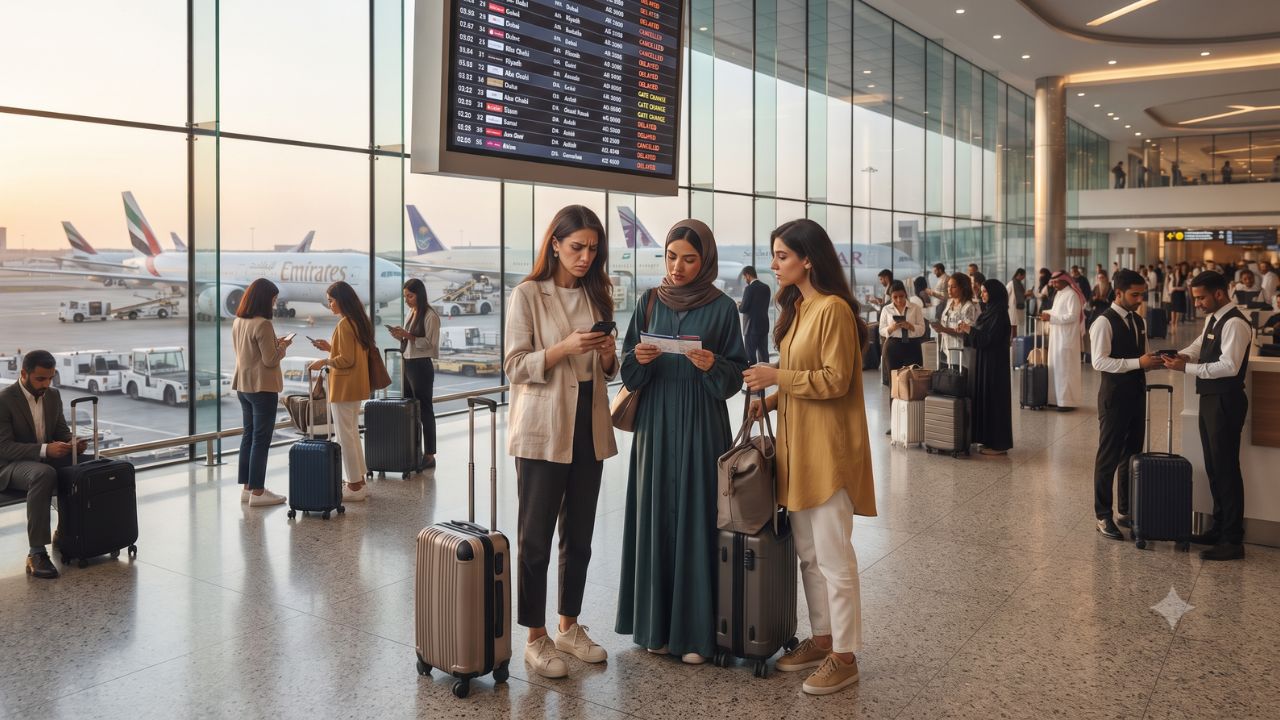
With Dubai International Airport logging 226 flight delays and Riyadh's King Khalid International Airport recording 18 cancellations, a sudden wave of 939 delays and 53 cancellations swept across the Middle East's primary aviation hubs within a single 24-hour cycle. Recorded through real-time global tracking data verified on September 24, 2026, at 6:06 PM ET (September 25, 2026, 2:06 AM GST) via FlightAware, the operational bottlenecks placed severe pressure on intercontinental connection banks linking Europe, Asia, Africa, and the Americas.
Because the Arabian Gulf functions as the world's busiest crossroads for long-haul transfer traffic, minor schedule slippages quickly cascade across international rotations. For passengers navigating transit terminals in Dubai, Abu Dhabi, Doha, and Jeddah, understanding airline duty-of-care obligations, Saudi civil aviation passenger rights, and smart layover management is essential to protecting onward journeys.
Comprehensive Impact Breakdown Across Gulf Airports
The operational disruptions were distributed across major international transfer gateways and regional domestic networks in the United Arab Emirates, Saudi Arabia, Qatar, and Kuwait.
| Airport & Country | Airport Code | Flight Delays | Flight Cancellations | Operational Impact Summary |
|---|---|---|---|---|
| Dubai International, UAE | DXB | 226 Delays | 5 Cancellations | Highest regional delay volume on long-haul routes |
| Abu Dhabi International, UAE | AUH | 121 Delays | 2 Cancellations | Midday and evening transfer bank hold delays |
| King Abdulaziz International, Jeddah, KSA | JED | 117 Delays | 8 Cancellations | Red Sea gateway international & domestic delays |
| Hamad International, Doha, Qatar | DOH | 92 Delays | 1 Cancellation | Transcontinental schedule revisions & gate holds |
| King Khalid International, Riyadh, KSA | RUH | 90 Delays | 18 Cancellations | Highest regional cancellation count across network |
| Sharjah International, UAE | SHJ | 49 Delays | 1 Cancellation | Regional low-cost carrier departure adjustments |
| Kuwait International, Kuwait | KWI | 29 Delays | 2 Cancellations | Gulf regional feeder route delays |
| Abha Regional Airport, KSA | AHB | 27 Delays | 7 Cancellations | Southern domestic mountain route adjustments |
| Gizan Regional Airport, KSA | GIZ | 0 Delays | 4 Cancellations | Direct domestic flight cancellations |
| Najran Domestic Airport, KSA | EAM | 0 Delays | 4 Cancellations | Regional domestic connection cancellations |
Carrier Performance and Cancellation Ratios
Regional and national airlines operating dense point-to-point and hub-and-spoke networks experienced noticeable operational friction throughout the monitoring window.
Saudia, the national carrier of Saudi Arabia, registered 22 cancellations (a 4% cancellation rate) alongside 61 delays (an 11% delay rate), reflecting domestic and regional route consolidations.
In the United Arab Emirates, FlyDubai absorbed the highest individual delay count among regional carriers, reporting 108 delayed flights (representing a 35% delay rate) with 2 cancellations. Qatar Airways recorded 74 delays (11% delay rate) and 1 cancellation at its Doha hub, while Kuwait Airways logged 17 delays (18% delay rate) and 1 cancellation. Regional carrier Mahan Air of Iran reported 4 delays (21% delay rate) alongside 1 cancellation (a 5% cancellation rate).
What Makes Gulf Transit Hubs Vulnerable to Cascading Delays
The aviation architecture of the Middle East is engineered around tightly timed "waves" of arrivals and departures. At mega-hubs managed by Dubai Airports and Hamad International Airport, hundreds of flights arrive from Europe and Africa between midnight and 3:00 AM, discharging tens of thousands of connecting passengers who board outbound flights to South Asia, Southeast Asia, and Australasia between 4:00 AM and 8:00 AM.
When airspace congestion, military routing restrictions, or sudden regional weather shifts delay incoming aircraft, the tightly compressed 60-to-90-minute transfer window evaporates. Aircraft must either hold at departure gates waiting for delayed transfer baggage and passengers or depart on time, stranding travelers in transit halls until the next scheduled flight wave twelve to twenty-four hours later.
Visitor Insider Tips
- Book Minimum Three-Hour Connections for Gulf Transfers: Avoid tight 60-minute layovers when purchasing tickets on Emirates, Qatar Airways, or Saudia. Opt for itineraries with layovers between three and four hours to absorb departure slot holds without missing long-haul connections.
- Understand Saudi GACA Passenger Protection Regulations: If flying on Saudia or departing from Saudi airports like Riyadh (RUH) or Jeddah (JED), know your rights under the General Authority of Civil Aviation (GACA) Consumer Protection Regulations. Passengers are entitled to complimentary refreshments after three hours of delay, hotel lodging and transport after six hours, and cash compensation for arbitrary cancellations.
- Utilize Airside Transit Hotels Without Clearing Customs: If facing overnight delays in Dubai (DXB Terminal 3) or Doha (DOH), check directly into airside transit hotels (such as the Dubai International Hotel or Oryx Airport Hotel) located past security, avoiding the need to clear immigration or enter the country.
- Keep Essential Medications and Valuables in Cabin Bags: Never check prescription medicines, vital electronics, or infant necessities into hold baggage during Gulf transit. If your connection is missed, checked luggage remains stored in automated airport transfer systems and is rarely retrieved for overnight stays.
- Check Digital Boarding Passes for Gate Changes: Gate assignments in massive concourses like Dubai's Terminal 3 or Doha's central terminal change frequently during peak congestion. Re-check airport display monitors or refresh airline apps every 20 minutes while waiting.
Cultural and Environmental Context
The Arabian Peninsula's modern airports serve as global crossroads where over 150 nationalities intersect daily. Maintaining smooth operations requires continuous coordination between civil aviation authorities, national air navigation service providers, and international security bodies across the Middle East.
Environmentally, airport authorities across the Gulf are implementing sustainability measures to mitigate the carbon impact of ground holds. Solar-powered terminal concourses, electric ground support vehicles, and single-engine taxi protocols are being expanded across Dubai, Riyadh, and Abu Dhabi to minimize aviation emissions during operational delays.
FAQ: Managing Gulf Flight Disruptions 2026
What caused nearly 1,000 flight delays across Gulf airports?
Operational bottlenecks, regional airspace congestion, tight aircraft turnaround schedules, and network rotation holds caused 939 delays and 53 cancellations.
Which airport recorded the highest number of flight cancellations?
King Khalid International Airport in Riyadh (RUH) recorded the highest number of cancellations with 18 cancelled flights.
Are passengers entitled to hotel accommodation during Gulf flight delays?
Yes, under international aviation standards and GACA/UAE civil aviation rules, airlines must provide free hotel lodging, meals, and airport transfers for delays exceeding six hours.
How can travelers rebook flights quickly during transit disruptions?
Use the airline's mobile app to accept automated rebooking suggestions or visit dedicated airside transfer desks before leaving the secure transit area.
Related Travel Guides
- McKinney National Airport Avelo Airlines Nonstop Flights Guide 2026
- Cabo Verde Airlines Sal Recife Direct Flight Guide 2026
- Asia Flight Disruptions Delays Beijing Delhi Tokyo Guide 2026
Beneath the soaring arches of the world's greatest crossroads, navigating flight delays with poise turns transit uncertainty into an opportunity for calm discovery.
Disclaimer
This article is for informational and educational purposes only. It does not constitute legal, financial, or professional advice. While we strive to provide accurate and up-to-date information, travel policies, regulations, and conditions change rapidly. Always verify information with official sources before making travel decisions. Nomad Lawyer makes no representations about the accuracy, reliability, completeness, or suitability of the information provided. Readers should consult qualified professionals for advice specific to their circumstances. The views expressed in this article are those of the author and do not necessarily reflect the views of Nomad Lawyer.
Raushan Kumar
Founder & Lead Developer
Full-stack developer with 11+ years of experience and a passionate traveller. Raushan built Nomad Lawyer from the ground up with a vision to create the best travel and law experience on the web.
Learn more about our team →