
Guam International Airport Disruptions: United, Korean Air, and Philippine Airlines Cancel 14 Flights in 2026
Major flight cancellations at Guam International Airport have stranded passengers across key Asia-Pacific routes, with United, Korean Air, and Philippine Airlines seeing significant operational failures.

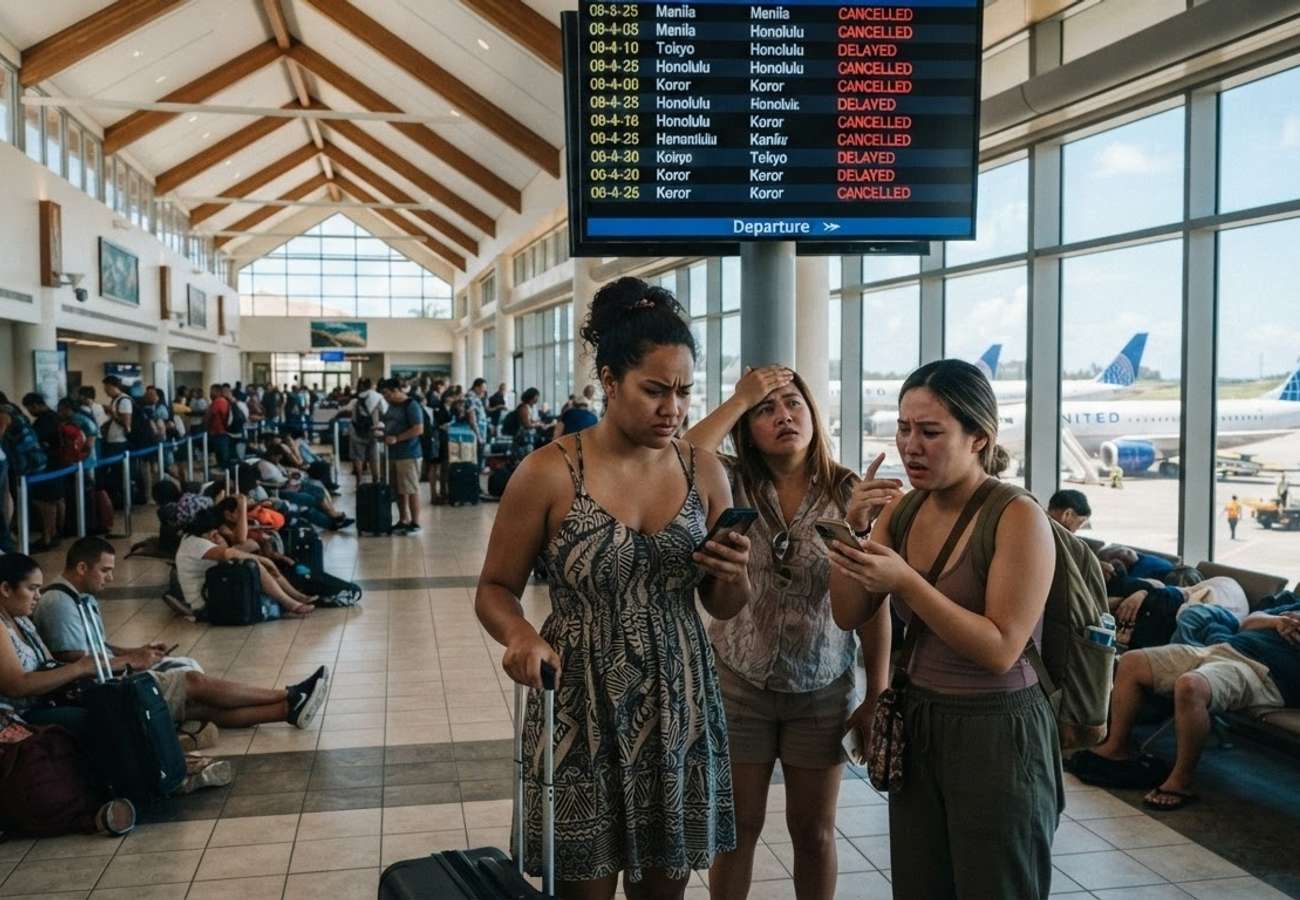
Image generated by AI
Operational instability at Guam International Airport has left numerous travelers stranded after three major carriers cancelled a combined 14 flights. The disruptions hit key transit corridors connecting the Pacific islands with major East Asian hubs, creating a ripple effect across regional travel itineraries.
The cancellations primarily impacted routes to Manila, Tokyo, Incheon, Honolulu, and Chuuk. While some services experienced delays, the high volume of outright cancellations forced passengers to seek emergency rebooking or alternative transportation in one of the Pacific's most critical aviation gateways.
Regional Connectivity Failures and Impacted Hubs
The scale of the disruption is magnified by Guam's role as a pivotal link between the United States and Asia. The failures were not limited to a single destination but spanned a diverse network of business and leisure markets.
Travelers heading to Incheon, Manila, and Tokyo (including both Narita and Haneda airports) faced the most significant interruptions. Additionally, essential regional links to Chuuk and Koror were severed, highlighting the vulnerability of island-hopping networks when a primary hub experiences operational collapse.
For many passengers, these cancellations resulted in missed onward connections, leaving them stranded in Guam while attempting to reach their final destinations across the Asia-Pacific region.
Breakdown of Airline Operational Performance
The operational data reveals a stark difference in how each carrier was affected. While United Airlines saw the highest volume of cancellations, Philippine Airlines suffered the most complete shutdown of its scheduled services from the airport.
Flight Disruption Summary
| Airline | Cancelled Flights | Delayed Flights |
|---|---|---|
| United | 9 | 1 |
| Korean Air | 3 | 0 |
| Philippine Airlines | 2 | 0 |
United Airlines bore the brunt of the volume, accounting for nine of the 14 cancellations. This represents a 42% cancellation rate for the carrier during the affected period.
Korean Air saw 75% of its scheduled operations cancelled, with three flights removed from the schedule. Philippine Airlines experienced a total operational blackout, with a 100% cancellation rate as both of its scheduled flights were scrapped.
Passenger Recovery and Legal Rights
When facing sudden cancellations at a hub like Guam, passengers are encouraged to move quickly to secure alternative routing. The volatility of these schedules means that the first passengers to contact the airline typically secure the best rebooking options.
Immediate Steps for Stranded Passengers:
- Digital Monitoring: Prioritize airline apps and email notifications over airport signage for the fastest rebooking confirmations.
- Direct Communication: If queues at the airport service desk are excessive, utilize online chat systems or phone support to bypass physical lines.
- Alternative Routing: If the carrier cannot provide a timely alternative, passengers should investigate flights via other airlines or regional carriers to reach their destination.
From a legal and policy perspective, passengers should review the specific "Conditions of Carriage" for their airline. While EU passengers have strong protections under EC 261/2004, those flying on US or Asian carriers in the Pacific are subject to different regulatory frameworks. Many airlines provide hotel vouchers or meal credits if the cancellation is deemed within the carrier's control.
Analysis: The Fragility of Pacific Aviation Hubs
This incident underscores the "single point of failure" risk inherent in Pacific aviation. Because Guam serves as a primary bridge between the US mainland (via Honolulu) and Asia (via Tokyo and Manila), a disruption here does not just affect local travelers—it disrupts global transit flows.
The fact that Philippine Airlines saw a 100% cancellation rate suggests that for smaller operators, any operational glitch at the hub can completely erase their presence in that market for the day. For larger carriers like United, the ability to maintain a few delayed flights allows for some flexibility, but the 42% cancellation rate still indicates a severe breakdown in scheduling.
Travelers are advised to maintain flexibility and monitor real-time flight tracking tools to avoid unnecessary transit to the airport during active disruptions.
Related Travel Guides
Disclaimer
This article is for informational and educational purposes only. It does not constitute legal, financial, or professional advice. While we strive to provide accurate and up-to-date information, travel policies, regulations, and conditions change rapidly. Always verify information with official sources before making travel decisions. Nomad Lawyer makes no representations about the accuracy, reliability, completeness, or suitability of the information provided. Readers should consult qualified professionals for advice specific to their circumstances. The views expressed in this article are those of the author and do not necessarily reflect the views of Nomad Lawyer.
Kunal K Choudhary
Co-Founder & Contributor
A passionate traveller and tech enthusiast. Kunal contributes to the vision and growth of Nomad Lawyer, bringing fresh perspectives and driving the community forward.
Learn more about our team →