
Greece Tourism Surge Forces Global Shift in Travel Planning and Infrastructure
Greece saw 43M+ visitors in 2025. Explore how record tourism revenues and €12B in investments are reshaping Mediterranean travel and infrastructure.
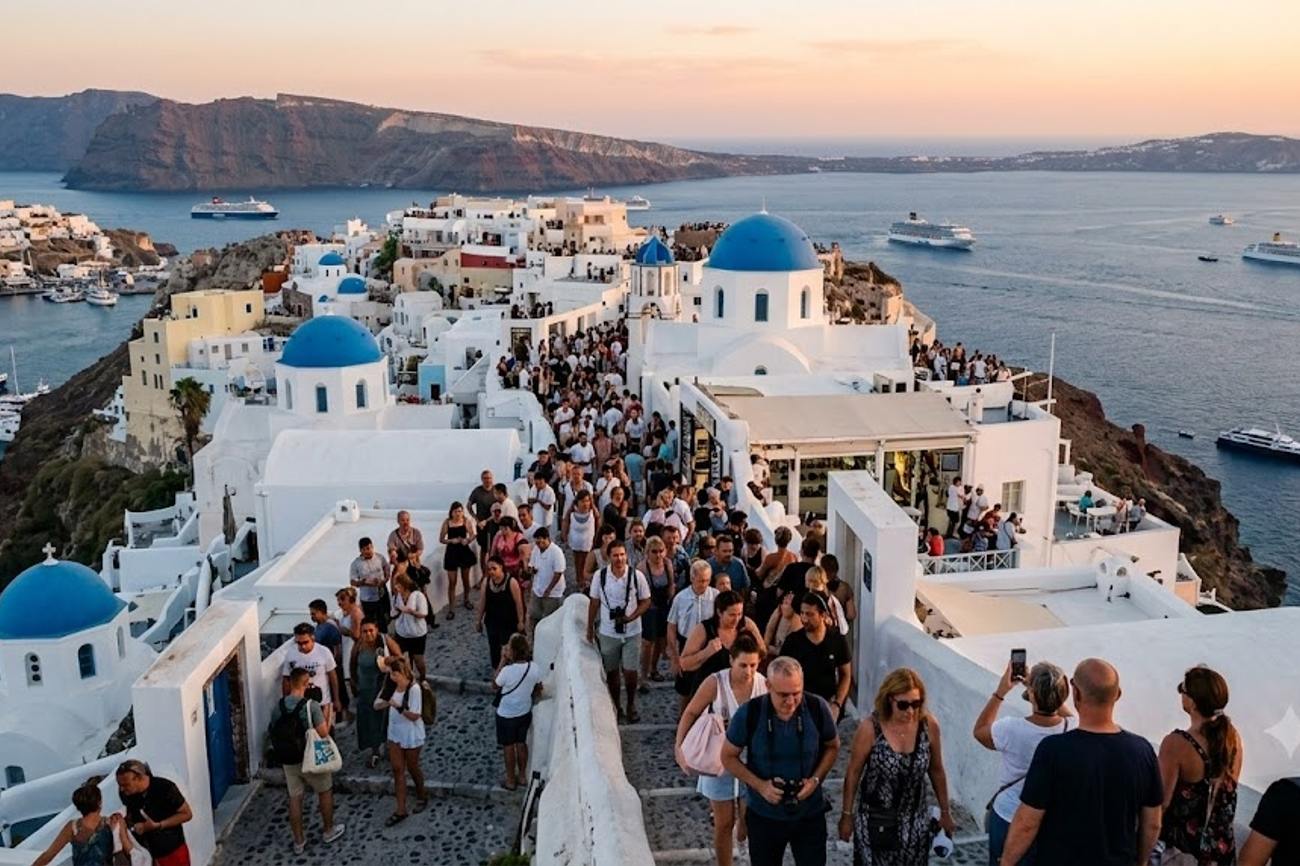
Image generated by AI
Record-Breaking Visitor Volumes Reshape the Mediterranean Economy
Greece has evolved into a global case study for sustainable economic growth through tourism. The nation is currently managing a visitor influx that dwarfs its own resident population, attracting more than 43 million international travelers in 2025—a staggering figure for a country of only 10 million citizens. This momentum is not merely a post-pandemic recovery but a structural economic shift.
Financial data reveals that tourism revenues reached €21.7 billion in 2024, creating a high-performance baseline for subsequent years. The growth trajectory accelerated in 2025, with travel-derived financial yields climbing by 9.4% and foreign guest arrivals increasing by 6.4%. This indicates a strategic pivot by Greek authorities and private stakeholders to prioritize high-value tourism over mass-market volume.
The trend intensified in the first half of 2026, which saw a 14.8% year-on-year increase in total tourism revenue. These figures highlight the success of targeted capital injections and the modernization of digital travel ecosystems, which have allowed the country to scale its offerings while increasing the average spend per visitor.
Evolving Traveler Behaviors and Seasonal Shifts
The sheer scale of this expansion is forcing a redesign of international flight pathways and destination management. As traditional summer peaks become increasingly congested, global travelers are altering their habits to avoid the crowds. There is a noticeable trend toward "shoulder season" travel, where visitors opt for spring and autumn to experience Greek culture without the peak-summer intensity.
Travelers are also adapting to a new landscape of hospitality. The integration of streamlined digital booking tools and expanded seasonal offerings means that destinations once considered "closed" during winter are now becoming viable year-round options. This shift is supported by destination managers who are implementing premium hospitality standards and eco-conscious operational models to maintain site capacity and cultural integrity.
For the modern globetrotter, this means a reallocation of leisure budgets and a movement toward alternative regional districts. By diversifying where and when they visit, travelers are helping to distribute economic benefits more evenly across the mainland and the islands.
Technological Integration and International Trade Partnerships
The modernization of the Greek hospitality sector is being accelerated by deep commercial cooperation with international service providers. Through bilateral programs and structured trade initiatives, the country is importing specialized expertise to upgrade its tourism framework.
Technology firms are increasingly deploying advanced property management platforms and digital guest relations tools across both urban centers and remote island resorts. There is a specific focus on "green tech," including energy-efficient building automation and advanced waste treatment systems, to mitigate the environmental impact of millions of annual arrivals.
Direct business exchanges, such as trade delegations in Athens and industry gatherings like TTG & XENIA 2026, serve as critical conduits for this innovation. These events allow foreign tech innovators to connect directly with municipal development boards and private asset developers, ensuring that the supply chain for hotel renovation and construction remains state-of-the-art.
Infrastructure Overhaul and Sustainability Mandates
To prevent the collapse of local natural resources under the weight of record-breaking crowds, Greece has directed massive capital toward municipal and resort infrastructure. The primary goal is the "de-seasonalization" of tourism—spreading activity across all twelve months to reduce the strain on water, power, and transport systems during the summer.
In hubs like Athens and various coastal communities, digital transformation projects are optimizing utility management and streamlining guest check-ins to reduce overhead and improve the user experience. These systemic upgrades have triggered a ripple effect in the aviation sector, with airlines revising routing schedules to introduce extended flight paths and specialized off-peak options.
Environmental protocols are no longer optional. Water conservation mandates and green building certifications are becoming the operational baseline for all new and existing properties. This shift ensures that the high quality of service is matched by a commitment to ecological resilience.
Massive Capital Inflow and Luxury Hospitality Expansion
The regional leisure landscape is undergoing a physical transformation driven by an influx of foreign investment. Between 2022 and 2026, more than €12 billion in capital was deployed into national visitor infrastructure and the construction of high-end hotel projects.
This financial wave is fueling the development of over 60 upscale resorts and boutique properties, all of which are scheduled to be operational by 2027. These investments are not merely about increasing room counts but are focused on creating "high-yield" destinations that attract affluent travelers, thereby increasing revenue without necessarily increasing the total number of people on the ground.
| Metric | Value/Statistic | Period |
|---|---|---|
| International Visitors | 43 Million+ | 2025 |
| Tourism Revenue | €21.7 Billion | 2024 |
| Revenue Growth (YoY) | 9.4% | 2025 |
| Foreign Guest Increase | 6.4% | 2025 |
| H1 Revenue Increase | 14.8% | 2026 |
| Total Capital Investment | €12 Billion+ | 2022–2026 |
| New Upscale Properties | 60+ Resorts | By 2027 |
Why This Matters: The Impact on the Modern Traveler
For the average traveler, the transformation of Greece represents a double-edged sword. On one hand, the €12 billion investment in infrastructure means a seamless experience: faster check-ins, more reliable transport, and world-class luxury accommodations. The push for sustainability also ensures that the natural beauty of the islands is preserved for future generations.
However, from a logistical standpoint, the "record-breaking" nature of these statistics means that the era of the "hidden gem" in Greece is rapidly closing. Travelers must now be more strategic. Planning a trip to Greece in 2026 and beyond requires a shift in mindset—moving away from the traditional July/August window and toward the shoulder seasons.
The transition toward "higher-value" tourism also suggests a shift in pricing. As the country pivots toward premium hospitality, budget-conscious travelers may find fewer low-cost options in primary hubs, necessitating a search for value in lesser-known regional districts.
Related Travel Guides
Disclaimer
This article is for informational and educational purposes only. It does not constitute legal, financial, or professional advice. While we strive to provide accurate and up-to-date information, travel policies, regulations, and conditions change rapidly. Always verify information with official sources before making travel decisions. Nomad Lawyer makes no representations about the accuracy, reliability, completeness, or suitability of the information provided. Readers should consult qualified professionals for advice specific to their circumstances. The views expressed in this article are those of the author and do not necessarily reflect the views of Nomad Lawyer.