
Greece Implements Strict New Renewable Energy Laws to Protect Landscapes and Heritage Sites in 2026
Greece has launched a comprehensive new Special Spatial Planning Framework for Renewable Energy Sources to curb uncontrolled expansion and protect cultural heritage sites through 2050.

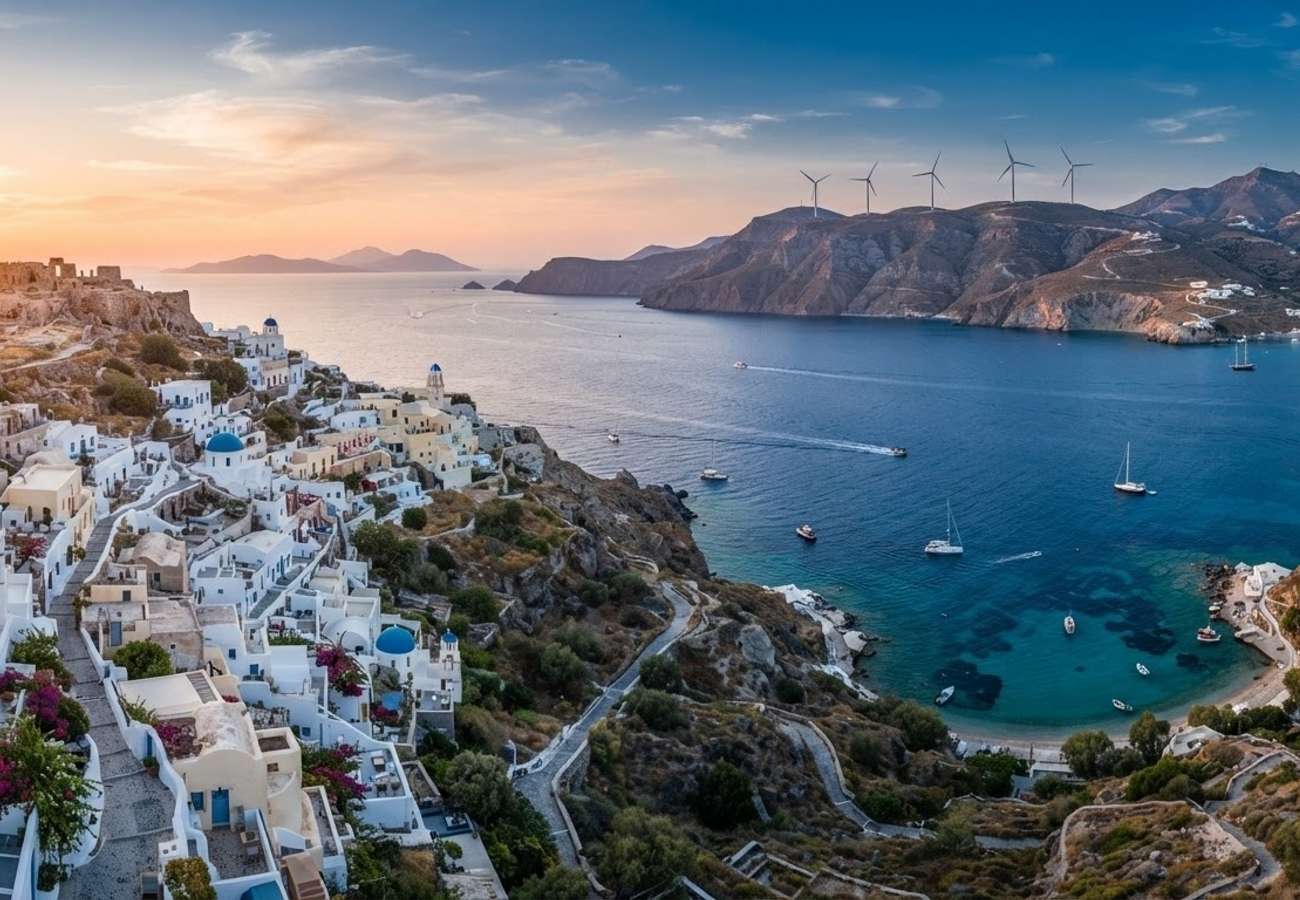
Image generated by AI
Athens, August 20, 2026 — Greece has enacted a sweeping overhaul of its energy sector regulations, introducing a new Special Spatial Planning Framework for Renewable Energy Sources designed to halt the unchecked proliferation of clean energy infrastructure across its historic landscapes.
The Greek government is shifting its strategy from rapid, unrestricted growth to a controlled, long-term planning model that extends to 2050. This legislative pivot aims to resolve the growing tension between the nation's ambitious carbon-neutral goals and the urgent need to preserve the archaeological sites and coastal vistas that drive its multi-billion dollar tourism economy.
Overhauling Energy Planning for a 2050 Horizon
The newly implemented framework replaces an outdated set of regulations that had governed the sector since 2008. For nearly two decades, Greece pursued an aggressive expansion of wind and solar capacity to decouple its economy from fossil fuels. While successful in increasing energy independence, this period of rapid growth often occurred without rigorous spatial oversight, leading to infrastructure being placed in ecologically sensitive or visually intrusive areas.
The updated mandate now covers a diverse array of energy technologies, including:
- Wind energy and solar power
- Energy storage systems
- Small-scale hydroelectric plants
- Biomass, biogas, and biomethane
- Geothermal energy systems
By establishing a coordinated national strategy, officials intend to move away from a "first-come, first-served" permit system toward a model where projects are approved based on their suitability for a specific location and their overall impact on the social and environmental fabric of the region.
Establishing Strict Exclusion Zones for Heritage and Tourism
A cornerstone of the 2026 regulations is the creation of expanded "exclusion zones"—areas where renewable energy development is now strictly prohibited. These boundaries are designed to safeguard the very assets that make Greece a global destination.
High-protection tourism zones are now off-limits for new wind farms. This measure prevents industrial-scale energy projects from marring the natural beauty of regions where the local economy is entirely dependent on landscape value. Furthermore, the law extends rigorous protections to:
- Archaeological sites and ancient monuments
- Cultural landmarks constructed after 1830
- Protected drinking water sources
- Pristine, untouched coastal strips
These restrictions signal a shift in priority, acknowledging that while clean energy is a necessity, the permanent alteration of cultural heritage sites is an unacceptable cost.
Island Wind Energy and the 4 Percent Land-Use Cap
Because of their fragile ecosystems and unique topography, Greek islands are subject to a specialized tier of environmental scrutiny. Under the new laws, any proposed wind project on an island must undergo a mandatory landscape assessment as part of its environmental licensing.
This assessment is not a mere formality; it requires a detailed analysis of the project's scale, the specific character of the surrounding terrain, and the potential visual degradation of the horizon. Mountainous regions on islands will receive individual, case-by-case evaluations to ensure that the natural shape of the terrain is not compromised.
To prevent the "industrialization" of small islands, the government has enforced a strict land-use ceiling. Wind farms are now prohibited from occupying more than 4 percent of the total land area within any single Municipal Unit.
While this cap is firm, the framework allows for rare exceptions. If a developer can provide certified, high-precision measurements proving that a specific site possesses exceptional wind resources—even in areas where average conditions are typically poor—the project may be considered, provided it meets all other stringent environmental criteria.
Integrating Energy Storage and Grid Stability
As Greece continues to leverage its high solar and wind potential, the government is recognizing the inherent volatility of these sources. To combat the fluctuations caused by weather patterns, the new framework explicitly integrates energy storage infrastructure.
By prioritizing the development of storage facilities alongside generation plants, Greece aims to stabilize its grid and reduce waste. This ensures that peak production during sunny or windy periods is captured and deployed during low-production intervals, enhancing the overall reliability of the national energy supply without requiring further land expansion for generation.
Why This Matters: The Intersection of Law and Tourism
For the international traveler and the local resident, these laws represent a victory for "place-making" over "power-making." From a logistical standpoint, this creates a more predictable environment for investors who previously faced unpredictable local opposition and lawsuits from environmental groups.
From a user-experience perspective, the 4 percent land-use cap and the exclusion of tourism zones mean that the "postcard" image of Greece—white-washed villages against a backdrop of blue seas and green mountains—is being legally codified. The risk of waking up to a horizon dominated by industrial turbines in a protected village is now significantly lower.
Legally, this sets a precedent for other Mediterranean nations. It demonstrates that a country can pursue aggressive Green Deal targets without sacrificing its cultural identity. The transition to clean energy is no longer viewed as a binary choice between "environment" and "energy," but rather as a spatial management challenge.
Greece is proving that the path to a sustainable future does not have to erase the footprints of the past.
Related Travel Guides
Disclaimer
This article is for informational and educational purposes only. It does not constitute legal, financial, or professional advice. While we strive to provide accurate and up-to-date information, travel policies, regulations, and conditions change rapidly. Always verify information with official sources before making travel decisions. Nomad Lawyer makes no representations about the accuracy, reliability, completeness, or suitability of the information provided. Readers should consult qualified professionals for advice specific to their circumstances. The views expressed in this article are those of the author and do not necessarily reflect the views of Nomad Lawyer.
Kunal K Choudhary
Co-Founder & Contributor
A passionate traveller and tech enthusiast. Kunal contributes to the vision and growth of Nomad Lawyer, bringing fresh perspectives and driving the community forward.
Learn more about our team →